



China’s reopening should be a boon to SGD and regional currencies, say analysts

Angela Tan
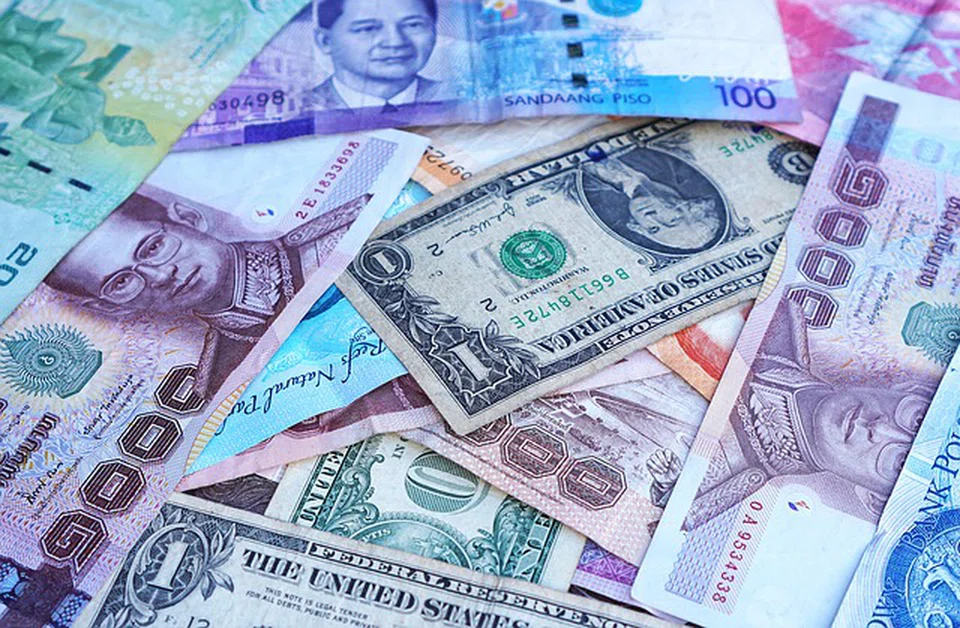
THE Singapore dollar (SGD), which has climbed 4 per cent against the Chinese yuan (CNY) over the past 2 months to trade at levels last seen a year ago, in May 2021, could continue to strengthen — albeit at a slower pace — and China’s reopening should be a boon to the SGD and regional currencies, say analysts.
One Singapore dollar (SGD) was worth 4.87 yuan (CNY) on Thursday (May 19), compared to 4.67 yuan in mid-March. Going by the global macro projections of Trading Economics and analysts’ expectations, the Singapore dollar is forecast to trade around 4.88 by the end of this quarter and by year’s end. 2022.
Peter Chia, senior FX strategist at UOB, said the abrupt weakness of the CNY is a reflection of the increased downside risks to the Chinese economy due to the country’s strict zero-Covid strategy. China’s policy, entailing the stamping out of new cases through widespread testing and strong lockdown measures, has brought tough curbs down on its largest cities from Shanghai to Beijing.
Chia said: “In March, portfolio outflows reached the biggest on record, which dated back to 2010. This has also put further pressure on the CNY.”
Simon Harvey, head of FX analysis at MonFX, which is part of the Monex group, said that the slowdown in China’s growth has prompted increasing emphasis on looser monetary policy by the People’s Bank of China (PBOC).
“The expectation of this has resulted in capital outflows in China and thus a weaker yuan against the US dollar. In addition to this, Chinese monetary officials haven’t publicly opposed the recent yuan depreciation; their actions have only attempted to slow the pace of depreciation so as not to cause mass capital flight like that seen in 2015,” Harvey said.
In 2015, China posted record capital outflows of more than US$500 billion amid a weakening yuan and faltering growth, said the Institute of International Finance (IIF).
A further increase in the pace of appreciation of the Singapore dollar nominal effective exchange rate (S$NEER) by the Monetary Authority of Singapore (MAS) in April also lent support to the SGD. In the MAS’ dual tightening move on Apr 14, the central bank actively targeted a stronger trade-weighted local dollar to maintain purchasing power, lower inflation and keep inflation expectations well anchored.
Harvey said the stronger SGD against the CNY is broadly consistent with the MAS’ intentions for a stronger trade-weighted local dollar.
He said: “Given that we expect USD-CNY to continue rising over the coming quarter, and there still being some room for S$NEER to appreciate in the coming months, we expect SGD-CNY to continue rising, but at a slower pace than that of the last 2 months.”
UOB’s Chia said while the fundamentals suggest a weaker CNY, further weakness from here is likely to be “measured”.
He noted that in the latest quarterly monetary report issued this month, the PBOC said it would keep the foreign-exchange market operating “normally”, and would guide market expectations.
“This suggests that sharp one-way moves in the CNY are unlikely to be sustained. In addition, sentiments on the CNY may start to stabilise, given that Shanghai is on track to exit its lockdown and return to normalcy in June,” Chia said.
Shanghai, which has been under lockdown since late March, is aiming to fully restore normal production and life in the city in June.
This week, China lifted some Covid-19 test requirements for people flying from countries such as the United States, and shortened the pre-departure quarantine for some inbound travellers, as it fine-tuned its measures to cope with the Omicron variant.
From Friday (May 20), travellers from Dallas, New York, Los Angeles, San Francisco, Seattle and Chicago will no longer need an RT-PCR test 7 days before flying, or any antibody test, going by notices issued late on Tuesday by the Chinese embassy in the United States and several consulates. Travellers will still need to do two RT-PCR tests within 48 or 24 hours of their flights — depending on the airport they are flying out of — plus another pre-flight antigen test.
Stephen Innes, managing partner at SPI Asset Management, said the markets have been very challenging “as the US dollar has strengthened a long way, and we are on the cusp of reopening trade to China, which should boost the SGD trade into the mainland”.
The US dollar is at a 20-year high, and the DXY index — a US dollar index that is weighted against the euro, Japanese yen, British pound, Canadian dollar, Swedish kroner and Swiss Franc — may have more steam ahead.
For Innes, the biggest worry is a looming global recession that will derail exporters, and possibly hit the oil sectors.
He said: “I think Asian foreign exchange is always at the mercy of the yuan, and the SGD is no different as CNY tends to have a magnetic attraction to the entire basket, good or bad.
“From a purely macro perspective, when China officially opens, it should be a boon for regional foreign exchange and could trigger inflows into SGD.”
Innes suggested that because no central bank would want to import inflation through a weaker currency, the MAS “will jawbone the SGD stronger on extreme weakness”.
“My best guess is that inflation has peaked, so the US Federal Reserve is more bark than bite at this point. We could see Asia foreign exchange currency sentiment improve on the first sign that US inflation is easing,” said Innes, who is predicting the USD-CNY to trade around 6.85.
Harvey said that capital outflows since the start of April were merely the reversal of part of the foreign direct investment (FDI) recorded since mid-2020 flowing into China, and are not representative of increased Chinese savings leaving the mainland.
“While a weaker yuan does reduce the attractiveness of overseas investments for Chinese nationals and institutions, the savings glut seen domestically suggests that overseas investments will still be substantial.
“A more pressing concern is the domestic conditions in China. If they deteriorate further, that could have a larger impact on overseas investment — weaker growth reduces investor confidence, lowering domestic interest rates, which will be somewhat offset by a weaker currency and thus, an increase in the cost of the investment in local terms,” he said.
Decoding Asia newsletter: your guide to navigating Asia in a new global order. Sign up here to get Decoding Asia newsletter. Delivered to your inbox. Free.
Copyright SPH Media. All rights reserved.






