



Foreign banks chase China’s pot of gold despite geopolitical tensions

Angela Tan
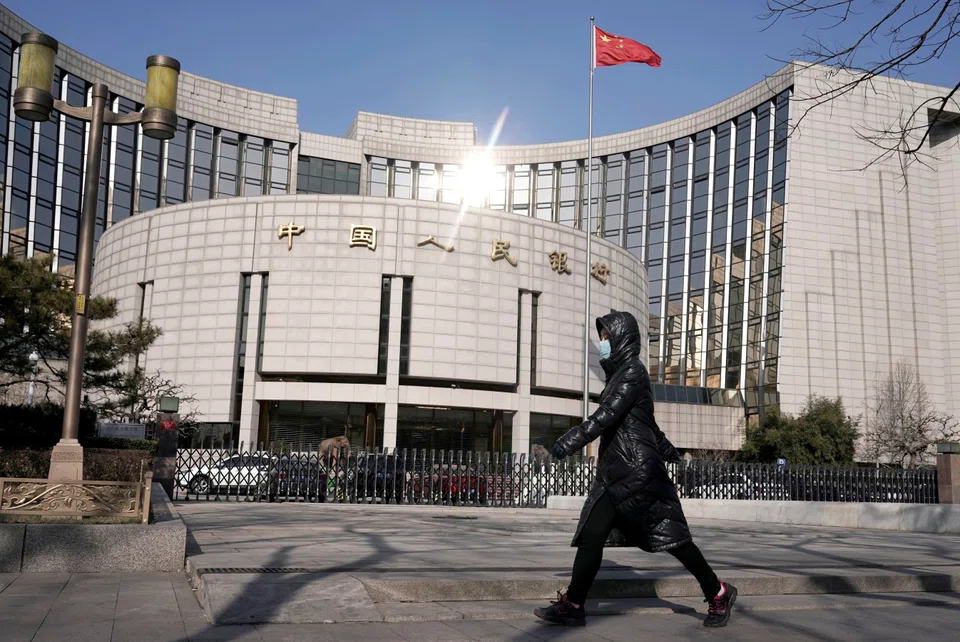
WHILE investors debate whether China is still investible, global financial institutions including DBS and OCBC in Singapore are expanding operations in the mainland, shrugging off the geopolitical tensions as short-term bumps for a lucrative future.
Banks The Business Times (BT) spoke to said their confidence and long-term commitment to China remain intact despite Beijing’s strict zero-Covid policy, which has seen many major cities such as Shanghai and Beijing under lockdown or some form of travel restrictions.
Tan Wing Ming, Acting Head of Greater China at OCBC Bank, acknowledged the lockdown in China has caused some disruption to the global supply chain and the bank is monitoring the situation closely.
“(But) we are already seeing signs of opening up and this will continue over the next few months. Even with the lockdowns in the Southern cities, there is no disruption in our provision of banking services, and we remain watchful and continue to proactively manage the risks arising from this volatility,” Tan said.
OCBC Bank’s loan portfolio in China mainly comprises large corporates, including network customers with stronger credit. Its onshore exposure to China companies is not significant, accounting for only 2 per cent (or S$7 billion) of the group loans.
OCBC’s Tan said: “Our focus is still partnering with Chinese state-owned enterprises (SOEs) and corporates as they move out of China into Asean. Asean has become China’s largest trading partner and vice versa. Many of the Chinese companies will go through Hong Kong, having two hubs outside mainland China. This is where huge opportunities lie.”
OCBC Bank has recently refreshed its corporate strategy that aims to “Excel for Sustainable Growth”. It will focus on harnessing its network strength in Asean, particularly in Indonesia and Malaysia, as well as its twin-hub capabilities of Singapore and Hong Kong, to capture increasing Greater China-Asean flows. The Singapore lender has expanded its China business office coverage beyond its three core Southeast Asian markets of Singapore, Malaysia and Indonesia, to include Vietnam and Thailand.
Mr Tan explained: “Because of our large presence in countries like Indonesia and Malaysia, we can go beyond lending to support customers with treasury, foreign exchange and cash management services. On the wealth management front, both OCBC and Bank of Singapore, leveraging our twin wealth centres of Singapore and Hong Kong, have been able to capture the Asia wealth flows very well.
“Our wealth management income in 2021 grew 11 per cent from 2020. We are well-supported by our strong capital base, healthy funding and continuous investment in digital, technology and talent, so we are confident to be able to capture the opportunities arising from the transforming and fast-growing Asian market.”


Over at DBS, South-east Asia’s largest bank believes over the long term, the continued structural rise of China, growth of its middle class and the liberalisation of its financial markets, will create growth opportunities.
“As an Asian bank, it is important for us to have a meaningful presence in the large Asian markets, including China,” said the bank’s spokesman.
Last week, the Hong Kong arm of DBS tied up with Shenzhen Rural Commercial Bank Corporation Limited (SRCB) to offer wealth management services to investors or residents in the nine mainland cities that form China’s Greater Bay Area.
DBS became the largest shareholder of SRCB last year after it bought a 13 per cent stake in the bank, which has 10 million individual customers and 280,000 small to medium-sized enterprises (SMEs), as its customers. The agreement also marks DBS’ third Wealth Management Connect (WMC) tie-up with a mainland bank, following the first two partnerships with the Postal Savings Bank of China, one of the largest retail banks in China, as well as with DBS Bank (China).
“We see an opportunity to expand and deepen our business in the Greater Bay Area (GBA) through the Wealth Management Connect Scheme,” the DBS spokesman said.
The GBA is one of the wealthiest areas within China, with a population of around 72 million, and a gross domestic product (GDP) equivalent to US$1.7 trillion.
“The need for financial services is on the rise, as reflected in the strong growth of China’s wealth management industry which is expanding at an annual rate of 6-8 per cent. The total assets under management of GBA alone has already passed the US$1 trillion mark,” the DBS spokesman added.
DBS’s WMC scheme enables both institutional and individual investors in China’s GBA to directly invest in offshore wealth management products without having to travel across borders. DBS sees this as a major breakthrough as it deepens the connectivity of the mainland and Hong Kong financial markets in the area of wealth management.
“Although there is no definite date on the border opening between Hong Kong and Mainland China, we expect a significant proportion of DBS Hong Kong’s Treasures Wealth customers to come from the GBA region in the long term,” the bank said.
DBS’s strategy in China is anchored on three thrusts.
Its spokesman said: ”First, we bank large companies, particularly potential world-beaters with regional growth ambitions. In 2021, we added an investment banking capability through a securities joint venture to support these companies’ capital markets activities. Second, in the Greater Bay Area (GBA), we want to go deeper, including banking SMEs down the supply chain. We also seek to extend our wealth management offerings to GBA customers. The 13 per cent stake we acquired in Shenzhen Rural Commercial Bank in 2021 accelerates this strategy. Third, we are keen to expand into the consumer finance space through ecosystem partners.”
Ming Tan, an analyst at S&P Global Rating said prior to the recent market volatility and tensions, the securities as well as wealth and asset management segments have seen the greatest interest from foreign banks. Tan also noted that the return on assets (ROA) was about 0.6 per cent for foreign banks in 2021, compared to about 0.8 per cent for the Chinese commercial banking sector.
For Wall Street banks, too, the lure of the China prize is too big to ignore despite the challenges. Filippo Gori, Asia Pacific CEO at JPMorgan, said the US bank has not changed its overall China strategy, which is based on a long-term approach of following clients investing in China, and growing with them.
“We hope that by the end of this year, we will have increased platforms in terms of licenses, onshore presence and so on and so forth that will help us further serve our clients,” Gori said on the sidelines of the JPMorgan Global China Summit.
While some clients are more cautious, “the long-term prospects of the region in general and China in particular, I think nobody has any doubts about that,” he said, adding that JPMorgan has kept on hiring according to its growth plans.
Meanwhile, Goldman Sachs - whose mainland investment bank is 15 years older than JPMorgan’s - will relocate Singapore chief executive and global markets banker EG Morse to Shanghai to become co-head of China alongside investment bankers Wei Cai and Sean Fan.
An internal memo seen by BT and confirmed by the bank’s spokesman, said Morse will “work closely with global and regional leadership in further developing and executing our China strategy”. The Wall Street giant has plans to grow all of its four global business lines - investment banking, global markets, asset management, and consumer and wealth management.
With China as its “most important and top strategic market”, Standard Chartered has committed to investing US$300 million in expanding its China-related businesses to capture opportunities arising from the country’s continued opening-up, said the bank’s executive vice-chairman and China CEO Jerry Zhang. It is also applying to set up a securities company in Beijing.
Credit Suisse, Switzerland’s second-largest bank, too, remains optimistic about China’s long-term prospects, as Beijing continues to open up the capital market, said the bank’s China CEO Janice Hu. Despite current challenges, Credit Suisse is still recruiting in China to grow its franchise, said Hu.
Decoding Asia newsletter: your guide to navigating Asia in a new global order. Sign up here to get Decoding Asia newsletter. Delivered to your inbox. Free.
Copyright SPH Media. All rights reserved.
TRENDING NOW
Companies still in search of AI use cases with worthwhile ROI, says Broadcom’s CEO

Beauty World Plaza up for collective sale for S$165 million

Trouble in paradise: Bali runs low on fuel, sparking long lines at pumps

Philippine power giant First Gen rebuffs foreign offers, plans up to US$2.6 billion in expansion

