


Regional exchanges revamp rule books in battle for S-E Asia's listing hopefuls
NYSE and Nasdaq exploring IPO pipelines in India and South-east Asia as Chinese listings dry up

Singapore
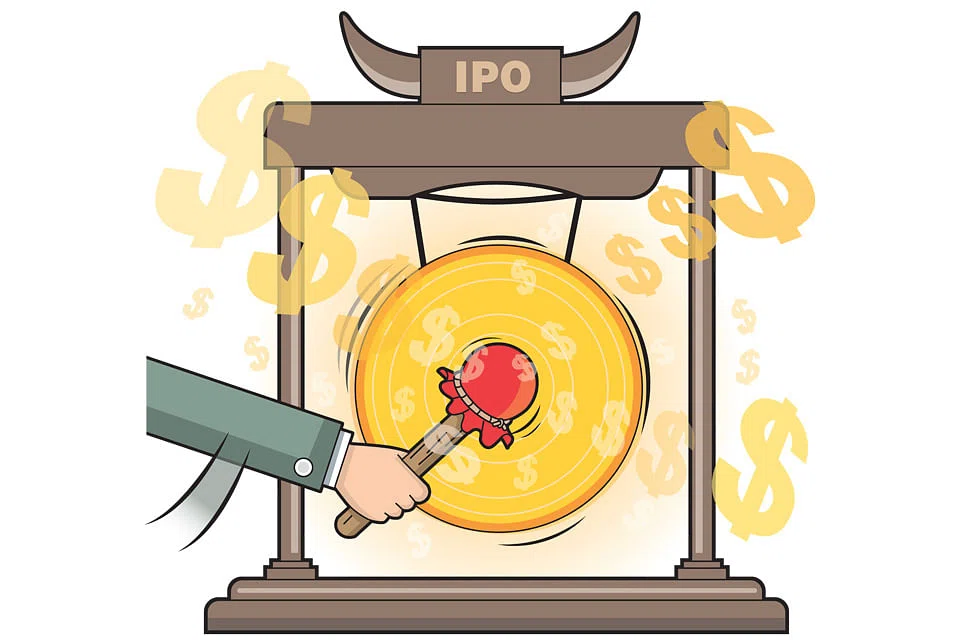
THE battle for initial public offerings (IPOs) is intensifying in Asia, where stock exchanges have either overhauled their rulebooks or are in the process of doing so to attract the next wave of new economy companies from South-east Asia and India to take the SPAC route to go public.
A SPAC, or special purpose acquisition vehicle, is a blank-cheque company that raises money in capital markets to acquire privately held targets, helping them skip lengthy and expensive IPO processes.
Even American bourses such as the New York Stock Exchange (NYSE) and the Nasdaq stock market - the world's two biggest stock exchanges - are turning their attention more than before to these IPO aspirants outside of China to make up for the lost revenues from absent Chinese issuers. The latter alone made more US IPOs in 2021 than companies from the rest of Asia over the past decade, according to Refinitiv data.
Alex Ibrahim, NYSE's head of international capital markets, said exchange officials had been spending a lot of time focused on the region and believed this would continue.
"Outside China, we're starting to see a lot of movement in South-east Asia, namely Singapore, Indonesia and Malaysia, especially in the tech space," he said. In an earlier interview with S&P Global Market Intelligence, Ibrahim also indicated interest in Israel and South Korea.
The pipeline is extremely tech-focused but NYSE is working with some consumer companies in Asia that could tap the US market in the near future.
Compared to the first-half of 2021 which saw 35 Chinese listings in the US, the second-half of the year saw only three, according to EY. Cross-border IPO activity practically dried up after China's tightened supervision on overseas listings and US regulators' demand for greater disclosures from New York-listed Chinese companies.
Sachin Mittal, senior analyst at DBS Group Research, noted that SPACs are starting to turn to Asia, with 2020 witnessing public listing proceeds via SPACs of US$3.7 billion, up five times from the 2019 level of US$0.70 billion.(see Amendment note)
FWD, the Hong Kong-based insurance group backed by billionaire Richard Li, was the latest group to pull plans for a US IPO on risk of intervention from both Chinese and US regulators. Its change of heart followed Chinese ride-hailing group Didi Chuxing which said it would delist from the NYSE just five months after its debut.
In contrast, deal numbers rose in Asean by 19 per cent on year, while proceeds increased by 71 per cent, according to EY. The Indonesia Exchange (IDX) led by deal numbers and proceeds (55 IPOs worth US$4.8 billion), with the listing of two mega IPOs: PT Bukalapak.com Tbk (US$1.5 billion) and Mitratel (US$1.3 billion).
Indonesia had the second highest concentration of unicorns (6 of the 30 Asean unicorns compared to Singapore with 15). The Stock Exchange of Thailand ranked second by deal numbers and proceeds (40 IPOs worth US$4.1 billion), and hosted two mega IPOs during the year.
In a recent interview with the Financial Times, Bob McCooey, Nasdaq's Asia Pacific chair, said the entire region is ripe for IPO activity: "The pipeline has grown from a handful of companies, if you asked me a year ago, into a few dozen today. He reckoned over time the region could become as big a source of business as China was until recently.
Like China, Indonesia and India are seen as the biggest areas of opportunity because of their large populations and growth potential. Other markets include Vietnam, Thailand and Malaysia.
As Asian companies and sponsors jumped on the SPAC bandwagon, regulators and exchanges in Asia have been forced to take note.
The Singapore Exchange (SGX) launched its SPAC listing framework in September 2021. In December, Malaysia's Securities Commission (SC) revised its SPAC rules to promote SPAC listings, and the Stock Exchange of Hong Kong Stock (SEHK) also rolled out its new listing regime for SPACs to list in January.
To attract more tech listings, the Indonesia Stock Exchange, or IDX, will adjust the requirements for companies applying to go public. Under the new rules, profitability and net tangible assets are no longer the main financial measures. Companies like GoTo, Traveloka, Tiket.com, SiCepat, and Blibli are reportedly planning to go public in Jakarta next year.
SGX is the first Asian bourse to unveil new rules to accommodate SPAC listings since a number of Asia-headquartered SPAC listings took off in the US towards the end of 2020. On Dec 29, global alternative asset manager Tikehau Capital and its partner Financière Agache, the family office of LVMH Group controlling shareholder Bernard Arnault, received an eligibility-to-list (ETL) its SPAC from the SGX. This came a few days after venture capital firm Vertex Venture, also backed by Singapore's investment company Temasek, said its SPAC, Vertex Technology Acquisition Corporation (VTAC), has received an eligibility-to-list letter from SGX.
Its SPAC listing framework is broadly similar to the US regime. But it does boast of unique "guardrail" features such as a higher minimum market capitalisation threshold of US$110 million compared to the US requirement of US$50 million to US$100 million; founders or sponsors of the SPAC must subscribe to at least 2.5-3.5 per cent of the IPO tranche depending on the market value; and a dilution cap on warrant. The SGX framework also treats a de-SPAC akin to an IPO, unlike the US where it is reviewed like any other post-listing merger and acquisition transaction, which paves the way for a speedier listing as compared to a traditional IPO review.
DBS's Mittal said: "SGX's SPAC framework stands out from other bourses, with its enhanced investor protection mechanisms (which are less prevalent in other markets), without compromising on the flexibility and competitiveness of its framework."
Following SGX's amendment of its listing rules, the Hong Kong stock exchange consulted on creating a listing regime for SPACs to meet interest from companies.
According to Johnny Lim, director, and Michael Kwan, associate director, at Reed Smith Resource Law Alliance, HKEx's regime is more strict than the rules prescribed by SGX's: SPACs participation is limited to professional investors whereas SGX accepts both retail and non-retail participation; warrants issue price must be at least 15 per cent above IPO issue price (the warrants issue price for the SGX cannot be lower than the IPO issue price); 100 per cent lock-up on IPO proceeds (instead of 90 per cent for US and Singapore); among others.
They said: "As SPAC activity continues, listing frameworks would, in parallel, continue to evolve and be refined. It would be interesting to see if there would be increasing confluence or divergence in the listing frameworks adopted by various jurisdictions, as bourses seek the fine balance between a "SPAC-tacular" product while mindful of its "SPAC-culative" nature.
But replacing the loss of Chinese listings in the US will be difficult. There are 80 so-called "unicorns" - private companies worth more than US$1 billion - in the Asia-Pacific region outside China, according to CB Insights, but none has the scale of giants such as Alibaba, the Chinese e-commerce company that was worth US$128 billion when it went public in 2014.
Amendment note: The sentence "Sachin Mittal, regional head of telecom & technology (Fintech & e-commerce) at DBS has been amended to "Sachin Mittal, senior analyst at DBS Group Research" to reflect Mittal's official designation.
Decoding Asia newsletter: your guide to navigating Asia in a new global order. Sign up here to get Decoding Asia newsletter. Delivered to your inbox. Free.
Copyright SPH Media. All rights reserved.
TRENDING NOW

Grab CEO’s wife Chloe Tong on life with Anthony Tan and finding her purpose
Three ex-employees of Envy group join Ng Yu Zhi in bankruptcy

He built the Vingroup empire. Now South-east Asia’s richest man is handing some key roles to his sons

If AI has a one-in-five chance of destroying us, what do we do with the remaining four?

