

TerraUSD stablecoins collapse, MAS reiterates crypto warning
Slump has fuelled concerns over larger stablecoins Tether, USD Coin and Binance Coin - which collectively have about US$150 billion in liabilities - and their ability to cover investor withdrawals

Angela Tan
STABLECOINS are proving to be not so stable after TerraUSD (UST), which is meant to keep a 1-to-1 peg with the US dollar, lost more than 70 per cent of its value in a matter of days, burning investors and leaving regulators exasperated that their warnings have fallen on deaf ears.
On Thursday (May 12), the Monetary Authority of Singapore (MAS) warned that certain cryptocurrencies are promoted as having a stable value, commonly known as “stablecoins”, but even such stablecoins have experienced fluctuations in market price. “MAS has consistently warned the public on the risk of trading in cryptocurrencies. Cryptocurrencies are highly volatile and often not anchored on economic fundamentals. This means that it is highly risky and not suitable for retail investors.”
MAS’ managing director Ravi Menon has said the central bank is reviewing an appropriate regulatory approach towards stablecoins, taking into consideration issues such as the backing for stablecoins which has an impact on their price stability.
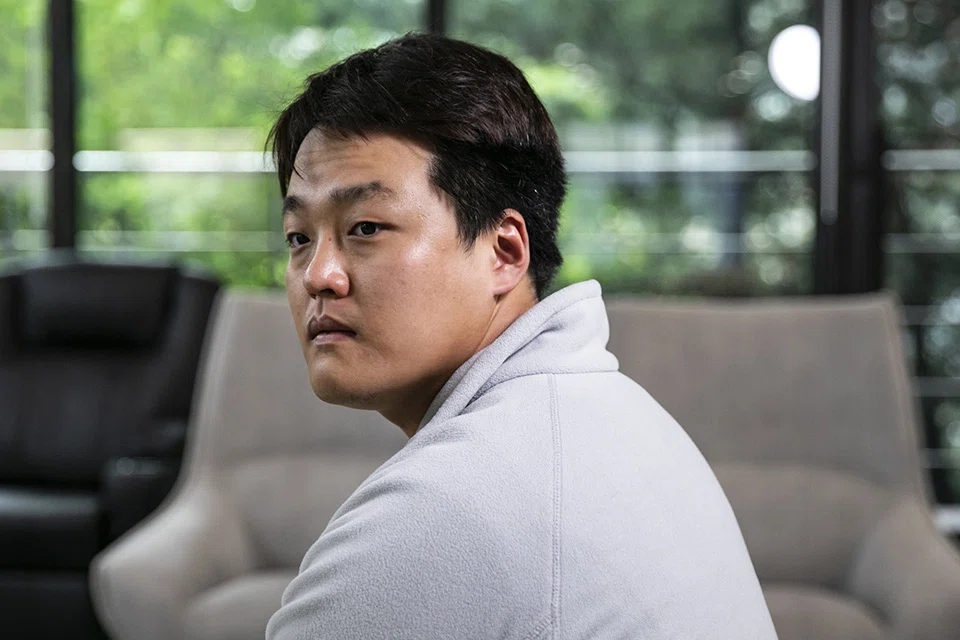
Two main tokens from embattled crypto project Terra Luna went into free fall mid-week. Founded by Daniel Shin and Do Kwon, Terra Luna was reported to have US$18 billion in investor funds as of last week. Now, it is teetering on the brink of collapse after its best-known stablecoin - UST - plunged to as low as US$0.26. It was trading at US$0.57 at the time of writing, still significantly below its intended US$1 peg.
Sister token Luna fell by 95 per cent as holders of UST sought to redeem their stablecoin for Luna tokens. The latter have a floating price and serve as shock absorbers for UST by guaranteeing that anyone holding US$1 of UST should be able to redeem US$1 worth of Luna. The Luna was trading around 27 US cents at the time of writing, much lower than UST.
Stablecoins, as they are named, are supposed to be less volatile than cryptocurrencies. They are typically backed by either dollar collateral or crypto collateral.
But unlike other stablecoin projects, Terra’s UST is not backed by anything. It runs on an algorithm that burns Luna as demand for UST increases, or vice versa. Hence, if UST drops to US$0.50, an arbitrageur could buy 100 UST for US$50 and redeem it for US$100 of Luna.
“While it is not yet fully clear what caused the draw downs, in the world of traditional finance the closest comparison would be a bank run,” said Sipho Arntzen, Next Generation Research Analyst at Julius Baer.
In response to the evolving crisis, Singapore-based Luna Foundation Guard (LFG) - acting akin to a central bank for UST - have sought to raise US$1.5 billion from investors in the traditional financial markets to shore up the UST token, with prospective investors reportedly being offered the opportunity to buy the Luna token at half of the prevailing spot price. The Business Times understands that LFG is not a MAS regulated entity.


Not surprisingly, UST’s plunge is fuelling concerns over rising risks of the US$180 billion stablecoin industry, as well as the logic of requiring a centralised authority and traditional financial markets to rescue what was considered a decentralised ecosystem.
Vijay Ayyar, vice-president, Corporate Development and Global Expansion at crypto currency exchange Luno, fears the collapse of UST will see regulators pay an even closer attention to stablecoins.
While Terra has yet to detail what happened, speculations are rampant, ranging from a coordinated attack, large-scale selling by project owners or intentional players, to simply, selling pressure as investors rotate back to cash.
Mudit Gupta, the chief information security officer at Polygon - an Ethereum scaling platform - highlighted that just before the UST dump, Terra removed US$150 million of liquidity from Curve - an Ethereum-based exchange - and US$84 million in UST was bridged to Ethereum. Terra’s chief executive, Do Kwon, was suspected of the US$84 million dump, but he has denied this on Twitter.
“The problem is that so long as the price of UST is below its peg, this creates an arbitrage opportunity for users to burn UST and mint Luna, and this will continue until UST restores its US$1 peg,” explained a crypto expert in Singapore.
The collapse has sent shockwaves through the entire decentralised finance (DeFi) industry, and rattled the crypto world which is seeing daily fluctuations of 20-40 per cent. Bitcoin is down about 20 per cent, trading below US$30,000. It has also resurrected concerns over larger stablecoins Tether, USD Coin and Binance Coin which collectively have about US$150 billion in liabilities and their ability to cover investor withdrawals.
There is no official figure on how many Singaporeans may be affected. Experts said UST adoption may not be significant, but there has been growing interest as the stablecoin is among the top 10 coins in terms of market capitalisation.
“UST is famous for its 20 per cent interest yield,” said the crypto expert, who withdrew his UST investments 2 months ago when he felt Terra’s projects were growing faster than its funding reserves.
Terra’s Anchor Protocol is a loan system designed to work with UST. It offers a 20 per cent yield for users, who can take loans or deposit savings. It also has a payment app that comes with a debit card and allows merchants to accept payments for their products and services.
Do Kwon unveiled a much-awaited recovery plan in an elaborate Twitter thread on May 11, but experts said it would be challenging to restore the peg without white knights.
Buyers beware
Representatives from Singapore’s crypto industry associations called for consumer caution in trading algorithm-based stablecoins.
Frederick Fung, chairman of the Association of Crypto-currency and Blockchain Enterprises and Start-ups Singapore, noted that algorithmic stablecoins are “experimental by design” and present unique risks.
“They are designed to mimic the value of the US dollar rather than to be actually pegged to it. Even with centralised stablecoins, these are designed via collateralisation of fiat. At the end of the day, these are not legal tender and retail audiences should exercise caution when trading cryptocurrency,” Fung explained.
Terra’s collapse is not unprecedented, said Chia Hock Lai, co-chairman of Blockchain Association Singapore, who pointed to the industry’s past failures with algorithmic stablecoins. Defi token Titan, which was used to finance the partially collateralised stablecoin Iron, crashed to near-zero last year, in what project creators described as “the world’s first large-scale crypto bank run”.
National University of Singapore law professor Kelvin Low, who researches on cryptocurrencies, said: “The first thing to note is that there is no 100 per cent guarantee that the peg will hold unless the stablecoin is 100 per cent backed by pure cash. As far as I know, no one does that.”
Stablecoins backed by other crypto assets present a problem because if one has to sell the assets to defend the peg, this will drive their prices down, he added. Stablecoins also often provide unaudited accounts of the so-called reserves backing their coins.
Additional reporting by Kelly Ng
Decoding Asia newsletter: your guide to navigating Asia in a new global order. Sign up here to get Decoding Asia newsletter. Delivered to your inbox. Free.
Copyright SPH Media. All rights reserved.






