

167 Singapore fintechs, financial institutions tap government digitalisation support

Kelly Ng
Singapore
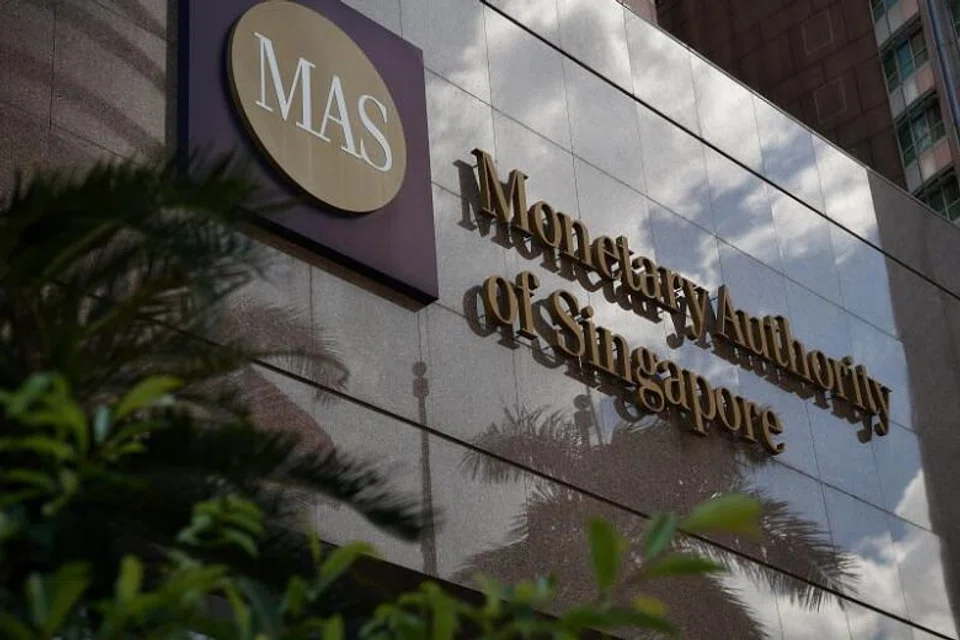
SOME 167 fintech firms and financial institutions have signed up for digitalisation grants, two months after the government rolled out a S$125 million support package for the industry.
Close to 4,700 industry professionals are also taking advantage of training subsidies and allowances offered under the package, which cover up to 90 per cent of fees for courses accredited by the Institute of Banking and Finance (IBF).
The Monetary Authority of Singapore (MAS), which announced the package in April, has set aside almost three quarters of the funds, or S$90 million, for supporting workforce training and manpower costs; the remaining S$35 million will go towards strengthening digitalisation and operational efforts.
Thus far, firms that have tapped the digital acceleration grant - firms must not have more than 200 employees to be eligible - under its Institution Project track have done so primarily to offset fees for cloud subscriptions and data-related services, to strengthen operational resilience or enhance office productivity and customer engagement, the MAS said.
Under this track, the regulator supports up to 80 per cent of the firm's qualifying expenses for the adoption of digital solutions. Of the 165 applications received under this track, 87 were submitted by fintechs and 78 by financial institutions.
Digital financial advisor Endowus, for instance, has used the funds to adopt digital tools such as Zoom and Castr.io (a live-streaming solution) to host webinars, which has helped it reach new customers at a faster rate, said its chief executive Gregory Van.
"Through (online webinars), we have been able to acquire an average of 50 per cent new leads with each session, more than 32,000 views and a watch time of over 8,600 hours since we started in early March," he said.
Endowus received S$120,000 from the digital acceleration grant.
The MAS also received two applications under the grant's Industry Pilot track, which supports collaborations among at least three smaller financial institutions - which the regulator defines as having not more than 200 employees - to customise digital solutions for use within their institutions.
One of these Industry Pilot projects involves five financial institutions working with Canopy, a data aggregation and visualisation platform, to collect data from multiple custodian banks in a comprehensive and consistent format.
These institutions have thus been able to redeploy employees, who previously processed data manually, to take on more value-added tasks, such as data analysis and customer service.
Canopy founder Tanmai Sharma said: "The current challenge is that banks deliver the information to external asset managers in different formats. As with all complex datasets, there are challenges to make the data complete and consistent. The industry pilot focuses on improving the data quality and processing speed so that external asset managers can focus more time on managing the client investments instead of processing data."
Multi-family office L-Bridge Capital is one of the five financial institutions in this industry pilot.
Its chief executive, Yenny Samad-Wong, said: "Our people will be able to spend less time generating customised reports and dedicate more time to navigating clients' portfolio in such a volatile period."
To upskill their staff, 36 financial institutions have also applied for MAS' grants to sponsor 2,815 employees for IBF-accredited courses; another 1,864 trainees are using these grants to put themselves through this training.
As at May 31, the MAS had received 29 applications under the Finance Associate Management Scheme, in which the authority will double its salary support for financial institutions to hire Singapore citizens who are fresh graduates or workers from other sectors.
L-Bridge Capital is one of the applicants. It hopes to use this scheme to boost its new management-associate programme for fresh graduates.
Chionh Chye Kit, chief executive and co-founder of regulatory technology firm Cynopsis Solutions, commends the support package for its comprehensiveness.
Cynopsis has acquired a S$120,000 digital acceleration grant, which has alleviated some cost pressures. The company has received enough in subsidies to send more than half its staff for training.
Mr Chionh said: "The training grant has allowed us to invest in our people at a time when most others might be cutting costs. The digital grant has been helpful also in that the MAS pays it out upfront, and whatever that's unused will be returned later."
Separately on Wednesday, the Singapore FinTech Association launched a self-assessment framework aimed at expediting ventures between fintech firms and financial institutions. The framework lays out basic requirements for fintech firms servicing financial institutions.
This tool helps fintech firms assess their compliance readiness and enhances financial institutions' confidence when partnering with them, said the association.
TRENDING NOW

He built the Vingroup empire. Now South-east Asia’s richest man is handing some key roles to his sons

Despite the de-dollarisation debate, demand for dollar liquidity in Asia is growing

Can a first-time homebuyer couple earning S$18,000 a month afford a new EC unit?

Asia needs new energy security architecture

