

95 serious 'adverse events' out of 2.2m Covid-19 vaccine doses in Singapore

Singapore
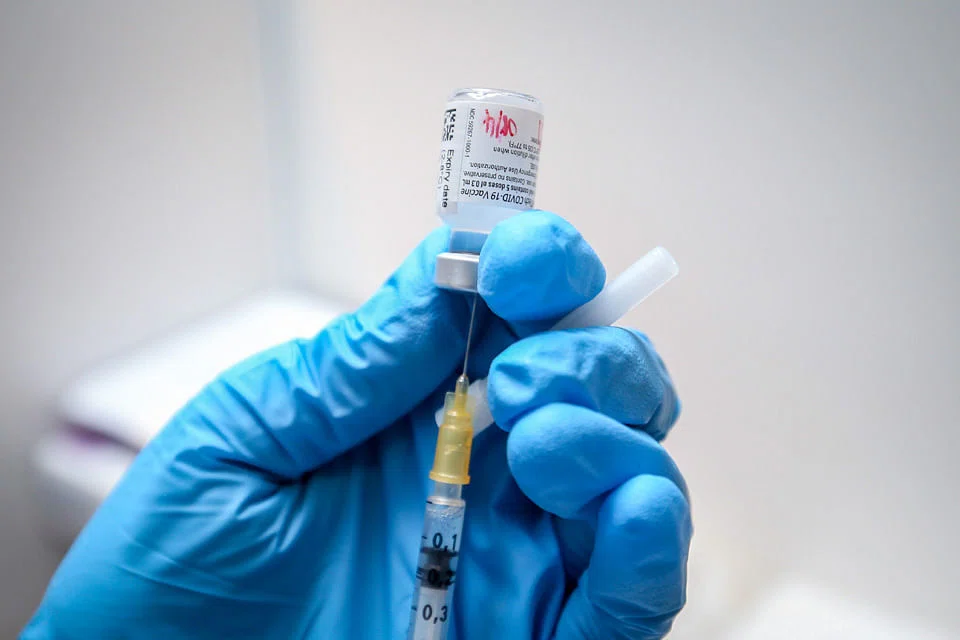
OUT of more than 2.2 million doses of Covid-19 vaccines administered in Singapore, 95 have been associated with serious suspected "adverse events" - or possible side effects - such as anaphylaxis, the Health Sciences Authority (HSA) said in the first of a series of monthly updates on vaccine safety.
"Based on available data, the benefits of the Pfizer-BioNTech and Moderna Covid-19 vaccines continue to outweigh the known risks in a pandemic," said the HSA, adding that it will continue to actively monitor the safety profile of the vaccines.
There have been no deaths associated with the vaccine in Singapore.
This first update covers Singapore's vaccination efforts from the beginning, on Dec 30, till April 18. Combined figures were given for the Pfizer-BioNTech and Moderna vaccines, with the former comprising 92 per cent of doses administered.
There were 2,796 reports of suspected adverse events, representing 0.13 per cent of administered doses.
The most common of these were a rash, mentioned in about a quarter of such reports, as well as hives; dizziness; and angioedema, or the swelling of the eyelids, face, and lips, which were each respectively cited in about a 10th of the reports. Other commonly reported adverse events included fever, muscle aches and pain, and shortness of breath.
Individuals aged below 60 years old accounted for 70 per cent of the cases, though they only formed about half of those receiving the vaccines. This is in line with clinical trial findings, said the HSA.
All "adverse events" are only suspected ones, as there are no confirmatory tests for determining whether they were directly caused by the vaccine, said HSA. The events must be assessed and interpreted in the context of baseline incidence rates - that is, their rate of occurrence in the general population without vaccination.
Out of all suspected events, 95 - or 0.004 per cent of administered doses - were classified as serious. These included 20 cases of anaphylaxis, which is a severe life-threatening allergic reaction, and 20 reports of other severe allergic reactions.
The incidence rate of anaphylaxis here is 1.4 per 100,000 doses administered, similar to overseas rates of around 0.5 to 2 per 100,000 doses.
Other serious events include breathing difficulty, fast heart rate, an increase or decrease in blood pressure, chest discomfort, fainting, limb numbness or pain, changes in vision, and an increase in liver enzymes.
Separately, the HSA has been monitoring the occurrence of Bell's palsy, a temporary weakness or paralysis of the facial muscles that has historically been reported with vaccines.
There have been 25 cases associated with Covid-19 vaccines here, most non-serious. The estimated local incidence rate is 3.45 per 100,000 persons per month, within background incidence rates of 1.1 to 4.4 per 100,000 persons per month.
While cases of unusual blood clots associated with low platelets have been reported with different types of Covid-19 vaccines overseas, no such cases have been reported here.
As for heart attacks and strokes, these did not occur at a greater frequency than usual among vaccinated persons here.
The 2.2 million doses administered in the period under study included a jfirst dose for 1.36 million persons, of which 849,764 went on to receive a second dose.
Much is known about possible adverse events associated with the Pfizer-BioNTech and Moderna vaccines, said Teo Yik Ying, dean of the Saw Swee Hock School of Public Health at the National University of Singapore.
With so many doses of those two vaccines having been administered worldwide - for instance, the United States has administered 240 million doses as at May 5 - it is unlikely that there are many remaining unknown effects, he said.
Dr Teo also addressed the cases of Covid-19 infection in vaccinated persons, including in the Tan Tock Seng Hospital cluster.
He urged the public not to interpret the cluster as a sign that vaccination is ineffective. In fact, that cluster shows that the vaccine has effectively protected against serious symptoms of infection, he said.
TRENDING NOW
Far East Organization’s The Serra Residences sells less than a quarter of units released at average S$3,460 psf

Once staunchly pro-China, Malaysian Chinese businesses are now distancing themselves from Beijing
Ageing in Asia: Huge potential for the consumer economy

DBS, OCBC, UOB face rate hike reality check

