

A blueprint to turn China into tech superpower?
Focus in communique is on need to strive for technological independence and boosting domestic consumption, while remaining attractive for high-end foreign investment
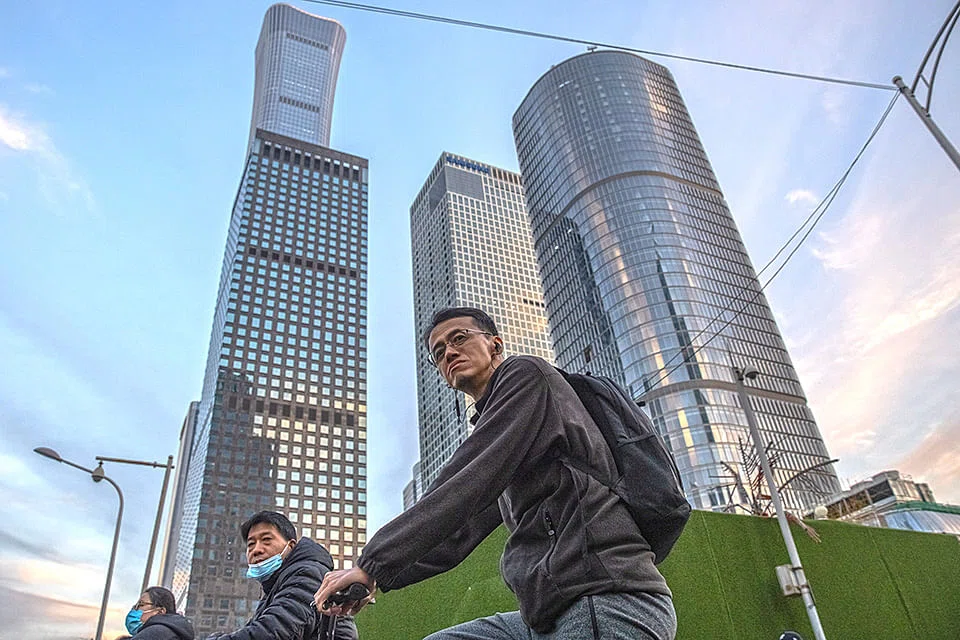
Beijing
INNOVATION, technology and self-reliance were the key takeaways from China's latest blueprint for its next five-year plan running through to 2026.
In a communique released late on Thursday, at the end of a four-day plenum meeting, Beijing revealed the first glimpse into its policy goals for the medium to long term. As expected, the focus was on the need to strive for technological independence and boosting domestic consumption, while remaining attractive for high-end foreign investment.
The communique was published after a meeting which gathered the Chinese Communist Party's top 200 leaders. The final five-year plan with more specific targets will be voted on during the annual Parliament session next March.
"It is the first time that a five-year plan has dedicated a specific chapter to technology," said China's Minister of Science and Technology Wang Zhigang at a press conference on Friday
"We are willing to work with the world on climate change, energy change, public health and to try and create a friendly environment for technology innovation in China," he added, pointing to another priority of the government wanting to remain open.
This year's plenum is particularly important for the Chinese government. It comes as President Xi Jinping further consolidates his grip on the Party and as China's economy shifts from quantity to quality after a record drop in gross domestic product (GDP) in the first quarter.
The plenum also took place at a complicated moment for China internationally. The country is locked in a bitter trade war with the United States, which has unveiled its vulnerability and reliance on foreign technology.
"The top priority is boosting domestic production of semiconductors. They are China's single-largest import, even ahead of oil, and are crucial to sectors like AI (artificial intelligence) and 5G that the leadership hopes China can dominate," said Julian Evans-Pritchard, an economist with Capital Economics.
China is also facing rising geopolitical tensions with its neighbours in Asia as it looks to assert its leadership in the region.
While China seeks to leverage its success of how it handled the Covid-19 pandemic, a recent Pew Research survey showed that distrust of China among Western democracies has never been greater.
"Compared to five years ago, China is now facing a more complex global environment with lingering US-China issues. Protracted Sino-US tensions could also lead to multilateral pressure from US allies," said UBS in a report. "The disputes are not only about trade, tech, market openness and intellectual property (IP) protection, but also about values, rules of game, governance and geopolitical disagreements."
China mentioned its dual-circle economy" concept twice in the communique without being specific.
The catchphrase has been rolled out in multiple speeches over the past months and refers to the need of shifting growth to domestic consumption. While this is not new, it has become one of China's first priorities post-pandemic. No specific GDP forecast was mentioned in the document, a sign that the focus is now on high-end quality growth. The communique, however, pledged to raise the country's per capita output levels to that of "moderately developed countries" by 2035.
According to Tian Yun, the vice director of the Beijing Economic Operation Association, the economy has to grow at 3.5 per cent each year for the next 15 years. "It is a big target but it can be done if China's full potential is realised," he told the Global Times.
China also included a paragraph in the communique on the need for sustainable growth. Last month, Mr Xi announced that China would be carbon neutral by 2060. According to analysts, this is an ambitious goal as this would mean completely uprooting the country's industrial system.
Some observers said the specific mention of Beijing's policy guidance running through 2035 is a sign that Mr Xi sees himself in power at least until then. This means he will definitely remain president well past the traditional two-term limit that would have seen him step down next year.
READ MORE: In China, Big Tech isn't the enemy. It's the strategy
TRENDING NOW

Knight Frank’s Tan Tee Khoon leaves firm, Nicholas Keong takes over auction business
Keppel Energy, Sembcorp Utilities and Tuas Power to supply biomethane in pilot project

GovTech retrenches another 38 staff in second round of layoffs
Take-up of new private homes dives 45% in Q3 as prices accelerate with 1.4% rise

