Amid pandemic, unemployment and small business bankruptcy curves need flattening
THIS May Day, it is imperative that we thank our essential services and frontline workers, and especially the migrant workers who come to Singapore to build our beautiful city. These migrant workers earn low wages, live in cramped quarters and now have the highest number of Covid-19 cases on the island state.
Their families back home must be worried about their health and well-being, and I hope they take comfort in Prime Minister Lee Hsien Loong's commitment that "we will care for you, just like we care for Singaporeans . . . We will look after your health, your welfare and your livelihood. We will work with your employers to make sure that you get paid, and you can send money home." During these extraordinary times, when a health pandemic disproportionately threatens the lives of those most vulnerable, PM Lee's leadership provides hope and optimism.
Employment outlook
The global economy has been dealt a significant blow as companies shut down production and discontinue services. Around the world, lockdown measures have people staying home as opposed to producing or consuming goods and services. With no revenue coming in and costs such as rent have to be paid, it is not sustainable for businesses to maintain employment. Employees are laid off or asked to take no-pay leave. As a result, the worldwide employment outlook does not look rosy in the short to mid term and possibly even the long term, depending on how governments play their cards.
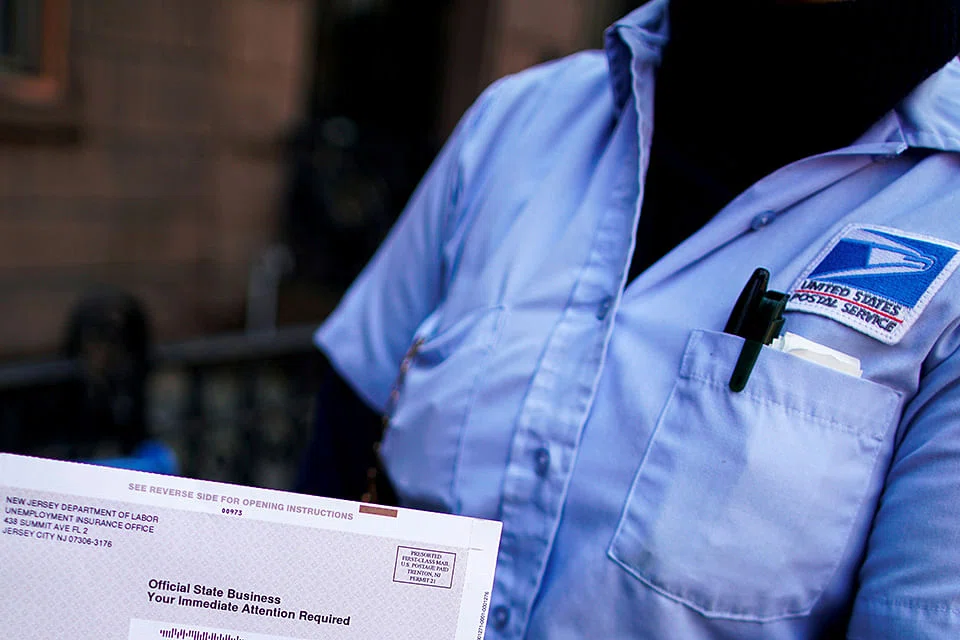
As of mid-April, 26 million people have filed for unemployment in the United States, and that number continues to rise as the world's largest economy is at a standstill.
In Singapore, the unemployment rate is expected to be around 4-5 per cent, more than double the 2.3 per cent rate in 2019, and higher than the 4.1 per cent figure recorded during the 2008 financial crisis.
Different government folks, different strokes
Ideological differences among governments on how to prop up the economy are more apparent than ever. Countries such as Singapore, Germany and South Korea are helping businesses by protecting workers and paying for wages. These employees will return to a job when the restrictions are lifted.
By contrast, the US government provides unemployment benefits by giving a direct transfer to help the unemployed tide over this difficult period. Thus, companies have fewer qualms in laying off employees, resulting in an even higher unemployment. On the other hand, China and India have not done much to protect workers. These are two extreme models, and there are no prizes for guessing which one workers prefer.
In the first model, governments step in as the backstop to help save businesses and workers from this crisis. This is a great outcome for the labour force, and also for the countries in the long run.
Looking beyond the virus curve
From an economic perspective, the main concerns arising from this crisis are unemployment and bankruptcy. As the healthcare system flattens the viral curve, the unemployment and small business bankruptcy curves are steepening. The question is whether fiscal stimulus and monetary relief can be used to dampen both these curves together.
The only way these two curves can be flattened jointly is through effective government policies.
For instance, the US is letting businesses fire their employees and claim unemployment insurance at the same time. By doing so, businesses are likely to take the government relief and substitute capital for labour.
In Singapore, the government is paying a substantial part of the wages that businesses would have paid. This allows businesses to furlough their employees instead of laying them off. In the longer term, this flattens the unemployment and bankruptcy default curves jointly. Another area of contention is the argument that small businesses and not large corporations should be protected as the former employ a vast majority of the workforce and are the engine of economic growth. Here again, the US - due to ideological and political reasons - is catering to political donors who own large businesses and giving bailouts to them.
Fiscal stimulus or monetary relief
Banks and governments can alleviate the stress on small businesses, but there are caveats involved.
Banks can offer monetary relief through forbearance plans where new lines of credit can avert default and bankruptcy on existing debt. However, this raises private debt where in the long run, interest rates will rise, causing declines in consumption and revenue.
Fiscal stimulus by governments creates public debt by providing relief without burdening small businesses. This approach makes sense for countries with significant reserves such as Singapore. As these costs are "once in a hundred years", governments that can, should bear them in such extraordinary circumstances. Over time, the economy will be more resilient and the government can recoup the debt by higher tax collection.
For countries that have a huge existing debt and are taking on even more, such as the US and UK, both private and public debts will have significant negative implications in the long run. Long-term interest rates will rise, causing employees, businesses and even governments to spend more to service debts. This will eventually result in decreased private and public consumption and suppress economic growth in the long run.
Every economy is different, and there is no magic bullet that will solve the unprecedented issues that are arising. However, it is clear that every organisation and individual needs to do their part to save businesses and jobs.
So on May 1 today, let us reflect upon what Labour Day means both as an employer and employee. Now, more than ever, it should mark solidarity among workers and honour their contributions to nation building.