

Asean factory reopening raises prospects for Singapore exports growth into 2022

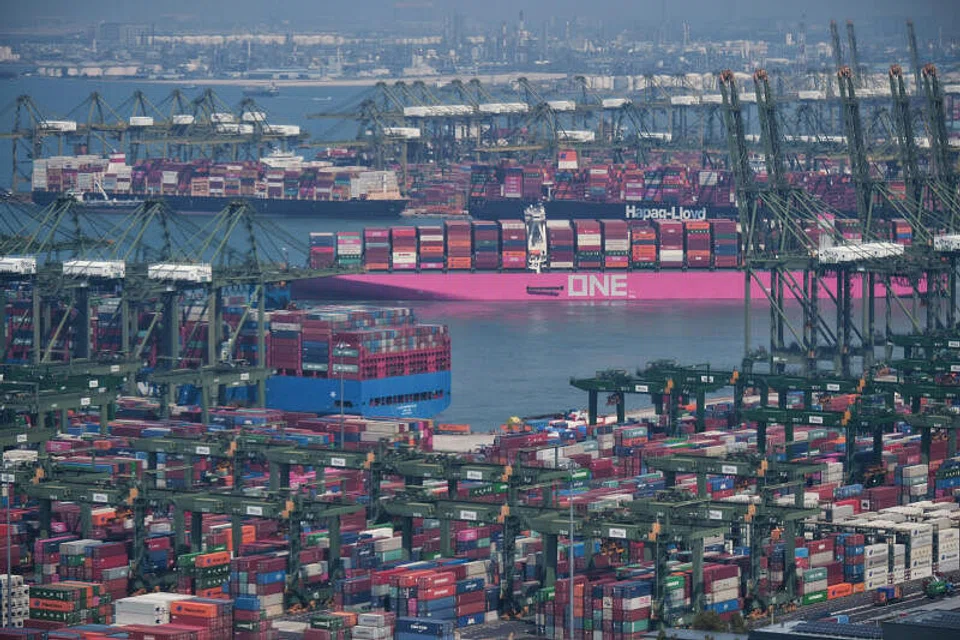
DEMAND from the other Asian markets helped propel Singapore trade to an 11th month of growth in October, as non-oil domestic exports (NODX) rose at their fastest pace in 4 years.
NODX rose by 17.9 per cent year on year in October, up from 12 per cent growth in the month prior, trade agency Enterprise Singapore (ESG) reported on Wednesday (Nov 17).
Shipments to mainland China - Singapore's biggest single market - were up by 35.6 per cent. Other major Asian destinations included South Korea (56.6 per cent), Taiwan (32.7 per cent) and Malaysia (29.4 per cent).
"China's slowdown has not impacted Singapore's exports so far," Chua Hak Bin and Lee Ju Ye, economists at Maybank Kim Eng, wrote in a morning report. "The economic reopening and improving demand in Asean, including Malaysia and Indonesia, is also supporting trade."
Noting that rising levels of vaccination in South-east Asia will avert supply chain disruptions from virus-related factory closures, Chua added: "Factories are reopening across Asean and catching up on their orders, which augurs well for Singapore's export outlook going into 2022."
In fact, the Asean reopening could bode well for Singapore's export sector in the next few years, Oxford Economics senior economist Jung Sung Eun also told The Business Times (BT).
"We expect below-trend growth for the Asean-5 this year despite favourable base effect. But as growth catches up, we forecast they will record above-trend growth in 2022 and 2023, which will likely lead to increased import demand," she said.
Dubbing an Asean recovery positive for Singapore's NODX, Alvin Liew, senior economist at UOB, told BT: "The regional consumption demand is also gaining importance and Asean consumers will likely be a key source of demand for Singapore's exports, once the region is able to keep the pandemic well under control."
Granted, NODX to the United States slipped by 3.9 per cent year on year in October, reversing September's 21.9 per cent increase, which Liew called "the main disappointment". But "while US and China continue to remain the key export destinations, not just for Singapore but for many regional economies, intra-regional trade has been seen as an increasingly important growth driver".
October saw broad-based growth in NODX, with electronics shipments up by 14.9 per cent and non-electronics shipments up by 18.9 per cent.
ESG attributed the gains to "robust global semiconductor demand" that boosted exports of integrated circuits and specialised machinery, while non-monetary gold and petrochemical exports increased on a low base.
Jung told BT that electronic exports should stay strong in 2022 on the back of a semiconductor up-cycle, adding: "While we expect bursts in non-monetary gold to be transitory, exports of specialised machinery and transport equipment could pick up further as businesses normalise and investment improves next year."
Liew also said that pharmaceutical exports - while "notoriously volatile" - should "contribute materially to the non-electronics NODX growth, as the world transits into the endemic stage of the Covid-19 pandemic".
On a seasonally adjusted, month-on-month basis, NODX increased by 4.2 per cent, up from 1 per cent in September, to hit S$16.4 billion.
Non-oil re-exports, a proxy for the wholesale trade industry, grew by 17.8 per cent year on year, against 16.4 per cent the month before.
Total trade rose by 24 per cent, up from 18.6 per cent in September, with increases in both exports and imports. ESG attributed the growth to higher oil and electronics trade.
Jung suggested that total export growth will be driven more by services in 2022, on "a rebound in travel industry from a very low base", and forecasts real service exports to reach pre-pandemic levels by end-2022.
But in the near term, "demand for goods and imports will remain strong" despite a spending shift towards services in the festive season, Chua told BT, noting that the reopening of travel is "only partial" for now.






