

August unemployment rate hits decade-high; worst is not over
Resident unemployment rate up 0.4 point from July to 4.5% in Aug

Sharon See
Singapore
SINGAPORE'S unemployment rate in August rose to its highest level in over a decade, and economists believe the worst is yet to be over.
Resident unemployment rate, which includes Singaporeans and permanent residents, hit 4.5 per cent in August, a 0.4-percentage point increase from the previous month, according to data from the Ministry of Manpower (MOM) on Wednesday.
Marginally faster than the 0.3-percentage point rise in July, August's reading is just a notch lower than the 4.9 per cent seen during the peak of the Global Financial Crisis (GFC) in September 2009.
Meanwhile, August's overall unemployment rate, at 3.4 per cent, has edged past the previous recessionary high of 3.3 per cent, also seen in September 2009.
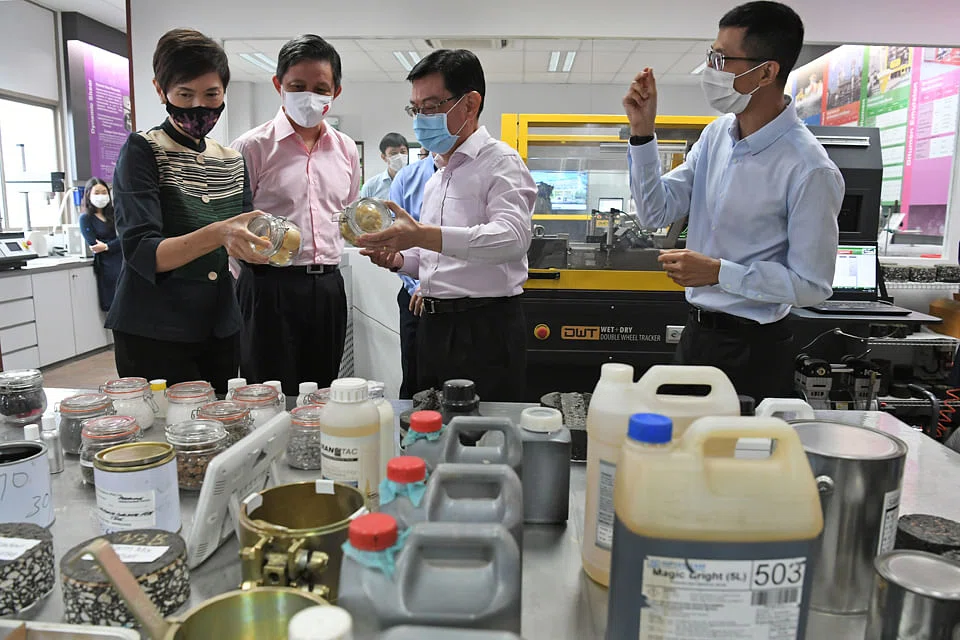
Speaking to reporters ahead of a visit to Samwoh Research & Development Centre, Manpower Minister Josephine Teo said: "We cannot tell at this point in time, whether in the coming months, the unemployment rate will uptick at a faster rate, or will it stay around the same.
"But nonetheless, we're keeping a very close watch, and when the next set of figures are available, we will share them with the public."
The ministry began tracking unemployment figures on a monthly, rather than quarterly, basis from July to monitor the situation more closely, Mrs Teo added.
Economists told The Business Times that the unemployment situation likely has not peaked yet, but offered varying degrees of pessimism.
Citi economists believe job losses in larger corporates are likely to increase, "if increased news flow on corporate retrenchments are any indication". This could bring resident unemployment rate above 5 per cent - or even above 6 per cent in "more bearish scenarios" - in the next few months, with disinflationary consequences, Citi said.
Selena Ling, chief economist of OCBC, said businesses in the hardest-hit industries like aviation, hospitality and entertainment may still be struggling to survive.
"Layoffs may continue to edge higher in the coming months if a vaccine is not made available, international borders are not reopened and global economies continue to struggle with resurgent waves of infections, which would still drag on business and consumer confidence," she noted.
DBS senior economist Irvin Seah said the fact that the current unemployment rate is comparable to that seen during the GFC - despite "significantly bigger" government support - shows the seriousness of the situation.
Even so, he believes Singapore is "at the bottom or near the bottom of the labour market cycle". This is because Singapore's economic contraction is likely to have bottomed out in the second quarter at 13.2 per cent year on year, and the labour market tends to lag behind the growth cycle by about one to two quarters, he said.
Another indicator, according to Mr Seah, is the mixed signals MOM's data appeared to send, which is "natural" at the bottom or peak of a cycle.
The latest Jobs Situation Report showed that 33,100 job seekers have been placed into the 117,500 committed opportunities in jobs and training available as of end-August, presenting a seemingly contradictory picture of the employment landscape even as unemployment figures rose.
Asked if the large number of vacancies also indicated underlying structural unemployment, Mr Seah said yes, adding: "The structural shift within the Singapore economy is happening too fast, and the middle-aged and older workers are scrambling to adjust to this transition."
This is especially apparent in the technology sector, which is aggressively hiring but is also having trouble filling roles due to a shortage of workers with matching skills, he said.
During the ministerial visit to Samwoh, Deputy Prime Minister Heng Swee Keat said what Singapore and the rest of the world is faced with is a "very sharp cyclical shock".
"There will be some degree of structural unemployment, but a lot of it is also cyclical shock of a very deep nature. There will also be some frictional unemployment and we're looking at how we can address this holistically, and that's why I'm also preparing for Budget 2021," Mr Heng added.
TRENDING NOW

Grab CEO’s wife Chloe Tong on life with Anthony Tan and finding her purpose
8 public officers referred to police over property buys near unannounced MRT stations: Chan Chun Sing
DBS tops trades in smaller board lots on debut of revised SGX framework

Deal between tycoon friends sparks scrutiny of Philippine power sector

