

Australia's unemployment rate unexpectedly falls but virus risks build
 Add BT as a preferred source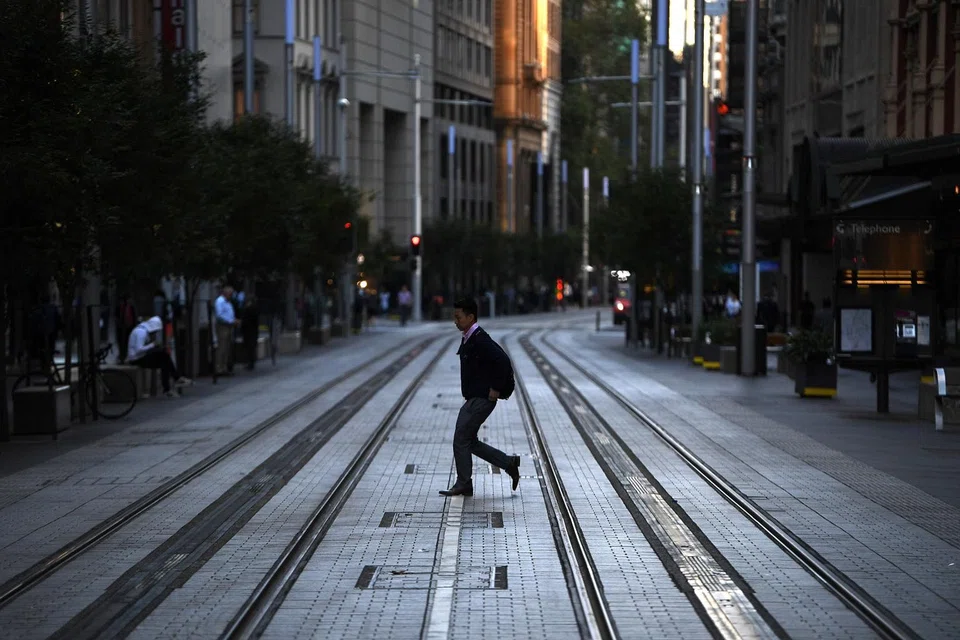
DeeperDive is a beta AI feature. Refer to full articles for the facts.
[SYDNEY] Australia's unemployment rate surprisingly slipped in February though risks are surging as travel restrictions and lockdowns related to the coronavirus pandemic threatened to push the economy into recession.
Data from the Australian Bureau of Statistics (ABS) on Thursday showed the jobless rate eased to 5.1 per cent when economists were expecting 5.3 per cent. A total of 26,700 new jobs were created in the month, more than the 10,000 expected.
The better-than-expected outcome did nothing to boost market sentiment as strained financial markets await further policy actions from governments and central banks.
The Reserve Bank of Australia (RBA), which cut its cash rate to a record low 0.5 per cent earlier this month citing the virus as a "significant" uncertainty, is likely to announce new stimulus measures later at 0330 GMT.
Economists expect it to cut interest rates to 0.25 per cent and launch its first ever quantitative easing programme in a bid to prevent the country's first recession in nearly three decades.
The RBA has already signalled it would consider yield curve control (YCC) as part of its quantitative easing programme, where it would buy local government bonds to help keep risk-free rates low and stable.
Navigate Asia in
a new global order
Get the insights delivered to your inbox.
Economists at major banks are still predicting a recession this year, which would take Australia's jobless rate to 6.5 per cent -7.5 per cent. The last time unemployment rose above 7.5 per cent was in 1998.
Prime Minister Scott Morrison's government has also flagged further economic measures on top of the A$17 billion of fiscal stimulus already announced.
The ABS said there was "no notable impact" in Thursday's figures from the coronavirus or recent bushfires that had ravaged large swathes of the country late last year.
The hit to employment is only just felt as Australia's flag carrier Qantas became the country's first major company on Thursday to stand down about two thirds of its workforce.
Qantas, which suspended all international flights, is in talks with grocer Woolworths Group about redeploying some of its workers.
REUTERS
Decoding Asia newsletter: your guide to navigating Asia in a new global order. Sign up here to get Decoding Asia newsletter. Delivered to your inbox. Free.
Share with us your feedback on BT's products and services
TRENDING NOW
Air India asks Tata, Singapore Airlines for funds after US$2.4 billion loss

Beijing’s calculated silence on the Iran war

China pips the US if Asean is forced to choose, but analysts warn against reading it like a sports result

Richard Eu on how core values, customers keep Singapore’s TCM chain Eu Yan Sang relevant

