Biden or Trump, there's no reset for US-Asia policy
Trade tariffs and supply chain shifts set to persist, but observers are still holding out for clarity on the direction the US will take after the election

Annabeth Leow
Singapore
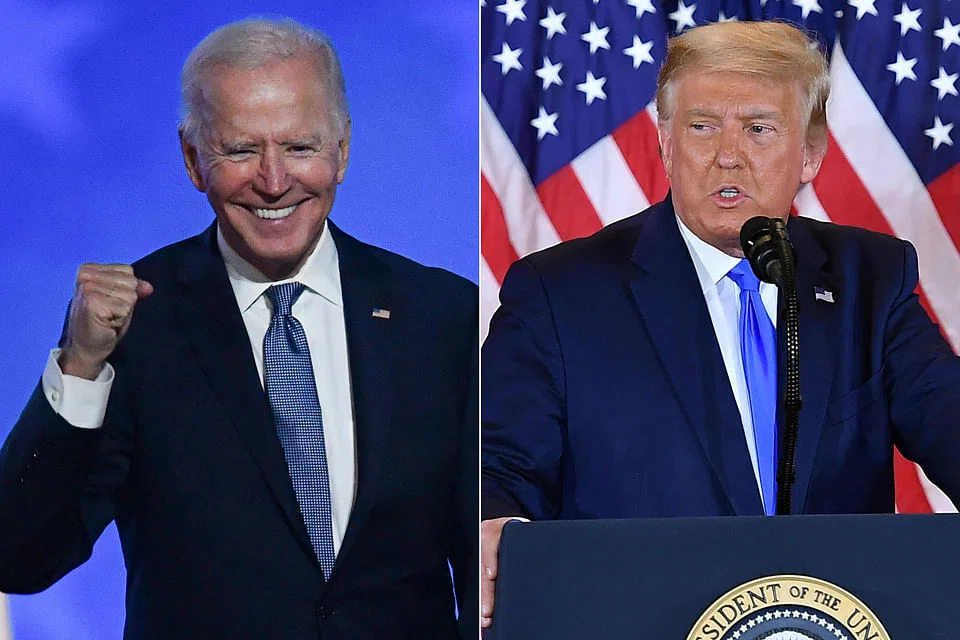
WHOEVER wins the White House - and the answer is still up in the air - there will be no big reset button for American policy in the Asia-Pacific.
That was the take from poll watchers on Wednesday, as ballot-counting in a closely-fought United States presidential election went into the night.
But, even with trends such as trade tariffs and supply chain shifts set to persist, observers are still holding out for clarity on the direction the US will take, once the electoral dust settles.
"While the presidential race is uncertain, it does look that there will be no change in who leads the Senate and the House - which still means a split Congress," Steven Cochrane, Moody's Analytics' chief Asia-Pacific economist, told The Business Times.
The Republican Party controls the Senate, while Democrats hold the House. As such, he expects "it would be difficult to get any significant legislation through Congress", which could cap any US economic rebound needed to boost global growth.
The president would have to rely mainly on executive orders, as US President Donald Trump has done with tariffs, he said.
That is even as US-China ties, foreign investment from both of the world's two largest economies, and trade and technology-related tensions are key issues at stake in the region.
Calling cooperation between the US and China paramount to regional success, Singapore Business Federation (SBF) chief executive Ho Meng Kit said tense ties "may reduce their commitments and investments abroad".
"Our businesses will need to assess the new dynamics of US-China relationship post-US elections," he added.
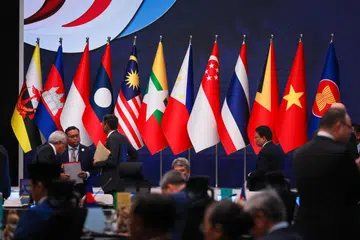
Robert Carnell, regional head of Asia-Pacific research at ING, told BT that Asean sits in the middle of the RCEP and CPTPP - a "trading love triangle", as he put it.
He was referring to two mega-free trade pacts: the planned Regional Comprehensive Economic Partnership, which excludes the US; and the Comprehensive and Progressive Agreement for Trans-Pacific Partnership, which replaces an Obama-era deal that Mr Trump withdrew from soon after he took office.
All the same, the 2020 presidential vote may not dramatically alter the Asian trade landscape, with Dr Cochrane saying: "Any change would be incremental under (Democratic candidate Joe) Biden, perhaps not so incremental under Trump."
Randall Kroszner, an economics professor at the University of Chicago Booth School of Business, also noted that both Mr Biden and Mr Trump have taken "a very hard line on China" in their approach to foreign policy.
"I don't think we would see a major policy shift under a Biden administration," he told BT, arguing that global trade tensions would likely persist even with a change in US leadership. "Biden would likely continue to pressure China for reforms that would open markets and provide stronger legal framework for foreign firms operating in China."
The relative lack of change could be a blow to hopes of a warmer climate for US policy in the region.
For instance, SBF's Mr Ho said "a Biden presidency suggests a more measured and multilateral approach to the global order" and would give Singapore businesses more certainty than Mr Trump's "America first" approach.
"Asean as a whole has not been really addressed by the Trump administration and this has to change," added Simon Tay, chairman of the Singapore Institute of International Affairs, citing US focus on a bloc that includes Japan, Australia and India, which he dubbed "specifically anti-China".
"Many US companies use Singapore as a preferred base to engage with the Asean region," he said. "But, in terms of a clear foreign policy and diplomacy, we want an America that is dependable and trustworthy. The last few years have been hard for Singapore and Asean."
One concern raised by Prof Tay was a "no-holds-barred war", where both the US and China push Singapore to pick an exclusive partner, despite the Republic's ability to "potentially anchor multiple supply chains".
On the bright side, Dr Cochrane believes that "decoupling between the US and China" will continue, fuelling a shift in supply chains out of China.
"That still poses some upside potential for much of South-east Asia - and, again, Singapore, as a hub of shipping, as a hub of high-tech manufacturing, R&D, finance," he said.
But with pundits' speculation over a "blue wave" of Democratic voters going unrealised, Mr Carnell dubbed Wednesday's political situation in the US as "the worst possible outcome for markets".
DBS chief economist Taimur Baig added: "China-US friction is unlikely to receive a breather. Same goes for Asia. (The) key takeaway (is that) policy uncertainty and volatility are here to stay."
To be sure, Rafik Mansour, the American chargé d'affaires ad interim in Singapore, told business leaders here on Wednesday that "we stand alongside our many partners - like Singapore - to advance a free and open rules-based order in this vitally strategic part of the world".
Speaking at an American Chamber of Commerce event in the morning, he said: "Regardless of the outcome of our election, I can be sure of one thing: The United States will remain a key player in the Indo-Pacific and a close partner to Singapore."
READ MORE: