

Biden's giant aid plan to be opening salvo in legislative battle
Wrangling could see a smaller bipartisan package, followed by a larger budget bill later in the year with Democratic priorities
Washington
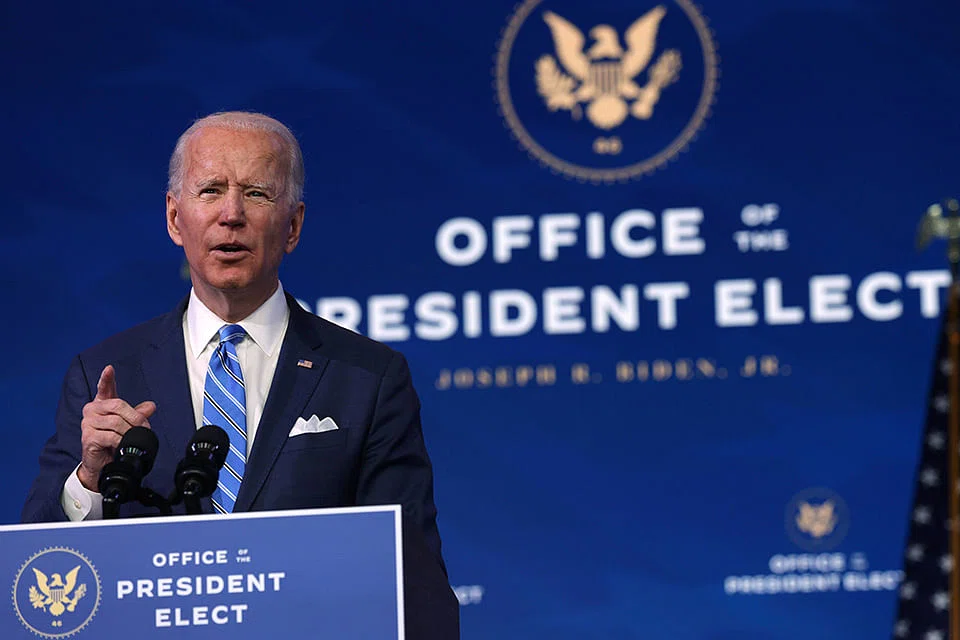
PRESIDENT-ELECT Joe Biden's US$1.9 trillion economic relief proposal serves as the opening salvo in a legislative battle that could be prolonged by the go-big price tag and the inclusion of proposals opposed by many Republicans.
"It's not hard to see that we're in a once-in-several-generations economic crisis," Mr Biden said on Thursday night in unveiling his plan. "We have to act and we have to act now."
The plan has elements that would likely appeal to enough moderate Republicans to gain favour in the Senate - including a US$400 billion effort to contain the coronavirus and speed the economy's reopening, as well as US$1,400 in additional direct stimulus payments.
Other parts are set to spur partisan warfare, including Mr Biden's proposals to more than double the federal minimum wage to US$15 an hour, provide large-scale aid for state governments and offer higher unemployment benefits through September.
Negotiations could end up producing a smaller bipartisan package in the coming weeks, followed by a larger budget bill later in the year with Democratic priorities. Mr Biden said he plans to unveil a second major package, aimed at longer-term economic rebuilding, at a joint session of Congress next month.
Republican Senator Marco Rubio of Florida kicked off calls for breaking the relief plan into pieces, tweeting that since Mr Biden served in the Senate for more than 35 years, "he knows the plan he outlined tonight can't pass quickly". Mr Rubio called for proceeding with the US$1,400 stimulus payments first.
Still, Mr Biden has several advantages in the struggle, including an ability to bypass Senate Republicans on some of the items using a special tool called budget reconciliation.
Enjoying unified Democratic control of Congress, Mr Biden will also have the White House bully pulpit to put pressure on Congress to act.
He has offered his plan as a way for the nation to come together to provide relief to impoverished Americans after the unprecedented mob violence in the Capitol last week, and amid the record spike in deaths from the pandemic.
"Unity is not a pie-in-the-sky dream, it is a practical step to getting things done," he said.
Still, the looming trial of outgoing President Donald Trump is set to prolong the partisan tensions of recent weeks.
Unless incoming Senate majority leader Chuck Schumer and Republican leader Mitch McConnell strike agreement on procedures, it could prevent a floor vote on Mr Biden's cabinet nominations and legislation for weeks, though it wouldn't delay committee work.
If Mr Biden can't get a deal on the whole bill, provisions such as a US$400-per-week boost to unemployment insurance and the US$15-per-hour minimum wage could be put into a budget bill and passed with just 50 votes.
The incoming president is a veteran of dealing with Mr McConnell, who may be willing to horse-trade for his priorities like Covid-19 liability protections for employers or an extension of business tax breaks.
Many economists are anticipating a robust period of growth in the US once vaccinations get the virus under control and normal commerce resumes, but a rough road remains.
A report on Friday is forecast to show retail sales failed to rise for the third straight month in December, after declines the prior two months.
The employment recovery stalled in December as the labour market reported its first month of job losses since April. Unemployment remained mired at 6.7 per cent.
Things could worsen in the coming months.
Some extra support measures for small businesses and the unemployed passed by Congress in December run out in March, and a federal eviction moratorium expires at the end of January.
The US Chamber of Commerce said in a statement on Thursday it "welcomes the introduction of President-elect Biden's American Rescue Plan," and singled out praise for the vaccination focus, while omitting comment on the minimum-wage increase.
Kevin Brady, the top Republican on the House Ways and Means Committee, said the package was bad for businesses. "Special interests and liberals are cheering. The jobless and Main Street are left shaking their heads." But Democrats were uniform in praising the plan.
Mr Schumer and House Speaker Nancy Pelosi pledged in a statement to work quickly to put "Biden's vision into legislation that will pass both chambers and be signed into law."
Congressional Democrats will have their own asks. Incoming Senate Finance Committee chairman Ron Wyden indicated he wants the plan tweaked to tie unemployment benefits to unemployment rates.
"I look forward to taking the lead on a proposal that puts a stop to needlessly lurching from crisis to crisis, and gives jobless workers the certainty that they will be able to buy groceries and make rent," he said in a statement.
The bill would dedicate US$350 billion for state and local governments, well beyond the US$160 billion for such funding included in a bipartisan compromise that never made it into the December package.
Mr Biden is also seeking to boost refundable tax credits for those with low-income and children while substantially expanding paid family and medical leave.
All of this will be a major lift for Congress to complete by the mid-March expiration of expanded unemployment benefits for gig workers and the long-term jobless, which has created a benefits cliff. BLOOMBERG
READ MORE: Four rules that should guide Bidenomics
Decoding Asia newsletter: your guide to navigating Asia in a new global order. Sign up here to get Decoding Asia newsletter. Delivered to your inbox. Free.
Share with us your feedback on BT's products and services
TRENDING NOW

Simba admits exceeding spectrum limits amid failed M1 deal; parent company Tuas’ full-year profit surges 277%

He built the Vingroup empire. Now South-east Asia’s richest man is handing some key roles to his sons

Ex-execs of CW Group, Allied Tech charged with offences linked to lawyer’s S$76 million misappropriation

Singapore to prioritise high-value AI infrastructure as Asean markets play to their strengths: Tan Kiat How

