

BoJ chief opens door to stimulus as oil prices drop
 Add BT as a preferred source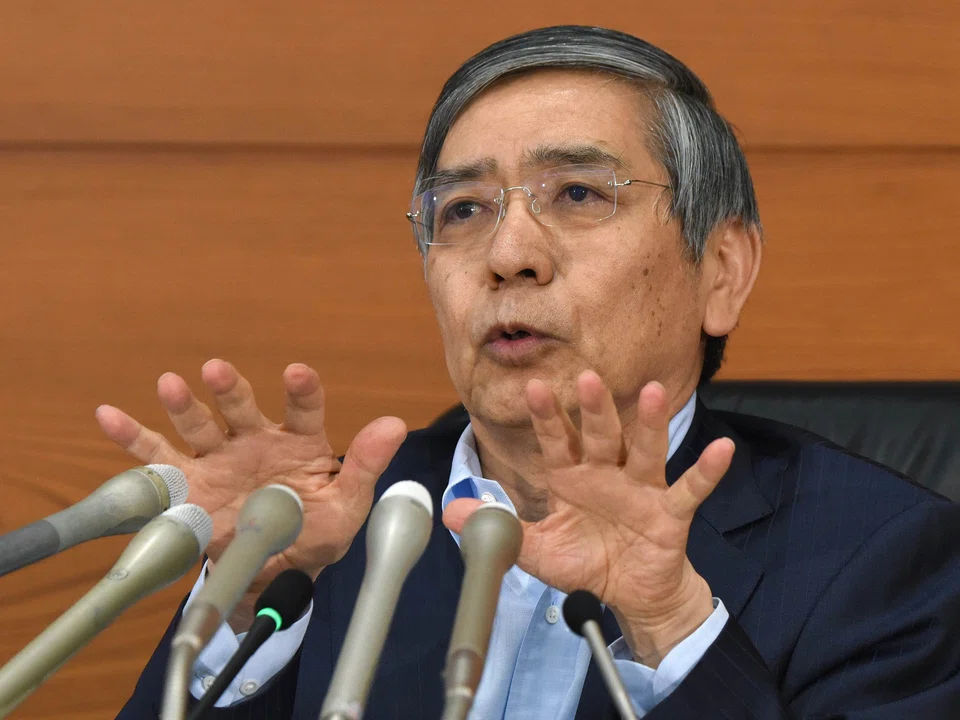
DeeperDive is a beta AI feature. Refer to full articles for the facts.
[TOKYO] The head of the Bank of Japan said Friday that he would consider pulling the trigger on more stimulus if weak oil prices keep holding back inflation.
BoJ chief Haruhiko Kuroda said Japan's economy was perking up, and the bank held off expanding its record 80 trillion yen (US$640 billion) annual asset-buying scheme following a two-day meeting.
But the country's near-zero inflation rate is far below the BoJ's 2.0 per cent target, a cornerstone of efforts to boost the world's number three economy and conquer years of deflation.
"We would consider adjusting policy if oil rates affect price trends and impact on underlying price movements," Kuroda told reporters.
"But that is not the situation right now. We will continue to watch oil price trends and see how they influence underlying price movements." A glut of crude oil supply is seen as the main driver for a sharp decline in oil prices that has seen crude fall about 50 per cent from mid-2014 levels.
Last month, Japan's central bank cut its economic growth and inflation forecasts, fuelling speculation that it would soon expand its easing scheme, aimed at boosting prices and kickstarting growth.
Navigate Asia in
a new global order
Get the insights delivered to your inbox.
Economists widely expect the bank to act before year's end to drag inflation higher.
After a brief recession last year, Japan posted stronger-than-expected growth in the first quarter as a pickup in capital spending drove the recovery.
The 1.0 per cent expansion in January-March - or 3.9 per cent on an annualised basis - was sharply up from an initial estimate of 0.6 per cent growth.
However, many economists expect second-quarter growth to be weaker, boosting the case for more BoJ policy action.
Earlier Friday, the bank kept its view that Japan's economy was continuing to "recover moderately".
Policymakers pointed to an improvement in exports, factory output and capital spending, as Tokyo pushes companies to hike wages in a bid to stimulate consumer spending, after a sales tax rise last year hammered demand.
"Against the background of steady improvement in the employment and income situation, private consumption has been resilient and housing investment has been picking up," the bank said.
The BoJ has said it expects the economy to expand 1.7 per cent in the fiscal year to March 2016 while inflation would come in at 0.7 per cent.
That was down from earlier estimates of 2.0 per cent and 0.8 per cent, respectively.
AFP
Share with us your feedback on BT's products and services
TRENDING NOW
‘Boring’ is the new black: The stars are aligning for a Singapore stock market revival
Near sell-out launches in March boost developer sales to 1,300 units after four slow months

China pips the US if Asean is forced to choose, but analysts warn against reading it like a sports result

Genting Singapore’s Lim Kok Thay receives S$7.5 million pay package for FY2025

