

'Buy Singapore last'? Roundtable shrugs off fear of a hawkish Malaysia

Annabeth Leow
Singapore
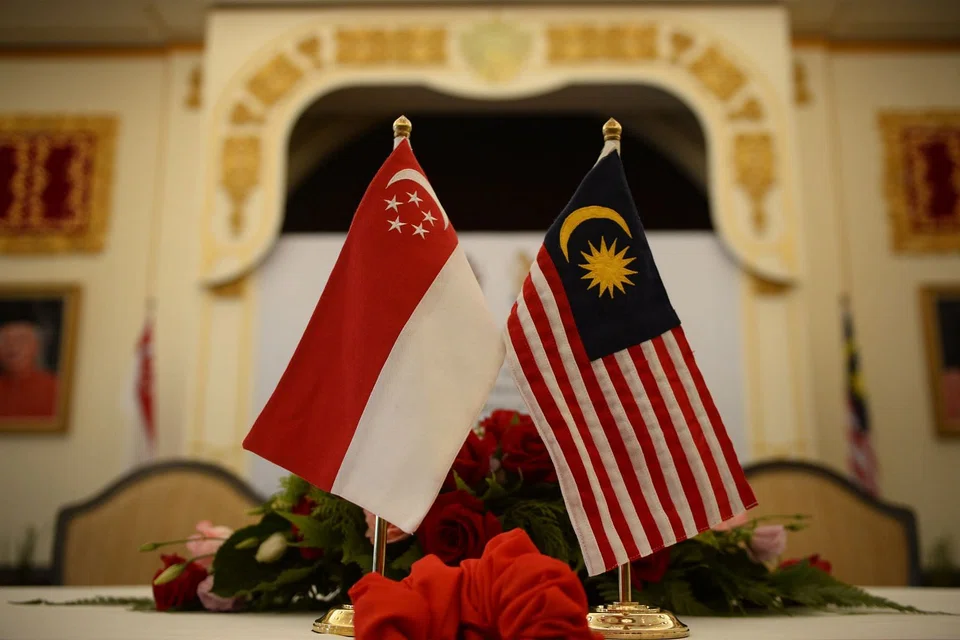
THE Singapore-Malaysia relationship is unlikely to change by much, in the wake of this year's election upset, despite fears over Malaysian leader Mahathir Mohamad's reputation for a hawkish stance on the Republic, said speakers at the 30th Singapore Economic Roundtable on Monday.
They noted that there are investment opportunities for Singapore in areas such as infrastructure, but political succession remains a wild card.
The meeting of private-sector economists, business leaders and policymakers was organised by the Institute of Policy Studies and took place under the Chatham House Rule, where quotes cannot be attributed without the speakers' consent.
One participant, alluding to Dr Mahathir's "buy British last" policy of the 1980s, said that the goods traded between Singapore and Malaysia are hard to explicitly boycott, as they involve complex global production networks for items such as circuitry, polymers and petrochemicals.
"If he were to ever say 'buy Singapore last', then this could maybe affect a few things - like wheelchairs, which actually go from Malaysia to Singapore. But, other than that, it's going to be quite difficult to see how specific goods from Singapore could be targeted without of course affecting Malaysia's bottom line," he said.
"And if we go back to Tun Mahathir's first tenure in power, we know that economic growth, industrialisation, Malaysia being an Asian tiger, are very, very important to him. So there may be, in terms of discourse, a bit of a change when it comes down to trade relations."
Dr Mahathir was returned to power in a watershed vote in May, toppling a scandal-hit Najib Razak.
Francis Hutchinson, senior fellow at the Iseas - Yusof Ishak Institute, noted in a special presentation on the impact of the new Malaysian government that the countries' economic ties are can well weather short-term changes in cross-Causeway relations.
"Bilateral relations are generally positive," said Dr Hutchinson, noting that economic ties had already started to deepen during Dr Mahathir's first round as premier.
"And the bulk of the relationship will not be affected by short-term issues. The new administration needs time to find its footing."
Oliver Redrup, transport director at PwC Singapore, said Singapore infrastructure firms could also benefit from warming cross-strait ties and a commitment by Malaysian authorities to more open tenders. Some opportunities include ports and power development, as local governments are given more autonomy.
Pointing to the successful real estate swop that resolved a dispute over railway land, and the related joint venture between Khazanah Nasional and Temasek Holdings, Mr Redrup noted that the neighbours have since come up with "groundbreaking" concepts for co-operation.
Even traditional diplomatic bugbears could be straw spun into gold.
On flare-ups of argy-bargy over the price of water sold by Malaysia to Singapore, Mr Redrup said potential concerns over future supply could still have positive effects on the Republic's domestic water sector.
"We've had the Jurong Island desalination plant, Marina East desalination plant, Changi NEWater second plant - they're all under construction or they're operational," he said.
"If the Singapore government takes the view that it needs to accelerate investment in domestic production, commission new plants quicker than currently planned, Singapore is very capable of doing that."
Dr Hutchinson acknowledged that question marks linger over when Dr Mahathir will pass the baton to coalition leader Anwar Ibrahim, given "the amount of times that he has quarrelled with his deputies" previously.
Still, "tackling complex bilateral issues is not a first-order priority", said Dr Hutchinson. "Life is complex enough for them as it is."
TRENDING NOW

Knight Frank’s Tan Tee Khoon leaves firm, Nicholas Keong takes over auction business

Keppel Energy, Sembcorp Utilities and Tuas Power to supply biomethane in pilot project

GovTech retrenches another 38 staff in second round of layoffs
Take-up of new private homes dives 45% in Q3 as prices accelerate with 1.4% rise

