

Can Singapore become a second home for Chinese tech?
Industry watchers seem to think so. Forays by Chinese tech firms are only a trickle now, but the factors in Singapore's favour are there

Annabeth Leow
Singapore
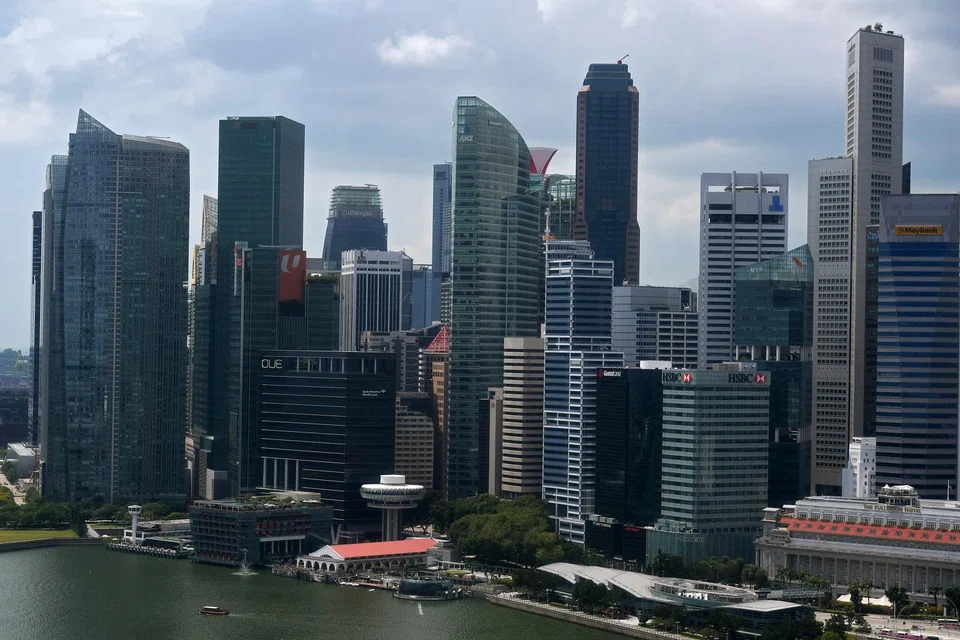
THE arrival of Chinese tech firms in Singapore is more of a trickle than a flood, based on industry professionals' observations of the scene.
But Singapore will retain an allure for these Chinese companies, given its location and other qualities, industry watchers told The Business Times.
Even with the opening this year of a research facility by artificial intelligence (AI) solutions provider Yitu Technology, as well as AI start-up SenseTime's plans to raise its headcount and expand its presence here, most tech companies expanding their footprint here are still American or European, said Colliers International research head Tricia Song.
Analysts at Edmund Tie & Co also noted that among the six tech companies taking new or bigger offices in the Republic since the middle of the year, only one - Hong Kong-based PCCW Solutions, which expanded the floor space at its Suntec City regional headquarters - is Chinese.
That's even as the infocomm and media industry's pledges rose to 18.4 per cent of fixed-asset investment value in Singapore last year, from 5 per cent in 2017, said the Economic Development Board (EDB). Fixed-asset spending involves facilities, equipment and machinery.
Matthieu Imbert-Bouchard, managing director of recruiter Robert Half Singapore, has seen "a notable increase in the number of Chinese tech companies entering the Singaporean market and hiring local Singaporean tech talent" in the last three years. He expects more such companies to come in, with plans to hire local software developers, product managers and service delivery managers who will liaise with external vendors.
Competitor Robert Walters has also noticed a rise in hiring for tech roles such as solution architects, data analysts, digital specialists and marketers, as well as sales staff.
Meanwhile, real estate firm Savills' commercial leasing and research team told BT that the Chinese presence "has been a steady flow over the last few years", with office demand driven by the tech sector, rather than finance or other industries.
Two big names in Chinese tech were in fact early entrants here:
Search engine operator Baidu, which moved from Singapore Land Tower to JustCo at Collyer Quay, in 2012 opened a joint laboratory with the Agency for Science, Technology and Research (A*Star) in Fusionopolis, and e-commerce giant Alibaba set up shop at One Raffles Place in 2014.
Huawei, the electronics hardware supplier that has found itself caught up in the US-China trade war, opted to launch a cloud and AI innovation lab for enterprise businesses in Singapore this year. It already has an office in Changi Business Park and a customer service centre in Somerset.
Also, ByteDance, the owner of popular video-sharing platform TikTok, has been pegged as ripe for expansion here.
ByteDance set up a regional headquarters in its WeWork office in Cross Street last year, but market chatter says that the company is poised to lease space of up to 60,000 sq ft in One Raffles Quay.
And just as established - even if perhaps less sexy than the "disruptors" - are the more conventional Chinese tech players such as network operators China Telecom and China Unicom.
Industry commentators cited the usual litany of factors - business-friendly regulations, intellectual property protection and available talent - as the draws for tech companies to come to Singapore.
More pertinently for Chinese firms, the Republic also has access to Mandarin-speakers, and proximity to the South-east Asian boom.
Joanne Chua, Robert Walters' regional client development director, said: "There are some high-potential markets for Chinese companies within the region, such as Indonesia, Thailand and Vietnam."
Shinjika Shukla, associate director at recruitment agency Michael Page, told BT that Singapore's trade connectivity can even provide a safe harbour for Chinese firms amid the US-China trade war, "thus insulating them from huge financial losses".
But, even with rising difficulties on their home front, analysts said that push factors are unlikely to be driving tech firms out of China - in spite of the civil unrest in Hong Kong and tensions between China and the US that have spurred American sanctions against blacklisted tech firms like SenseTime and video surveillance provider Hikvision.
Long-term business decisions, such as opening offices or moving headquarters, need careful consideration, said Colliers' Ms Song.
"It is still too early to see Chinese companies expanding to Singapore due to the Hong Kong situation, and we have not seen significant impact from the trade war so far," she said.
Separately, the Savills team noted that Chinese firms tend not to take up large spaces in the Singapore office market. Many prefer running holding companies instead.
But Michael Page's Ms Shukla added that Singapore "also gives startup firms an opportunity to get investments from non-Chinese investors".
Lim Swee Nian, assistant managing director of the EDB, said the agency is "attracting investments from international companies in diverse industries and geographies".
His e-mailed reply to BT queries did not name China, but highlighted the separate research tie-ups with Nanyang Technological University forged by Alibaba and SenseTime.
Chinese digital bank WeBank separately launched a fintech research tie-up with that university this year.
TRENDING NOW

From legacy to launch: Francis Yeoh and Yeoh Pei Xien on family unity and YTL’s next‑gen ventures

Could Japan trigger the next global financial crisis?

Wealthy Indonesians snap up government bonds as yields near 8%: OCBC
‘You buy more picks and shovels because you keep hitting gold’: Why AI spending needs to see results

