

China claims success from 'two-child' policy as 2016 birth rates rise
 Add BT as a preferred source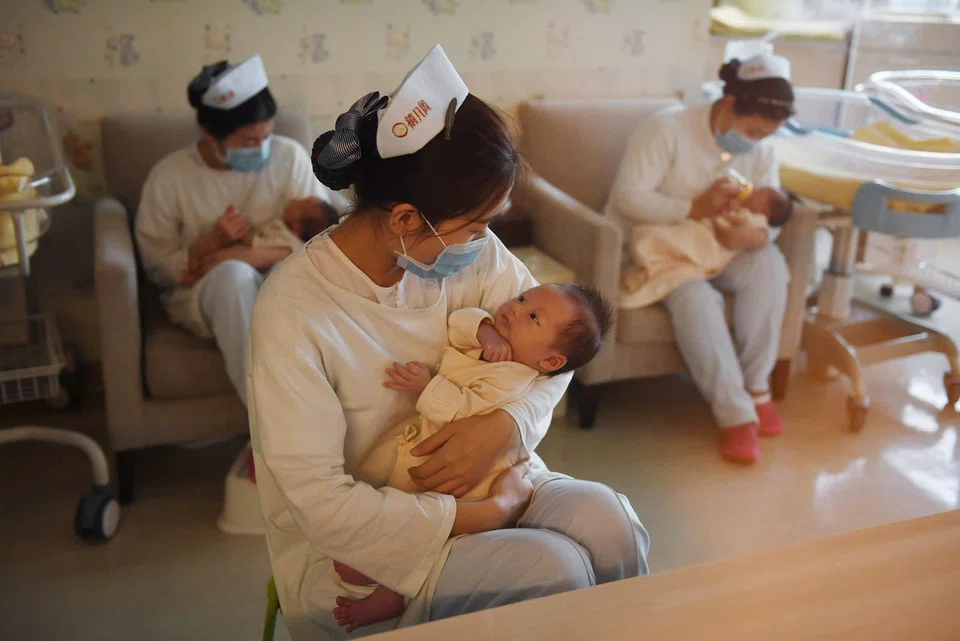
DeeperDive is a beta AI feature. Refer to full articles for the facts.
[SHANGHAI] China's decision to allow all couples to have two children instead of one has resulted in birth rates rising to the highest level since 2000, a government official said.
New births in the world's most populous nation reached 17.86 million in 2016, up around 1.4 million compared to the 2011-2015 average, said Yang Wenzhuang of the National Health and Family Planning Commission.
"While the total number of women of childbearing age fell by 5 million, the number of births increased significantly, showing that the family planning policy adjustments were extremely timely and extremely effective," he told reporters on Sunday.
Worried about the costs of supporting an increasingly ageing population, China issued new guidelines in late 2015 allowing all parents to have two children.
China began implementing its controversial "one-child policy" in the 1970s in order to limit population growth, but authorities are now concerned that the country's dwindling workforce will not be able to support an increasingly ageing population.
Mr Yang said the number of women of childbearing age was expected to decline by about 5 million a year over the 2016-2020 period, but China was hoping to keep birth rates at around 17-20 million a year.
Navigate Asia in
a new global order
Get the insights delivered to your inbox.
China has already made provisions to increase medical staff and the number of hospital beds in order to handle the rising number of births. It expects its total population to rise to around 1.42 billion by the end of the decade, up from 1.37 billion at the end of 2015.
REUTERS
Share with us your feedback on BT's products and services
TRENDING NOW

Shelving S$5 billion office redevelopment plan proved ‘wise’ as geopolitical risks mount: OCBC chairman

Why where you park your joint venture matters: Lessons from a US$689 million shareholder dispute

China pips the US if Asean is forced to choose, but analysts warn against reading it like a sports result
Singaporeans can now buy record amount of yen per Singdollar

