

China inflation slips but stays high on virus, food worries
 Add BT as a preferred source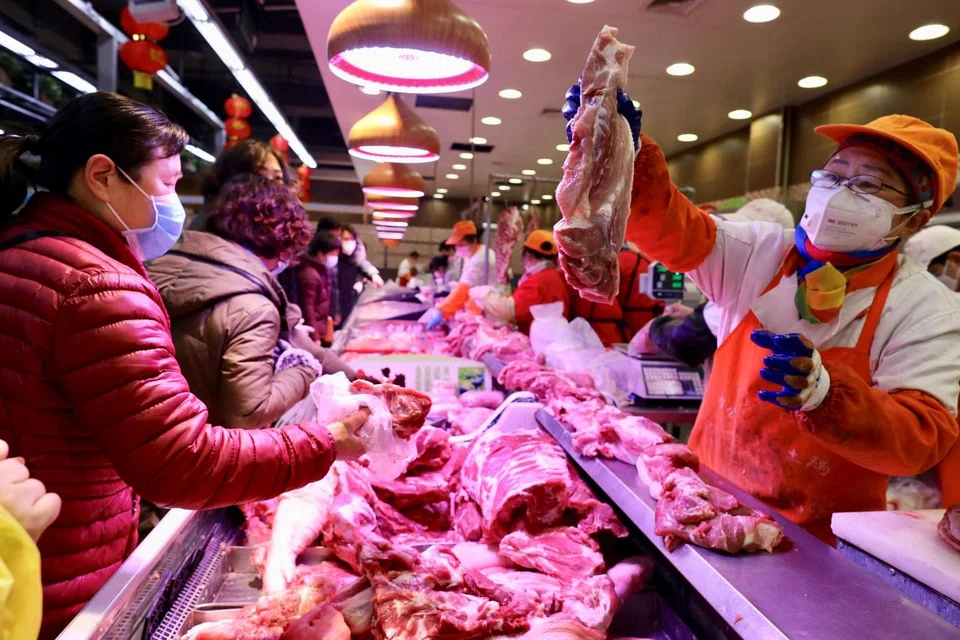
DeeperDive is a beta AI feature. Refer to full articles for the facts.
[BEIJING] Consumer inflation in China remained high in February, official data showed Tuesday, as the coronavirus epidemic and soaring food prices took a toll on the economy.
China's consumer price index (CPI) rose 5.2 per cent in February from a year ago, according to the National Bureau of Statistics -- down slightly from 5.4 per cent the month before, which was the highest point in at least eight years.
The figure was in line with a Bloomberg forecast of analysts, as economists pointed to heightened food prices and the cost of medical supplies during the epidemic which has infected more than 80,700 people.
"The sudden new coronavirus epidemic caused a more complex impact on price movements in February," said Zhao Maohong, director for the urban department of the statistics bureau.
Food prices rose more than 21.9 per cent from a year ago.
Pork prices in particular remained high, increasing 135.2 per cent in February, after a 116 per cent rise in January.
Navigate Asia in
a new global order
Get the insights delivered to your inbox.
Prices spiked over the past year due to African Swine Fever, which ravaged pig herds across the country.
The world's second-largest economy has also been fighting to curb the coronavirus outbreak, which has killed more than 3,100 nationwide.
Consumers were encouraged to stay home over an extended Lunar New Year holiday to avoid infections and businesses suspended operations. Cities also imposed various travel restrictions.
Although consumer prices tend to fall after the Lunar New Year break, analysts have said costs may stay higher for longer this year as containment measures for the outbreak hit both supply and demand, and disrupted supply chains.
China's producer price index -- a barometer of the industrial sector that measures the cost of goods at the factory gate -- entered negative territory from a year ago last month.
It fell 0.4 per cent from a year ago, compared with analyst expectations of a 0.3 per cent drop.
The producer price index rose 0.1 per cent in January.
ING economist Iris Pang told AFP that "factories almost stopped operation in February", leading to expectations of negative growth.
She added that both indexes are expected to fall in March due to lower energy prices.
But Ms Pang said "this may not be a good thing for all companies as some depend on higher oil prices to have higher profits".
AFP
Decoding Asia newsletter: your guide to navigating Asia in a new global order. Sign up here to get Decoding Asia newsletter. Delivered to your inbox. Free.
Share with us your feedback on BT's products and services
TRENDING NOW
‘Boring’ is the new black: The stars are aligning for a Singapore stock market revival
Near sell-out launches in March boost developer sales to 1,300 units after four slow months

China pips the US if Asean is forced to choose, but analysts warn against reading it like a sports result

Genting Singapore’s Lim Kok Thay receives S$7.5 million pay package for FY2025

