

China's central bank keeps short-term rates steady despite Federal Reserve easing
 Add BT as a preferred source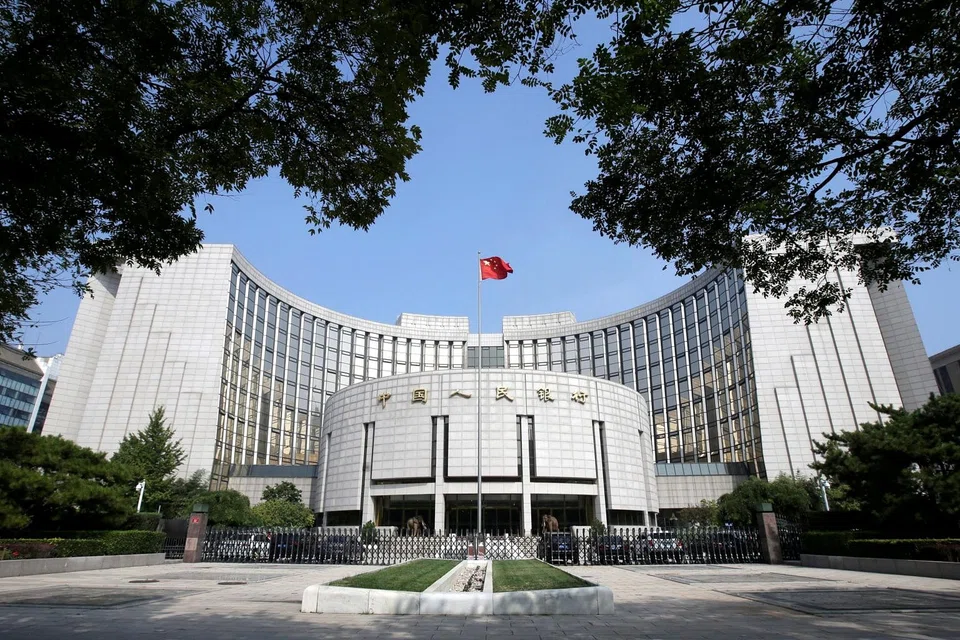
DeeperDive is a beta AI feature. Refer to full articles for the facts.
[SHANGHAI] China's central bank kept short-term borrowing costs steady on Wednesday, shrugging off the US Federal Reserve's emergency policy rate cut overnight.
The People's Bank of China (PBOC) skipped open market operations, it said in a statement on the website, leaving reverse repurchase agreements unchanged.
But markets widely believe the authorities will continue to move to lower financing costs for business and roll out powerful measures prop up the economy, which has been hit by a coronavirus outbreak.
The decision by the PBOC on Wednesday comes hours after its US counterpart delivered an emergency 50-basis point rate cut to mitigate the widening economic fallout of the coronavirus.
The Federal Reserve's move, however, failed to calm US financial markets roiled by worries about a deeper, lasting slowdown.
Major economies have kicked off a new round of easing globally to combat disruption to economic growth from the virus epidemic, which was first detected in China, has now spread beyond to some 80 nations and could turn into a pandemic.
Navigate Asia in
a new global order
Get the insights delivered to your inbox.
Central banks in Australia and Malaysia cut rates on Tuesday and on Monday the Bank of Japan took steps to provide liquidity to stabilise financial markets there.
However, analysts and traders in China said the PBOC's decision to keep short-term market rates steady largely matched their expectations.
"Pressure from consumer prices remained huge, and Consumer Price Index (CPI) was likely hovering at elevated level in February," said Yan Se, chief economist at Founder Securities in Beijing, adding chances for the PBOC to follow the US move to lower rates were low in the near term.
Instead, he expects the PBOC to make targeted reduction to reserve requirement ratio (RRR) in the short term to support key sectors.
Zhang Yu, chief macro analyst at Huachuang Securities, who also expected a targeted RRR cut this month, said the Fed's emergency move overnight could prompt China's central bank to lower its benchmark deposit rate this month.
Reductions to central bank's medium-term lending facility (MLF) rate and reverse repo rate were "more of stabilising short-term market sentiment", she said.
"If declines in China's equity market are not huge and the virus situation is not getting worse again, China does not necessarily have to follow the United States," Mr Zhang said in a note.
China's stock markets traded broadly flat on Wednesday morning.
Multiple PBOC officials have recently said China should make timely adjustments to benchmark deposit rates, and should pay more attention to changes in real interest rates.
The PBOC lowered the reverse repo rates by 10 basis points in February, as authorities stepped up measures to relieve pressure on the economy.
With no reverse repo maturing on Wednesday, the PBOC did not inject or withdraw any cash from the interbank money market.
REUTERS
Decoding Asia newsletter: your guide to navigating Asia in a new global order. Sign up here to get Decoding Asia newsletter. Delivered to your inbox. Free.
Share with us your feedback on BT's products and services
TRENDING NOW

Shelving S$5 billion office redevelopment plan proved ‘wise’ as geopolitical risks mount: OCBC chairman

OCBC is said to emerge as lead bidder for HSBC Indonesia assets

Middle East-linked energy supply shocks put Asean Power Grid back in focus

Eurokars Group introduces rental car franchises Enterprise Rent-A-Car, National Car Rental, and Alamo to Singapore

