Climate crisis more acute than feared: How will this impact businesses?
There is an urgent need to scale up investment in adaptation to build climate resilience.

THE climate crisis looked dire enough; but the United Nations (UN) now says the situation is worse than we feared - and that urgent and bolder action is needed from governments, businesses and individuals.
The warning klaxon came in the form of the latest report from the UN's Intergovernmental Panel on Climate Change (IPCC), made up of the world's leading climate experts.
Published at the end of February this year, it said that even if the world hits its target of keeping global warming to 1.5 degrees Centigrade above pre-industrial levels, it faces unavoidable multiple climate hazards over the next 2 decades.
Even temporarily exceeding this warming level will result in additional severe impacts, some of which will be irreversible - with risks for society increasing, including to infrastructure and low-lying coastal settlements.
"This report is a dire warning about the consequences of inaction," said Hoesung Lee, chair of the IPCC.
February's report is the second part of the IPCC's Sixth Assessment Report (AR). The first, published in August, detailed the underlying science of climate change; the third will look at ways of reducing those impacts.
"This (second part of the report) recognises the interdependence of climate, biodiversity and people and integrates natural, social and economic sciences more strongly than earlier IPCC assessments," Lee said. "It emphasises the urgency of immediate and more ambitious action to address climate risks. Half measures are no longer an option."
Urgent action required
Claire Aubertin-Noel, Growth Markets Corporate Strategy and Sustainability Centre of Excellence lead at global professional services company Accenture, said the IPCC report is "the ultimate wake-up call for global climate action".
"There has to be a sense of urgency; the time to act is now. While a multitude of companies have been publishing net-zero targets - which is a good first step, as they did not even exist a year ago - what will now drive progress is the pace of implementation.
"Businesses need to walk the talk in addressing climate change, executing on their public commitments."
Aubertin-Noel pointed out that funding is available - US$130 trillion of assets, which the Glasgow Financial Alliance for Net Zero (GFANZ) has committed to being net zero by 2050 - while efforts are being made to harmonise global reporting standards for environment, social and governance (ESG)-related disclosures, which will bring transparency into what has traditionally been an opaque market.
"So the challenge is now execution. Given the mounting pressure from all stakeholders - including regulators - ESG measurement is undeniably a top priority for all companies, and has moved from a CSR (corporate social responsibility) topic to a CEO (chief executive officer) agenda," she said.
Arjun Sethi, head of global management consulting firm Kearney's Apac region and vice-chair of Kearney's Digital Transformation Practice, feels the same sense of urgency; he said the IPCC's stark warning for all stakeholders reiterates the importance of direct and immediate action.
"Businesses can no longer write off climate change as a problem for the next CEO; the status quo is falling away and there is a real cost to inaction, whether you are a government, global multinational or an SME (small and medium-sized enterprise)," he said.
Jo Feng, senior vice-president, Asia area, at global biopharmaceutical business AstraZeneca, points out that "the good news is that change is still within our grasp - but only if we all act swiftly and in every way we can".
"What we need to do now is focus on what changes can be made, through taking a science-driven approach, and how we mitigate the impact of climate change. Building resilience is key," she added.
Manish Pant, zone president, East Asia & Japan, Schneider Electric, a global specialist in energy management and automation, believes climate change is a true challenge for humanity, and consumers, governments, and corporates all have a role to play in tackling climate change.
"This includes rethinking approaches to energy and reducing carbon emissions drastically by establishing more sustainable practices," he said.
Efforts to adapt
But just as important as addressing the cause of climate change, through mitigation efforts such as decarbonisation, is the need to adapt to the effect of climate change - by changing the way we live.
Examples of climate adaptation include strengthening sea walls to brace for rising sea levels, managing forests to reduce the risk of forest fires and to prevent landslides, and planting crops that would be more resilient to weather extremes.
Adaptation solutions also abound in urban planning - an area in which governments and corporations can unite their efforts; these can take the form of climate-proofing infrastructure or greening buildings.
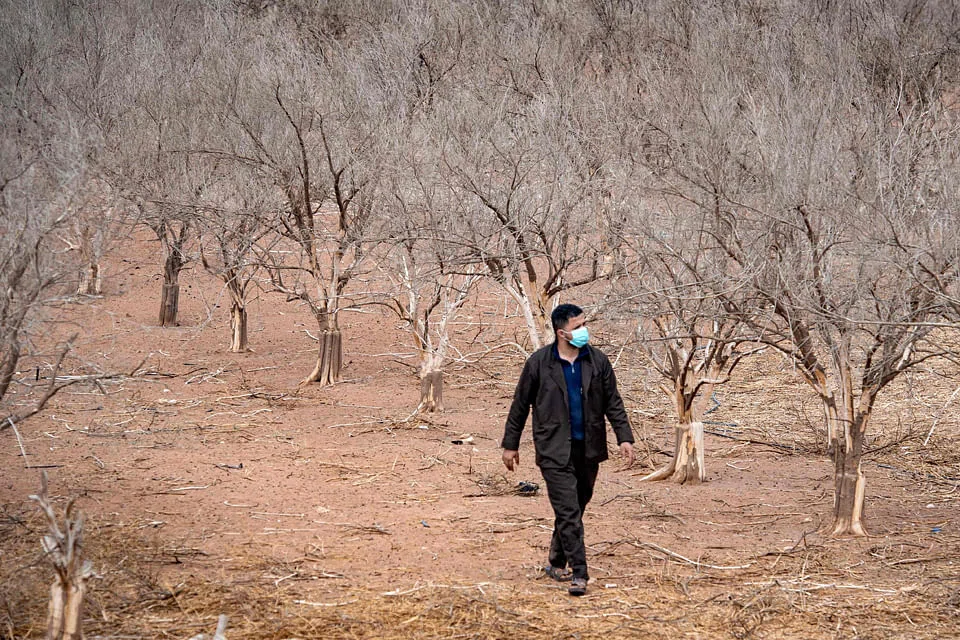
Climate adaptation efforts are crucial because weather extremes - such as increased heatwaves, droughts and floods - are already exceeding plants' and animals' tolerance thresholds, according to the IPCC's latest report; such events have also exposed millions of people to acute food and water insecurity.
Ambitious, accelerated action is therefore needed to adapt to climate change - at the same time as making rapid, deep cuts in greenhouse gas (GHG) emissions - to avoid mounting loss of life, biodiversity and infrastructure, the IPCC added.
Feng says this means that scaling up investment in adaptation is no longer optional, given that the ability of nature and humanity to adapt to it will be outpaced without urgent action. "There is no doubt climate change and our adaptation to it is one of the most complex issues that we face today."
Sethi agrees. "We can't meet 2022 conditions and reach 2030 targets with a business model from 2015, whether you are a government or a private company," he said.
"Scaling up investment in adaptation efforts will be useful to fund more effective initiatives in full, rather than half-measures, but without modernising climate strategies and incorporating effective metrics, these investments may have a limited impact."
Pant believes that governments worldwide must make a strong commitment to such efforts and take the lead in laying out the plans, implementing the relevant policy changes and regulations, and putting in place funding support to fuel the relevant adaptation strategies.
"As the size and value of climate-related risks increase, corporates must also look at strategies to transform their business to adjust to the changing climate," he added.
Adaptation will be critical here in Asia, says Aubertin-Noel, given the region's contribution to GHG emissions, its population size - with the Asia-Pacific region representing 60 per cent of the world's population - and its growing economic heft.
COP27 and financing
So far, progress in adaptation has been uneven, says the IPCC: most observed adaptation is fragmented, small in scale, designed to respond to current impacts or near-term risks, and focused more on planning rather than implementation, with the largest adaptation gaps existing among the lower-income population groups.
Many will therefore be looking to this year's UN Climate Change Conference, COP27, to be held in Egypt in November, for governments' policy stances in this regard - and for indications on how poorer nations will be aided in their efforts.
Aubertin-Noel, citing a 2021 United Nations Global Compact-Accenture CEO Study on Sustainability, said the UN Environment Programme has estimated that adaptation costs will keep rising - reaching US$140 billion to US$300 billion a year in 2030, and US$280 billion to US$500 billion in 2050.
COP27 is likely to see financing efforts continue to push for adaptation strategies and solutions, especially to support those countries most at risk from climate change, Sethi said.
In Feng's view, the conference will be a welcome opportunity to build on commitments to achieve shared goals of reducing emissions and the impact of climate change, while also bringing a focus on funding for developing nations.
Partnerships
Pundits agree that concerted and coordinated action by various stakeholders will be needed to push through what has been deemed necessary by the IPCC to save the planet.
"At every level of action," Sethi says, "collaboration and cross-regional support hold the power to drive mutually beneficial sustainable efforts and create lucrative partnerships that benefit the environment, the people, and help a company survive the coming changes ... Regulation, technologies and initiatives must be implemented quickly for maximum impact."
Feng says greater collaboration through public-private partnerships is needed, along with genuine representation from developing countries most at risk of the consequences of climate change, to drive forward efforts to decarbonise. "Science tells us it's time for everyone to do their part to limit the impacts of the climate crisis on our planet, and global partnership-driven initiatives play a crucial role in ensuring a secure future. No organisation, government, or institution can do it alone."
Pant believes that transformative policy change across more economies is urgently needed in order to decarbonise at the speed and scale required to achieve net-zero by 2050. "This is because action from governments can accelerate even more action from companies," he said.
Aubertin-Noel agrees: "Global companies can make an impact not only on the countries where they operate, but also on their ecosystem, such as the social and economic fabric, to influence consumers to make smarter, more eco-conscious choices."
Pant adds that technology will play a key role in aiding such efforts: digitisation, powered by the Internet of Things, can help companies create achievable targets for a greener future and accelerate the transition to a low-carbon economy, while technological solutions can also help rural communities to become more productive, efficient and increase their local revenues. "Apart from efforts by local governments, corporates too have a vital role to play in enabling access to energy and allowing energy-poor populations to develop in a sustainable way," he said.