

Collaboration with public agencies needed to drive Industry 4.0 forward in South-east Asia
Enthusiasm for new technologies can wane during implementation, so firms and government must work together
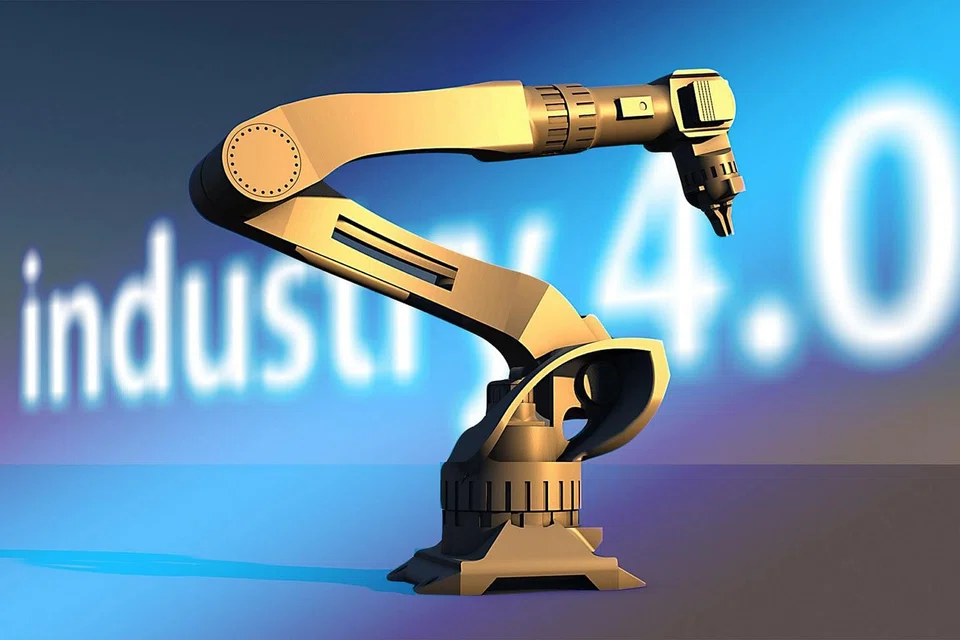
MANUFACTURERS in South-east Asia are warming to advanced technologies that promise to siphon costs and change how companies relate to their customers. Commonly known as Industry 4.0, these technologies are revolutionising manufacturing worldwide and in the region.
A new McKinsey survey suggests, however, that as implementation hits speed bumps in South-east Asia, companies must focus on retaining their enthusiasm so they can capture greater benefits.
Industry 4.0, which includes advanced analytics, machine learning, robotics and automation, is propelled by several recent advancements, notably a titanic rise in data availability, faster and cheaper computing power and near-ubiquitous connectivity.
These advanced technologies provide the foundations for new business models, new ways of interacting with machines and new approaches to predicting and anticipating the future.
McKinsey tracked attitudes and implementation of Industry 4.0 technologies for several years, and our latest survey suggests that optimism in South-east Asia remains broadly apparent for these technologies, even as enthusiasm has waned.
National differences
Of the South-east Asian countries included in the research, 57 per cent of the respondents in 2019 said the expectations for Industry 4.0 had risen over the previous year, compared to 67 per cent in the 2017 survey.
Behind this overall trend, national differences are stunningly apparent. In Singapore, respondents who expressed increased optimism fell from 53 per cent in 2017 to 38 per cent this year, while those who said they were more pessimistic remained steady at about 13 per cent. In contrast, enthusiasm shown in Indonesia rose from 78 per cent in 2017 to 84 per cent in 2019, with no expression of growing pessimism.
The survey results suggest that eroding enthusiasm is likely the result of companies moving from consideration of Industry 4.0 technologies to implementation. As execution of the transformations began, the realities of the challenges set in, dampening momentum. Indonesia is an exception, largely a result of a strong government effort toward implementing these technologies. In 2018, the government launched the "Making Indonesia 4.0" initiative to create a robust ecosystem around Industry 4.0.
The survey series also shows that more companies are testing Industry 4.0 technologies and indeed have begun deploying them throughout their organisations. Again, geographic differences are notable. In Singapore, 17 per cent of the respondents in the latest survey reported ad-hoc efforts and 4 per cent said there were a significant number of efforts across locations. In Indonesia, 37 per cent of the respondents said they were exploring ad-hoc programmes and 11 per cent had begun broad implementation.
As companies begin moving into the implementation phase of Industry 4.0 deployment, our latest survey suggests the challenges they face are evolving as well. The obstacles cited by respondents in South-east Asia have become more focused on execution and are moving away from questions centred on consideration.
Although about 90 per cent of the respondents in South-east Asia said their companies plan to achieve operational goals for Industry 4.0 in one to three years, 55 per cent said they have yet to move beyond initial pilots. Breaking from the pilot trap to broader deployment is a critical step to capturing the full potential of these technologies.
However, the 2019 survey showed that common hurdles for leaving the pilot trap, such as uncertainty, are being replaced with challenges that are more closely related to execution.
In 2018, the respondents in Asia generally listed an inability to define a business plan and insufficient integration among business units as their biggest challenges. In 2019, these were replaced at the top of the list by a lack of appropriate expertise and weak cross-functional alignment.
Our research and experience show that overcoming these obstacles relies largely on what we see as a triple transformation: business models, technology platforms and corporate organisations must all change to adapt to the inevitable market evolution.
Working with the World Economic Forum, McKinsey has identified 26 companies from across the world that are succeeding in their Industry 4.0 transformations, with two of these lighthouses in Indonesia. Mining company Petrosea moved from losses to profits in six months by deploying drone surveys and real-time monitoring of operations, among other efforts; Schneider Electric has created nine smart factories and an ecosystem around sharing resources with customers and partners.
Collaborative programmes
Individual corporate efforts are just a part of the effort needed to move Industry 4.0 forward. Collaborative programmes that include public agencies, particularly in closing the skills gap every country faces, are also crucial.
In Singapore, for instance, JTC Corporation and Nanyang Technological University (NTU) initiated a programme in 2019 to train a new academic generation in digital manufacturing technologies.
Industry 4.0 technologies promise significant benefits to companies and consumers, but companies and governments must work together to revitalise enthusiasm for these technologies. While our surveys suggest that optimism in South-east Asia has waned slightly, the potential for Industry 4.0 has not.
TRENDING NOW

Grab CEO’s wife Chloe Tong on life with Anthony Tan and finding her purpose

He built the Vingroup empire. Now South-east Asia’s richest man is handing some key roles to his sons

Can Mark Shaw bring Singapore back to Orchard Road and the movies?

Ex-Sembcorp Marine CEO Wong Weng Sun acquitted of charges in Brazil corruption case

