Covid-19 curbs likely to stay through Chinese New Year
Ministry panel says the country must be ready for a tightening of measures if healthcare system is swamped


Singapore
SINGAPOREANS may have to celebrate Chinese New Year (CNY) in groups of no more than 5, as the highly mutated Omicron variant of the coronavirus threatens to spark a new wave of Covid-19 infections.
Finance Minister Lawrence Wong, a co-chair of the multi-ministry taskforce on Covid-19, said on Wednesday (Jan 5) that "we don't intend to relax further at this time, and we will try not to have to tighten" social restrictions until the Omicron wave passes, which is unlikely to happen before the CNY holiday in February.
"But we also must be prepared for all contingencies and in the event that the healthcare system comes under tremendous pressure, then as a last resort, we may have no choice but to tighten some of our measures," he added.
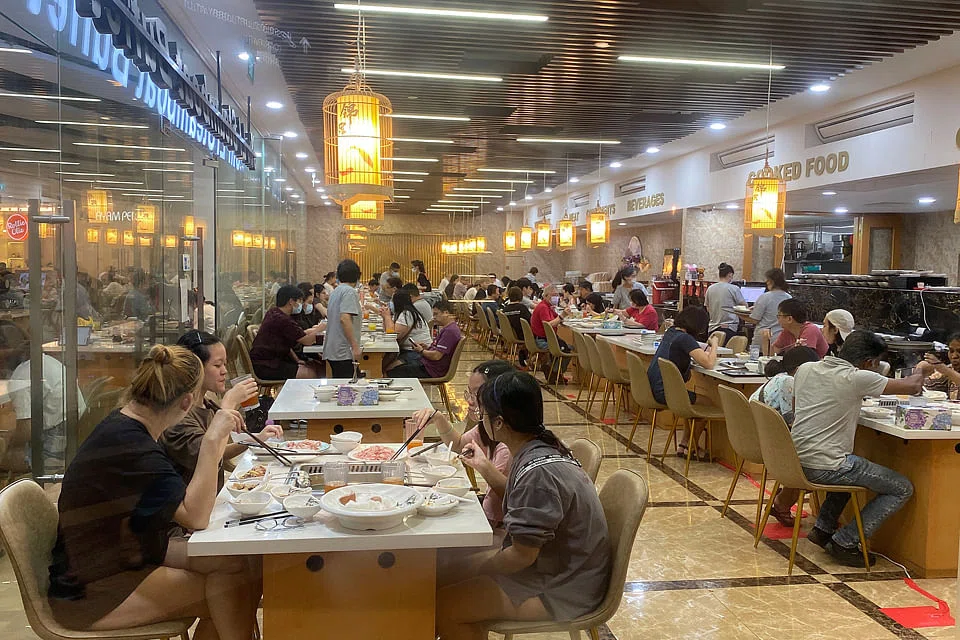
Ongoing restrictions allow up to 5 unique household visitors a day, and food and beverage outlets will take no more than 5 fully vaccinated diners in each group.
Chinese restaurants may not have been counting on restrictions being relaxed, as a quick check with several popular ones showed that they are already fully booked for the eve of CNY, when reunion dinners are in full swing.
Still, the curbs are a dampener for the 15-day festive season, which brought up to 30 per cent of the year's revenue during better times, said Samuel Yik, founder and managing director of Dian Xiao Er. He said it is usually full-house at the restaurant during the period.
"For lohei, businessmen like to come in as a group, and for Chinese restaurants, we have many big tables which can accommodate up to 15 persons, but it's no use, since the maximum we can seat is only 5 persons," he said.
That, and with the number of tables slashed by safe-distancing rules, Yik estimated that takings during the period could fall by 30 to 40 per cent from that in pre-pandemic years.
But he considers it a positive sign that no further tightening of Covid-19 measures are planned: "To control the spread of the virus, this is kind of expected and acceptable."
In recent weeks, Singapore has seen a gradual rise in Omicron cases; Health Minister Ong Ye Kung, another taskforce co-chair, disclosed that there have been 2,252 such cases so far. None of them have needed intensive care or died, and just 3 have needed oxygen supplementation.
The data indicates that Omicron infections are less severe than Delta, especially for those who have received vaccinations and booster shots, he said.
Still, Trade and Industry Minister Gan Kim Yong, another co-chair, warned that "we must be mentally prepared that the Omicron wave may be greater than the Delta wave we had experienced before".
Singapore's Covid-19 epidemic peaked with the Delta wave in late 2021, when the Republic notched a record 5,324 cases on Oct 27.
Wong said compliance with safe-management measures will give Singapore "a much higher chance of getting through this upcoming wave without having to tighten further".
But "unnecessary" risk-taking will raise transmission and put more pressure on the healthcare system "and we may have no choice but to tighten", he added.