

Creativity around infrastructure financing not exhausted yet: AIIB
Singapore
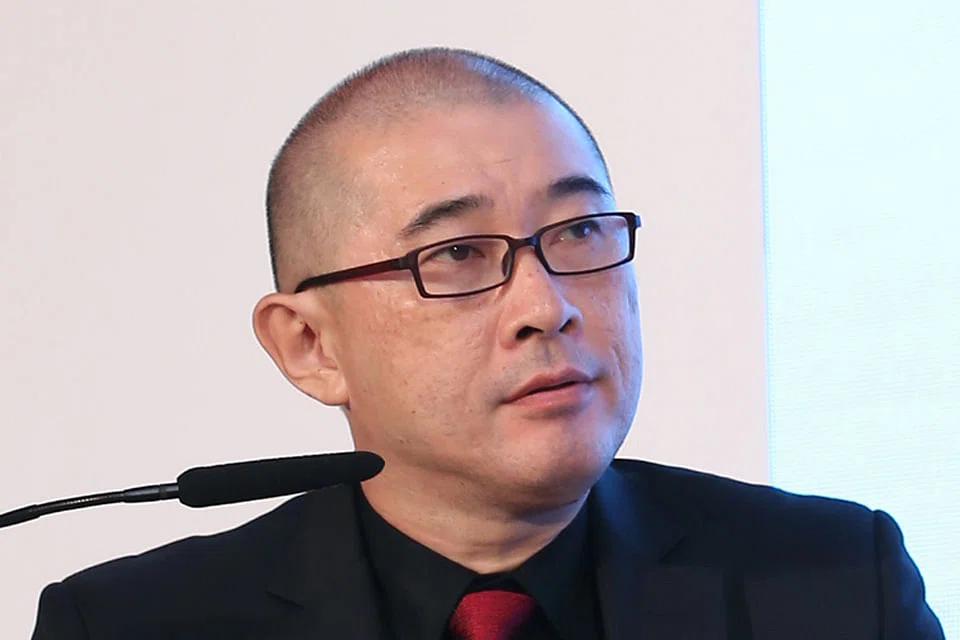
WHY isn't more private capital going into infrastructure projects? One reason is because governments are choosing to fund the most bankable projects themselves, leaving riskier, less palatable projects to private investors, Pang Yee Ean, director-general (investments) of the Asian Infrastructure Investment Bank (AIIB), said.
At a panel forum hosted by the Industrial and Commercial Bank of China and Surbana Jurong on Monday, he said: "Strangely but as a natural phenomenon, the governments always put the bankable projects to be financed by themselves. And then they come running to us and say, 'How about those non-bankable projects? Can you get the private sector to finance?'
"That is the natural way of acting if you are doing the budgeting for the country. So we need to convince them that actually the bankable projects should be financed by the private sector. These are the projects with strong financials, that can produce the yields that will be able to entice the private sector to participate."
The panel, comprising public and private practitioners, discussed the barriers to private investment and suggested ways to bring new private financiers into the scene.
Darius Lilaoonwala, co-head of IFC Global Infrastructure Fund of IFC Asset Management (a unit of the World Bank), said the public sector still dominates the bulk of infrastructure investments, providing about three- quarters of financing, although the role of the private sector is growing.
Mr Pang cited statistics that said only 3 per cent of institutional funds worldwide is invested in infrastructure, and only 30 per cent of that is invested in the developing world, where the need for infrastructure is most critical.
He said that governments of smaller, less well-off countries with sovereign risk ratings ranging from B- to BB have fiscal constraints and therefore need to tap the private sector for more financing.
Kow Juan Tiang, group director (Environment and Infrastructure Solutions Group) of IE Singapore, also raised the worrying trend that the actual realisation of infrastructure projects, in the region and globally, is only about one-fifth of the demand required.
Yet, many factors continue to keep private investors at bay, thus stalling the building of much needed infrastructure. For instance, there have been cases of governments changing their minds and deciding to nationalise a public-private partnership (PPP) project midway in its development.
Mr Pang said multilateral banks need to step in on such issues to stop them because this will erode the confidence of future private participation.
On the banking side, he noted that the stricter reserve ratios mandated under Basel III regulations will make banks more conservative about lending to infrastructure. This is because banks will try to manage their risk profiles by lending to projects with shorter tenors or in less risky developed markets.
He believes that creativity around infrastructure financing has not been exhausted. One way he can think of is to use different financiers at different stages of a project. Because project risks differ along its cycle, ramping up during construction and tapering off when completed, project owners should consider tapping the open market for funding when their project is done. If the project is producing stable yields, it can even be injected into a listed business trust.
Mr Lilaoonwala agreed, noting that most international and commercial banks have been steadily withdrawing from lending money to infrastructure projects because of domestic issues and regulatory reasons.
"It doesn't have to be the same financier from start to finish. Once a project has been de-risked, it may be a good idea to see whether we can tap bond markets, thus allowing the commercial banks to recycle their capital."
On the equity side, he sees more private equity players taking equity stakes alongside strategic investors in high capital cost projects, and thinks that pension funds and sovereign wealth funds may also be possible candidates, even though they tend to be more risk-averse.
These institutions have between US$70 trillion and US$90 trillion of assets under management and are also looking for projects to finance, but their focus has been largely only in developed countries and not emerging markets where infrastructure needs are greatest.
Also on the panel were Wong Heang Fine, chief executive of Surbana Jurong, and Kenneth Loo, president of The Singapore Contractors Association.
READ MORE: Infrastructure offers 'silver lining' amid global slowdown
TRENDING NOW

Government to bring forward raising of retirement age, give employers more financial support to create flexi-load jobs

If Europe goes to war, the fallout will be felt in East Asia

Indonesia stocks suffer worst plunge in nearly 30 years as MSCI proposes standalone status

Vietnam’s northern provinces, not Hanoi or Ho Chi Minh City, are powering near 10% GDP growth

