Crossing the PMET divide: Can every job be a good job?
Pressure to place ever more Singaporeans into PMET jobs likely to rise; it is estimated that by 2030, about two in three of them will hold such jobs

Singapore
MORE PMETs (professionals, managers, executives and technicians) are getting retrenched, while non-PMET jobs continue to be shunned by Singaporeans.
As such, questions have been raised about whether increasing the wages for non-PMET positions is a better solution for this dichotomy - rather than creating more PMET jobs and pushing more Singaporeans into this category of labour.
In the past decade, the share of PMETs in Singapore's workforce crossed a tipping point. As of June 2019, the majority - 56 per cent - were PMETs. This was up from 47 per cent a decade prior.
As nationally classified, PMET jobs require higher-level skills typically - though not necessarily - acquired through tertiary education.
Over the years, the term has sometimes served as shorthand for more desirable, better-paying jobs to which the broad middle of Singaporeans may aspire.
The pressure to place ever more Singaporeans into PMET jobs may only rise from here. The 2013 Population White Paper estimated that twothirds of Singaporeans will hold PMET jobs in 2030.
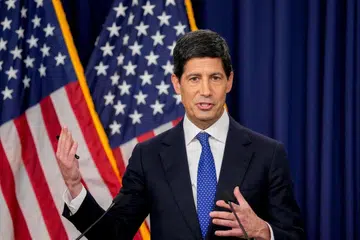
In January, Minister for Trade and Industry Chan Chun Sing touched on the issue as he sparred with Workers' Party chief Pritam Singh in Parliament on jobs data.
Putting forth that Singapore's labour market policies had worked for Singaporeans, Mr Chan said Singapore's PMET share of local employment was ''one of the highest in the world; and the trend is continuing to grow in that way, because we understand the aspirations of our next generation''.
He added: ''If 70 per cent of our people are going to graduate with degrees and diplomas, you can see the tremendous pressure on the aspirations for the next generation.''
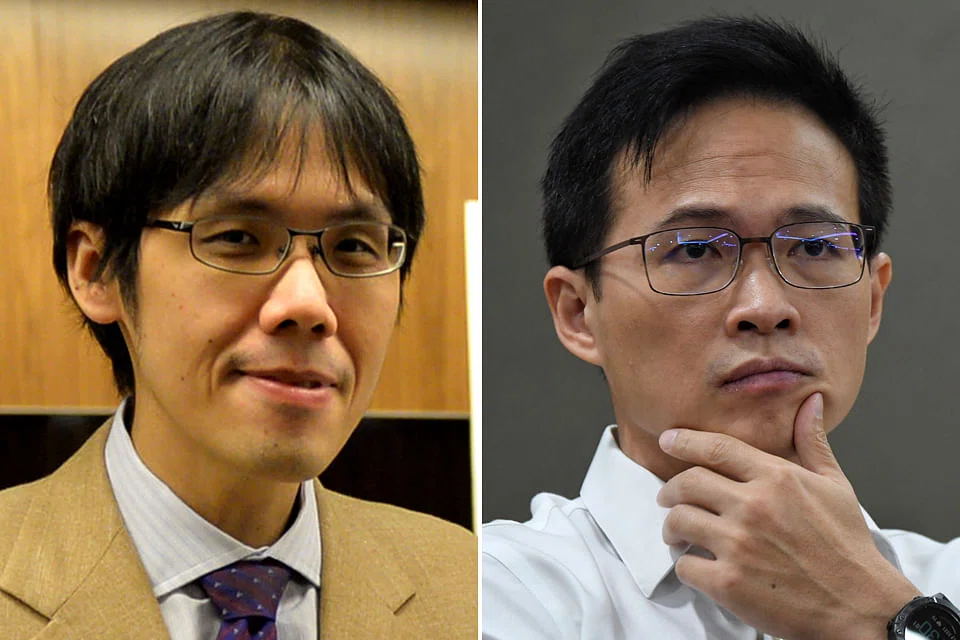
Speaking to The Business Times, Walter Theseira, associate professor of economics at the Singapore University of Social Sciences, cautions that channelling more Singaporeans into PMET roles should not be the goal. This, he says, would put the cart before the horse.
''What matters at the level of the worker is whether they have earnings that reflect the difficulty and valueadd of their job, their skills and capabilities, and whether they have prospects for upgrading their income over their careers,'' he said.
''This does not require having a PMET job, and indeed in many countries, people earn stable decent incomes in non-PMET jobs,'' he added.
''The issue here is whether earnings are too low for non-PMET Singaporeans, again, in comparison to other highly developed economies.''
Prof Theseira's comments come at a time when Covid-19 has taken a heavy toll on lower-income and less-educated workers worldwide and in Singapore.
Nearly 50 per cent of retrenched locals in the second quarter of 2020 were non-PMET workers, higher than their workforce share - a reversal in trend.
It is not only low-skilled workers with livelihoods at stake, but mid-skilled workers who may be increasingly channelled by structural forces into non-PMET jobs.
In a recent opinion piece published in The Straits Times, Senior Minister Tharman Shanmugaratnam described an increasingly "polarised" job market as a trend to tackle in the years ahead; with more jobs being created at the high- and low-skilled ends of the labour market, and fewer in the middle.
This phenomenon has been extensively studied in developed economies, like the US and UK. Research suggests that as technological progress raises the income of high-skilled workers, demand grows for services as a result. Employment share and wages then rise in lower-skilled service occupations.
Simply imagine more high-skilled professionals, with more money to spend - and more gig workers delivering their meals.
Specific worker groups are also more at-risk. In particular, Prof Theseira says older workers are being replaced by younger and more educated workers who earn more.
With pressures mounting, should non-PMET jobs pay more in Singapore?
According to a Ministry of Manpower survey of some 15,000 employers held last year, gross monthly wages for the top 10 non-PMET job vacancies range from S$1,300 to S$2,700, depending on occupation.
A cleaner's wages range from S$1,300 to S$1,600, while employers were prepared to offer security guards salaries of S$2,100 to S$2,700.
In the middle are jobs for healthcare assistants (S$1,500 to S$1,950), waiters (S$1,560 to S$2,100) and receptionists (S$1,700 to S$2,400), among others.
These figures, however, are well below Singaporeans' median gross monthly wages of S$4,300 as of 2019.
Unsurprisingly, MOM's March report on the survey's results said that non-PMET vacancies remained harder to fill than PMET vacancies - and that the most common challenge cited by employers in finding locals for non-PMET jobs was a mismatch in wage expectations.
To a lesser extent, locals also found these jobs physically strenuous; preferred not to work shifts, weekends, or public holidays; and found the working environments unconducive.
The latter reservations are often cited as reasons locals shun non-PMET jobs, wages aside; and may prefer to leave such jobs to foreigners.
But here, Prof Theseira maintains that higher wages would encourage Singaporeans to reconsider, with wages as a compensating factor for the difficulties of the job.
What, then, would it take, to raise wages?
Donald Low, a former Singapore civil servant and currently professor of practice in public policy at the Hong Kong University of Science and Technology, says productivity improvements cannot be relied upon as the lone solution.
"We should accept that there will always be some sectors whose labour productivity growth rates will always be lower than the average productivity growth rate. These would be the sectors that use less machinery, and are less amenable to automation," he said.
"It's not just low skilled jobs that may suffer from this. Just think about an orchestra, or teachers, and ask yourself how much labour productivity improvement there has been over the decades with these two sectors."
Even where productivity improvements do occur, Prof Low points out, they may not translate to wage increases.
For the same reason, Prof Theseira says labour institutions are important to ensure that wages move in tandem with improvements in productivity - "whether that is unions, the National Wages Council, or Progressive Wage Model or minimum wage type systems", he said.
Desmond Choo, assistant secretary-general of the National Trades Union Congress (NTUC), urges more workers to join the labour movement and push for their respective employers to become unionised.
The unions support workers through regular collective bargaining with unionised companies to push for better employment terms over and above minimum legal requirements, he said.
"NTUC and unions are also working closely with tripartite partners to implement the progressive wage model (PWM) in more sectors," he added.
According to Mr Choo, the PWM will help improve the lot of non-PMET low-wage workers in the cleaning, security, landscape and lift and escalator sectors.
"(This is) despite the challenges of widespread cheap sourcing", which Mr Choo admits does occur in certain sectors.
Wage increases, where achieved, are not costless either. Those who argue against mandating wage increases, or for limiting the wage power of unions, caution that to remain viable, businesses will seek to pass on wage increases to their customers.
This, along with higher spending power due to wage increases, could increase the costs of goods and services, which could in turn demand even higher wages to keep up with rising prices.
Such increases can be offset by businesses improving productivity, whether through automation, or simply redesigning processes to reduce headcount.
By implication, not all businesses - and not all jobs - would survive. Is this a poison pill, or the price of progress?
"Either the business is able to continue, or it isn't. But it is crucial to recognise that wage and productivity growth in an economy rarely occurs while keeping all jobs and businesses in place," said Prof Theseira.
"After all, we eliminated bus conductors decades ago to reduce manpower needs in public transport."