Current stress test requirements for power retailers insufficient: minister
Tan See Leng says Open Electricity Market remains viable; but its foundation needs a recharge

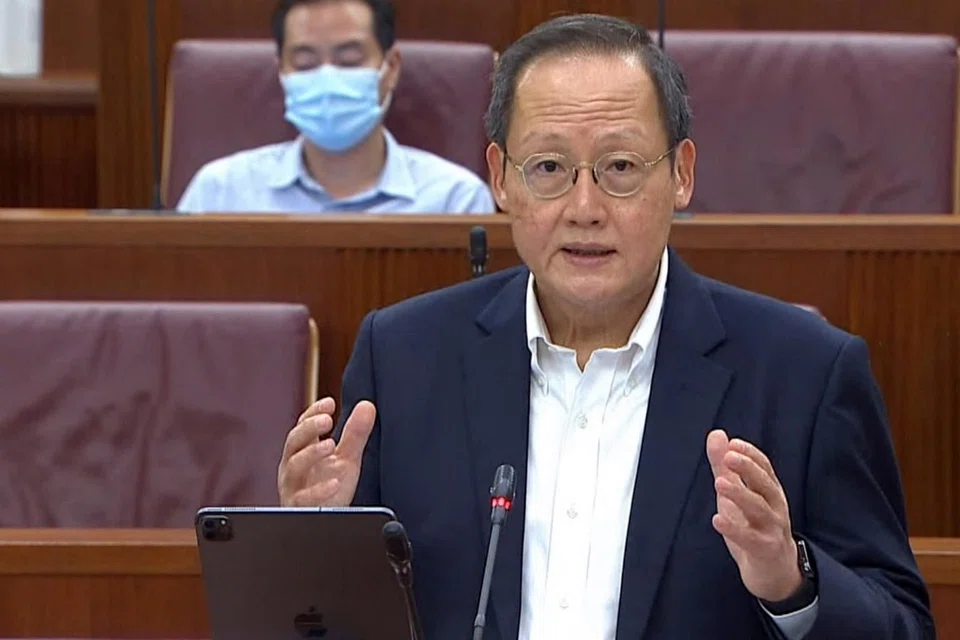
NINE electricity retailers remain in Singapore's Open Electricity Market (OEM) following the exit of 5 players so far. Depending on the severity and duration of the energy crunch, more retailers could exit or re-enter the market, said Second Minister for Trade and Industry Tan See Leng.
Even so, the viability of OEM remains and there is sufficient competition in the market although there is "no magic number" on the number of retail licensees needed to sustain the OEM, said Dr Tan. He was responding to a long string of parliament questions on Monday (Nov 1) in relation to the goings-on lately in Singapore's electricity sector, which has seen several market players bow out amid sharp spikes in spot electricity prices.
Dr Tan however admitted that the foundation of the OEM will need to be strengthened.
Presently, retailers are vetted and have to satisfy a stringent set of requirements before they are issued a licence to serve OEM consumers, he explained.
They have to demonstrate the management team's relevant experience in energy retailing or trading and have to consistently hedge at least 50 per cent of their wholesale electricity price risk. They are also required to submit financial statements to the Energy Market Authority, which allows the regulator to monitor their financial health.
"On hindsight, these are necessary but insufficient to withstand a severe stress test, such as the one we are currently facing. Some retailers were ill-prepared to weather the storm," he said.
"Members have raised useful suggestions on how we can further strengthen these requirements and the futures market. We will consider them carefully," he added.
Under Singapore's progressive liberalisation of the electricity sector, the OEM was launched nationwide for households beginning 2018. As a result, household consumers were able to benefit from greater choice, competitive pricing and innovative offers with no change to the reliability of their electricity supply, he said.
But some market participants had not anticipated nor were they sufficiently prepared for the current volatile market conditions. Global energy shocks and disruptions to Singapore's piped natural gas have led to spikes in wholesale electricity prices.
He cited a couple of factors for the retailers' exits including their under-hedged positions, whereby they found themselves having to buy the unhedged portion of electricity at the high wholesale electricity prices and sell them at much lower contracted rates to consumers. The other was a lack of liquidity in the electricity futures market.
"Given the huge volatility, market makers were not prepared to take on significant positions. This is similar to the situation in other commodity markets," he continued.
As of end-October, about 140,000 households and 11,000 business accounts will either be transferred to another retailer, or back to SP Group following the exits over the last 3 weeks of iSwitch Energy, Ohm Energy, Best Electricity, UGS Energy and SilverCloud Energy.
Collectively, these 5 retailers supply to about 9 per cent of all electricity consumers in the city-state, according to Dr Tan.
Dr Tan remarked: "The entry and exit of retailers are features of an open and competitive retail market. The unusually high number of exits reflects the severity of the global energy shock. We have observed the same phenomenon in other countries, such as the UK and Spain."
So far, most consumers in Singapore have been "somewhat cushioned", he said. This is largely because a majority or 99 per cent of household consumers are on standard price plans with retailers or the regulated tariff rate, and about 96 per cent of businesses are on fixed price or discount-of-tariff plans.
"These have risen by far less than the price of gas or wholesale electricity," he said, adding however that sustained high fuel prices will eventually feed into consumers' electricity bills to reflect the cost of electricity production.
As to questions by Members Parliament on whether SP could continue to honour the prices and terms of the existing contracts that affected customers had contracted with their electricity retailers, Dr Tan replied: "The transferred households will need to pay the same regulated tariffs as all the other households and small businesses. This reflects the price SP pays to the generating companies for the electricity.
"Thus, for the transferred customers to pay less, the other consumers with SP will have to pay more than the regulated tariffs to cross-subsidise them".
Decoding Asia newsletter: your guide to navigating Asia in a new global order. Sign up here to get Decoding Asia newsletter. Delivered to your inbox. Free.
Copyright SPH Media. All rights reserved.