

Draghi unveils revamped QE program as ECB cuts economic outlook
 Add BT as a preferred source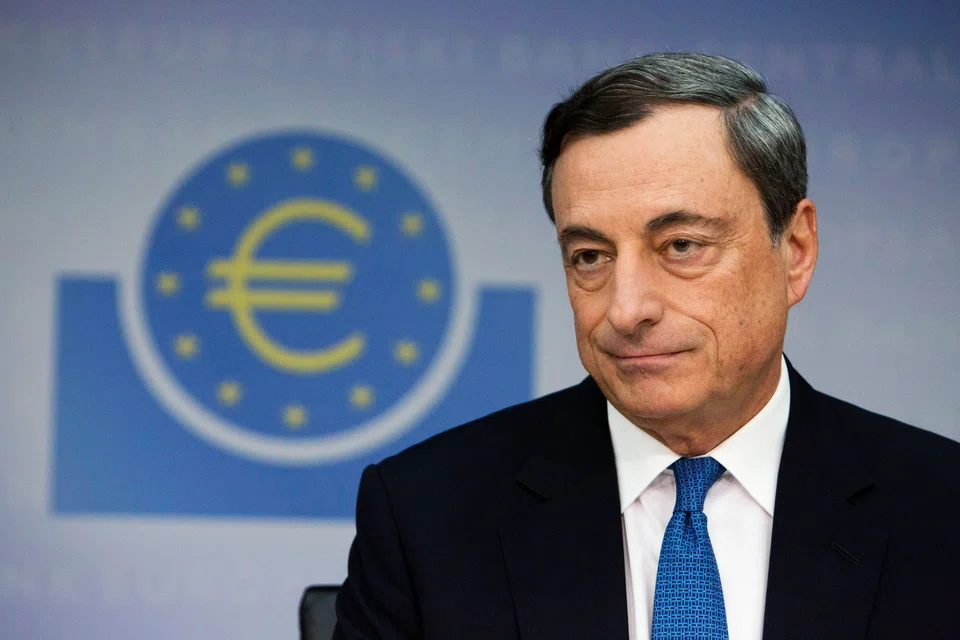
DeeperDive is a beta AI feature. Refer to full articles for the facts.
[LONDON] Mario Draghi unveiled a revamp of his quantitative-easing program that allows officials to buy higher proportions of each euro area member's debt.
Acknowledging a "somewhat weaker economic recovery," the European Central Bank president said in Frankfurt on Thursday that the Governing Council has now set a purchase limit of 33 per cent of a country's debt stock, up from 25 per cent previously. Officials also cut forecasts for economic growth and inflation, citing the emerging-market rout as a threat to global expansion.
Mr Draghi's move gives the ECB's stimulus program more flexibility as officials prepare to continue bond purchases at least until September 2016. Weaker commodity prices, slowing trade and volatility in global equities have fueled speculation that more stimulus is on the way.
"Taking into account the most recent developments in oil prices and recent exchange rates, there are downside risks to the September projections," Mr Draghi told reporters.
"A cross- check of the outcome of the economic analysis with the signals coming from the monetary analysis indicates the need to firmly implement the Governing Council's monetary policy decisions."
The ECB cut its outlook for inflation and growth through 2017. Officials see consumer prices barely growing this year with an increase averaging 0.1 per cent. Inflation will then accelerate to 1.1 per cent in 2016 and 1.7 per cent the next year, Mr Draghi said. The economy will grow 1.4 per cent in 2015 and reach a pace of 1.8 per cent two years later, he said.
Navigate Asia in
a new global order
Get the insights delivered to your inbox.
BLOOMBERG
Share with us your feedback on BT's products and services
TRENDING NOW

Air India asks Tata, Singapore Airlines for funds after US$2.4 billion loss
‘Boring’ is the new black: The stars are aligning for a Singapore stock market revival

From 1MDB to ‘corporate mafia’: Is Malaysia facing a new governance test?

South-east Asian markets account for 8.8% of global capital inflows from 2021 to 2024: report

