

Employees should prepare to work longer hours to cover colleagues as Omicron cases spike: Tripartite advisory
 Add BT as a preferred source
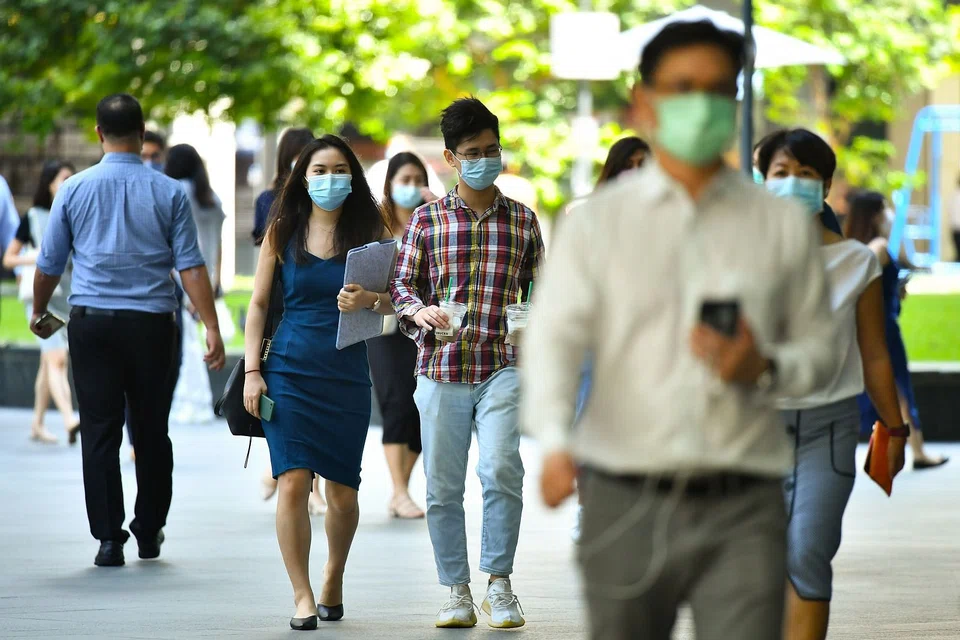
FIRMS should prepare for workers having to put in longer hours to cover for absent colleagues, as Covid-19 Omicron cases rise, the tripartite partners said in an advisory on Friday (Feb 4).
To minimise business disruptions, firms should plan for "potentially high levels of workforce absences", they said, adding that employees could be asked to work longer hours to cover for colleagues.
Employers of workers in essential services that are covered by Part 4 of the Employment Act - such as those working in transport and healthcare - can also consider applying for exemptions from overtime limits, said the advisory.
These workers include workmen, or manual labourers, earning a basic monthly salary of not more than S$4,500 and all other employees whose basic salaries do not exceed S$2,600 a month.
However, there are some work activities which would not be granted overtime exemption. They include any work where mental concentration is paramount to ensure safe operations, such as crane operators, any work involving continuous and manual operation of machinery, such as woodworking, and work activities undertaken by young persons and pregnant women.
Issued by the Ministry of Manpower, National Trades Union Congress and Singapore National Employers Federation (SNEF), the advisory gives further guidance to employers in planning and responding to potentially high levels of workforce absences.
It comes as Singapore sees a rise in Omicron Covid-19 cases. With the variant's higher transmissibility, employers are more likely to see fluctuating short-term absences, which could spike should workplace transmission take place.
To assist employers, the advisory laid out a list of recommendations for employers to consider when reviewing their business continuity plans to deal with short-term staff shortages.
They include:
- Identifying core capabilities critical to business operations; employees fulfilling critical functions can be deployed in split teams to reduce risks of disruption to operations
- Training and identifying employees within the company who can be redeployed should employees performing critical functions test positive for Covid-19
- Employers could consider regular testing of employees who work on-site, especially those who serve critical functions, to allow for early detection and isolation of positive Covid-19 cases. This would help to reduce workplace transmission among critical staff
- Maintaining regular contact with employees who get infected with Covid-19 to keep track of their recovery and to facilitate those who test negative to return to work earlier
- Adhering to prevailing safe management guidelines, including knowing which steps to take when employees are infected with Covid-19
- Developing company policy on leave and salary arrangements, in consultation with unions where applicable, should employers decide to temporarily suspend operations due to absence of employees critical to core business functions
- Identifying the triggers for various aspects of the business continuity plan depending on the level of staff absences for different segments of the workforce
- Preparing other resources that are required to activate the business continuity plan, such as work from home equipment and channels to employ temporary help
- Preparing communications plans to consumers or service buyers to seek their understanding for delays in service delivery, if applicable
- Taking guidance from advisories issued by respective sector agencies, if any are available
"As the nation deals with this period of elevated daily cases, the tripartite partners urge both employers and employees to continue to work together," said the advisory.
"Employees should support their employers in these difficult times to ensure business continuity, and employers should likewise show care and concern for the health and safety of their employees, recognise their sacrifices and contributions, and reward them accordingly."
Decoding Asia newsletter: your guide to navigating Asia in a new global order. Sign up here to get Decoding Asia newsletter. Delivered to your inbox. Free.
Copyright SPH Media. All rights reserved.
TRENDING NOW

ComfortDelGro’s Zig to buy S$10 million worth of BYD cars for private-hire fleet

Singapore telco price war squeezes earnings, strengthens case for StarHub-M1 deal, say analysts
Sats slides 13.6% as investors dump shares on profit-margin squeeze

When every phone becomes a satellite phone, what happens to Asia’s telcos?

