Employment Pass minimum pay rises to enable business growth and openings for locals
Foreign worker policy being tightened amid weakened job market growth outlook
Singapore
THE minimum qualifying salaries for work passes of both foreign professionals and foreign mid-skilled workers will go up a second time this year.
The latest announcement is that, come Sept 1, the salary criteria for new Employment Pass (EP) applicants will be raised to S$4,500; that for S pass applicants will go up to S$2,500 from Oct 1.
The EP minimum qualifying salary in the financial services sector will be raised to S$5,000 from Dec 1 - the first time that qualifying salaries are set higher for a specific sector.
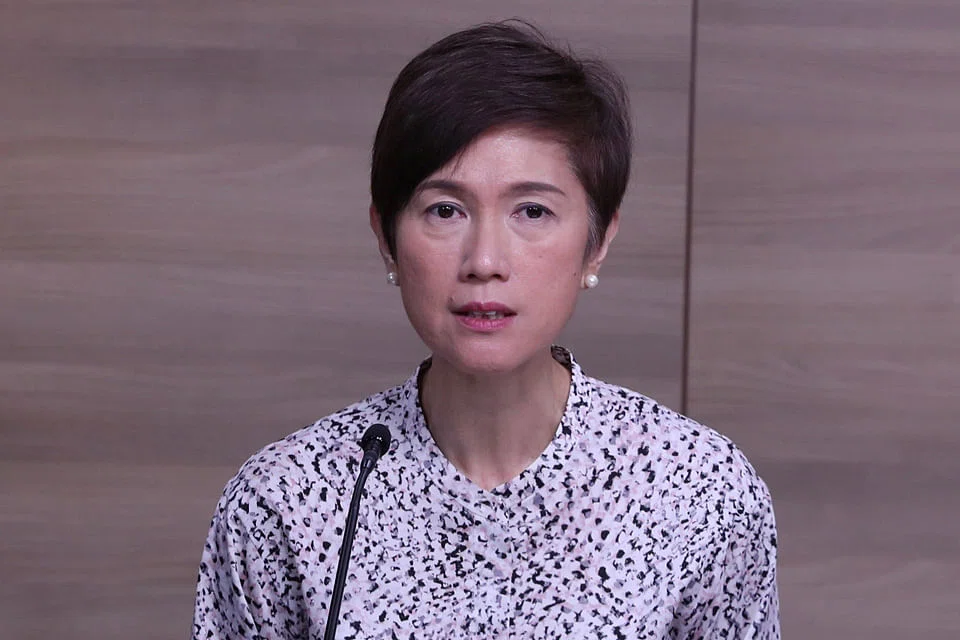
Details of these changes were unveiled on Thursday, a day after Manpower Minister Josephine Teo said the government would move to tighten its foreign workforce policies.
In a statement, the Ministry of Manpower (MOM) said the government has regularly updated the criteria for approving work passes "to enable businesses to grow as well as to support employment opportunities for locals". The new adjustments, which Mrs Teo described as "significant" in a virtual media interview, were made because the fallout of the Covid-19 pandemic has weakened the job market and made the growth outlook uncertain.
She said that though the most recent adjustments to foreign work pass policies were announced in the Budget just this year, there is much more slack in the job market now, with higher unemployment kicking in and more people working shorter hours and looking for additional jobs.
Coming just after the general election, when the foreign-worker policy was a hot issue, Mrs Teo said some people would inevitably see the latest changes as being politically motivated.
However, she said that it would be wrong to delay the changes. "It's the right thing to do - and to do it now."
The first time that the EP salary threshold went up this year was in May, when it was raised from S$3,600 to S$3,900 for new applicants.
For S Pass holders, the minimum salary was increased to S$2,400 in January, from S$2,300 last year.
There were 193,700 EP holders and 200,000 S Pass holders in Singapore as at December last year.
The MOM said the growth of EP and S Pass holders has slowed from an average of 13,000 a year in the first half of the last decade to under 3,000 in the second half. S Pass holders' annual growth slowed from an average of 17,500 to fewer than 6,000 over the same period.
With the latest increases, the EP qualifying salaries for older and more experienced candidates in their 40s will be raised correspondingly, so that they remain around double the minimum salary for the youngest applicants, MOM said.
The salary criteria for older and more experienced S Pass holders will also be raised accordingly.
The new criteria for renewals of both EPs and S Passes take effect from May 1, 2021.
On the move to set a higher qualifying salaries for the financial services sector, MOM said it complements the Monetary Authority of Singapore's efforts to encourage and support financial institutions in the push to develop a strong pipeline of local talent.
It added that salaries in the financial-services sector have been consistently higher than in other sectors.
MOM said that, in evaluating EP and S Pass applications, it would give "additional emphasis" in considering an employer's record and responsiveness to government efforts to help recruit and train more local professionals, managers, executives and technicians (PMETs).
It added that employers further need to avoid over-concentration of EP and S Pass employees. "Employers whose PMET workforce profile suggests a bias against locals will be put on a watch list."
MOM announced that it would extend the Fair Consideration Framework (FCF) Job Advertising Requirement to S Pass applications submitted from Oct 1. The minimum FCF job advertising duration of EP and S Pass applications will be doubled to 28 days at the same time.
Employers had expressed concern about the impact on costs, labour shortage and Singapore's competitive edge when the move was announced on Wednesday. Responding to the latest details, Sim Gim Guan, the executive director of the Singapore National Employers Federation (SNEF), urged employers to build and boost their Singaporean core by tapping government support schemes. He said this would also ease the impact of the tightened work pass requirement.
But he expressed hope that the government would recalibrate the policy when the economy improves, so as to support employers to seize growth opportunities and create more job opportunities for Singaporeans.
Ho Meng Kit, the chief executive of the Singapore Business Federaton, sees the higher costs of hiring foreign talent pushing employers to increase their intake of Singaporeans, but he also noted "there is a gap of wage and skills expectations that need to be bridged between employers and mid-career local PMETs".
Kurt Wee, the president of the Association of Small and Medium Enterprises, said businesses have been facing a "very tightened foreign workforce landscape" for the last eight to nine years. "We are seeing risks of policy being overly protective towards the local workforce and this may have a negative impact on the longer-term resilience and competitiveness of our local workforce."
Addressing the concerns about costs, Mrs Teo said in a Facebook that the changes would apply to renewal applicants only a few months later, which would give businesses time to adjust. The extension of the Jobs Support Scheme and the Jobs Growth Incentive would also to ease the cost burden, she added.
READ MORE: Higher salary floor for foreign hires may put financial hub aspirations at risk