
Eurozone downturn deepens, points to winter recession
 Add BT as a preferred source
A CLOSELY-watched survey has showed eurozone October business activity contracted at its fastest pace since late 2020. German industrial orders also slumped more than expected in September, as foreign demand sank, putting Europe’s largest economy on course for recession.
S&P Global’s final composite Purchasing Managers’ Index (PMI) for the eurozone, regarded as a good guide to economic health, fell to a 23-month low of 47.3 in October from September’s 48.1, albeit just above a preliminary 47.1 estimate.
Anything below 50 indicates contraction.
“The final eurozone PMIs for October paint a clear picture of falling activity and sky-high inflation,” said Jack Allen-Reynolds at Capital Economics.
“While it does not yet point to the 0.5 per cent quarter-on-quarter contraction that we have pencilled in for Q4, the new orders and future output PMIs suggest that worse is to come.”
Asked what type of recession the eurozone would endure, 22 of 46 respondents in an October Reuters poll said it would be short and shallow; 15 said it would be long and shallow. Eight said it would be short and deep, and only one said it would be long and deep.
Navigate Asia in
a new global order
Get the insights delivered to your inbox.
In France, the bloc’s second biggest economy, earlier data showed industrial output declined in September, although its PMI indicated that services sector growth slowed less than initially forecast in October.
Spain’s services sector activity contracted for the second straight month in October, weighed down by high inflation again, its PMI showed.
Inflation in the 19 countries using the euro currency surged more than expected last month, reaching 10.7 per cent, more than five times the European Central Bank’s (ECB) target. Consequently, the ECB is likely to press ahead with more interest rate rises, which will add to the burden faced by indebted consumers.
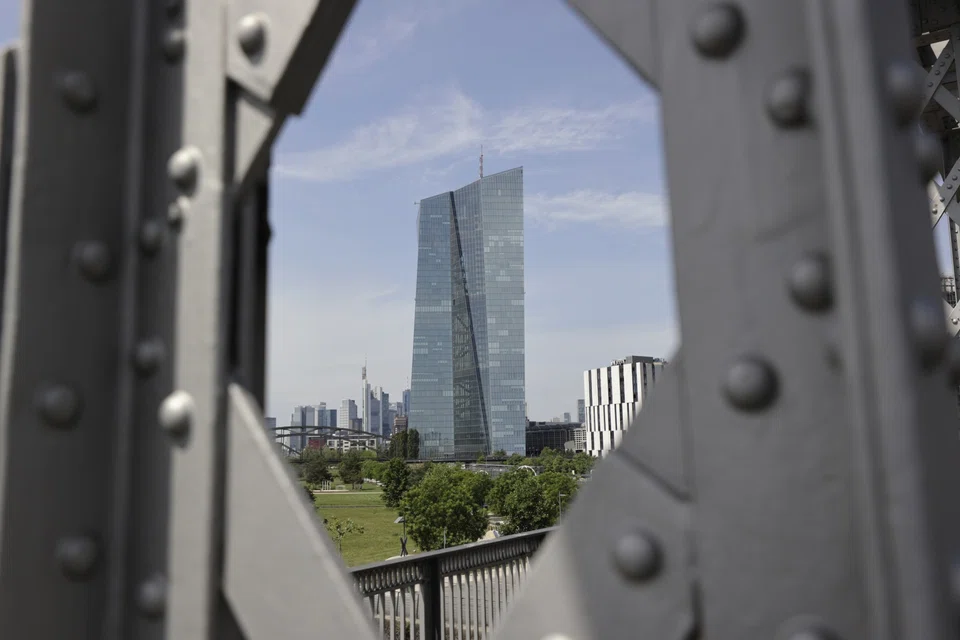
The ECB was the last among its peers to begin raising rates in this cycle, waiting until July. By year-end, the deposit and refinancing rates were forecast to be 2 per cent and 2.5 per cent respectively.
In contrast, the US Federal Reserve, which began hiking the rate in March, raised interest rates by 0.75 per cent again on Wednesday, in what has become the swiftest tightening of US monetary policy in 40 years.
In the eurozone, high operating expenses due to energy, wage and transport costs pushed services companies to raise charges sharply again.
The output prices PMI index was 62.7, the fifth-highest reading in the survey’s 24-year history, and just below September’s 63.2.
With no end in sight to the Russia-Ukraine conflict, nearly 65 per cent of 34 respondents in the October Reuters poll said the cost of living in the eurozone would worsen, or worsen significantly.
Since Russia’s invasion of Ukraine in February, energy costs have soared, and with winter nearing, several European governments have announced new measures to limit the increase in prices.
“The input and output price PMIs remain extremely strong. While they have fallen from their recent peaks, they are a very long way above their previous highs,” Allen-Reynolds said.
“The upshot is that Europe looks set for a painful winter of weak activity and strong inflation.” REUTERS
Decoding Asia newsletter: your guide to navigating Asia in a new global order. Sign up here to get Decoding Asia newsletter. Delivered to your inbox. Free.
Share with us your feedback on BT's products and services

