

F&B salaries up 20% in 2 years and set to rise further

Singapore
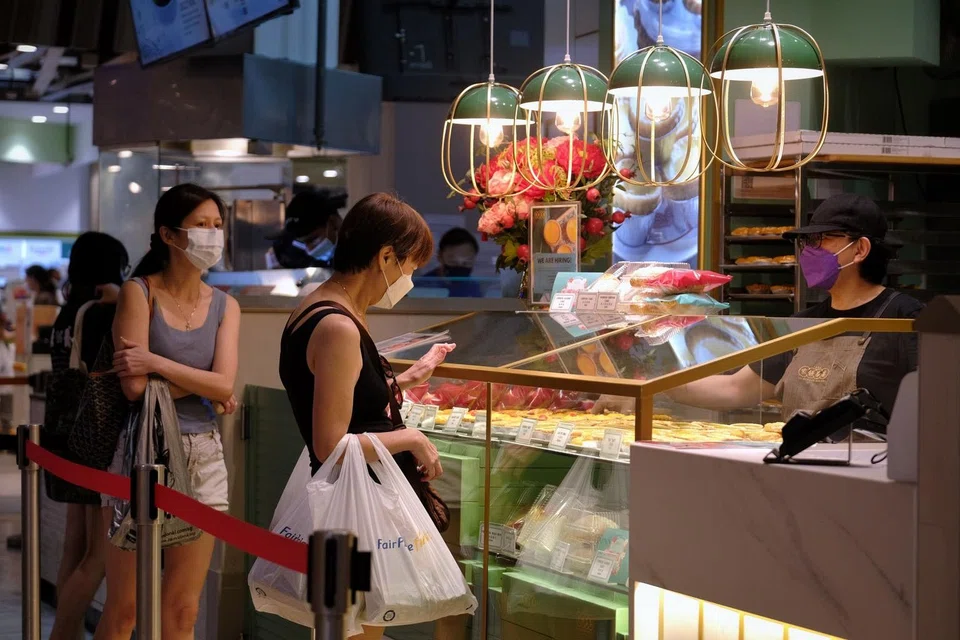
FOOD and beverage (F&B) operators are steeling themselves to raise pay further when minimum qualifying salaries for S Pass and Employment Pass holders kick in this September, even after border curbs and tighter quotas have driven wages up by some 20 per cent over the last 2 years.
Martin Bem, founder and managing director of upscale microbrewery LeVeL33, expects the work pass changes to drive at least a 10 per cent increase in total employment expenses this year.
Seoul Garden Group chief executive officer (CEO) Andrew Lee said that wages for the restaurant chain's S Pass holders will go up by 20 per cent. He also expects to raise local pay, with the group soon to be reviewing its salary structures for "balanced" compensation.
The Food, Drinks and Allied Workers' Union has observed "voracious demand" for workers, with F&B-related job postings rising by over 30 per cent in the second half of 2021, as compared with the first half of 2021.
In this excessively tight labour market, firms are under pressure to provide competitive salaries and prevent the poaching of staff.
New entrants to the industry may dangle salaries of up to "30 to 40 per cent" more than the norm, driving staff turnover across the sector, said Brian Stampe, chief operating officer of Commonwealth Concepts, whose brands include PastaMania and Fat Cow.
"You've a lot of small, first-time operators that may be attacking the labour issue a little too aggressively, which is not sustainable for them or the industry," he noted, adding: "With no existing base of staff, they are likely to offer much higher salaries to entice people to join them, without full consideration of the longer-term impact on their operating cash flow."
This is after wages have already risen during the pandemic years.
Members of the Food and Beverage Management Association (FBMA) - mostly F&B operators in hospitality - have hiked pay by 20 per cent for culinary, service and stewarding roles since 2020, FBMA president Kung Teong Wah said.
Wages of commis chefs, waiters and captains range from S$1,800 to S$2,100, up from S$1,500 to S$1,700 in 2019, he said.
Those of stewarding attendants range from S$1,500 to S$1,700, up from S$1,400 to S$1,600 in 2019. These increases took place from the fourth quarter of 2021 as the festive season approached, said Kung.
Hotels' hourly rates for casual labour have also risen, now averaging S$15 to S$18 for peak hours, up from S$13 to S$15 before; and S$12 to S$15 for non-peak hours, up from S$10 to S$12.
Beehoon eatery White Restaurant's salaries range from S$2,500 for an entry-level chef to above S$5,000 for a head chef - up from a pre-2020 range of S$2,200 to above S$4,000.
Yet there are still few Singaporean applicants, while those who do apply often lack experience, said CEO Alan Wah. Such chefs tend to be from Malaysia or mainland China.
But foreign labour is both more tightly restricted and harder to find now. The services dependency ratio ceiling (DRC) was cut in 2 steps in 2020 and 2021, as was the S Pass sub-DRC. They now stand at 35 per cent and 10 per cent respectively.
Meanwhile, Covid-19 has made it hard for new foreign staff to enter and caused many Malaysians - a large share of the industry's foreign workforce - to return home, said employers.
The staff shortage is most severe in the kitchen, where talent is harder to replenish and requires more time to train up, they added.
Rather than relying just on wage competition, established players are focusing on retention and developing a new generation of talent.
White Restaurant plans to roll out its own management trainee programme by early 2023, fast-tracking diploma holders, Institute of Technical Education and fresh university graduates into various departments across operations, kitchen and service.
Commonwealth Concepts has given out ad-hoc performance incentives on a 1- to 3-month basis since 2021, on top of improving wage scales and other benefits.
"Rather than just purely hiring new people, we are focused on keeping and rewarding those who have been loyal to the company," Stampe said.
While automation and digitalisation have been increasingly adopted to ease reliance on labour, most customers still expect to be served by staff after e-ordering, according to Seoul Garden Group's Lee.
"The critical issue we need to think about in the long run is how to run our business with less manpower rather than trying to get a lot of manpower, which increases our overall cost structure," Lee said. (see amendment note)
He is considering trialling a partial self-service system across his 16 outlets, where main dishes are delivered to tables but customers can pick up smaller items such as condiments or drinks on their own.
As Singapore moves towards living with Covid-19, loosened border curbs may improve the supply of foreign labour.
Yet F&B operators are still operating on a lower level of demand - and as this rises with reopening, the environment will only become more challenging, said Chen Yongchang, head of research and consulting at the Singapore Management University's Institute of Service Excellence.
"If you're going to give customers a lower level of service, in order to maintain the same level of satisfaction, something else needs to level up - whether it's giving them a better experience in terms of quality or variety of food, more efficient processes or ambience," Chen said. "This will affect the smaller players more than the bigger players, because they have less wiggle room - and they may have to end up exiting altogether."
Amendment note: An earlier version of this story incorrectly said Seoul Garden Group's CEO Andrew Lee had increased staff salaries by 20 per cent in the last 2 years. Lee had increased salaries, but did not specify the percentage. The story has been updated to reflect this.
TRENDING NOW

Knight Frank’s Tan Tee Khoon leaves firm, Nicholas Keong takes over auction business
Keppel Energy, Sembcorp Utilities and Tuas Power to supply biomethane in pilot project

GovTech retrenches another 38 staff in second round of layoffs
Take-up of new private homes dives 45% in Q3 as prices accelerate with 1.4% rise

