

FDI applications uptick a bright spot in Thailand's gloomy economic outlook
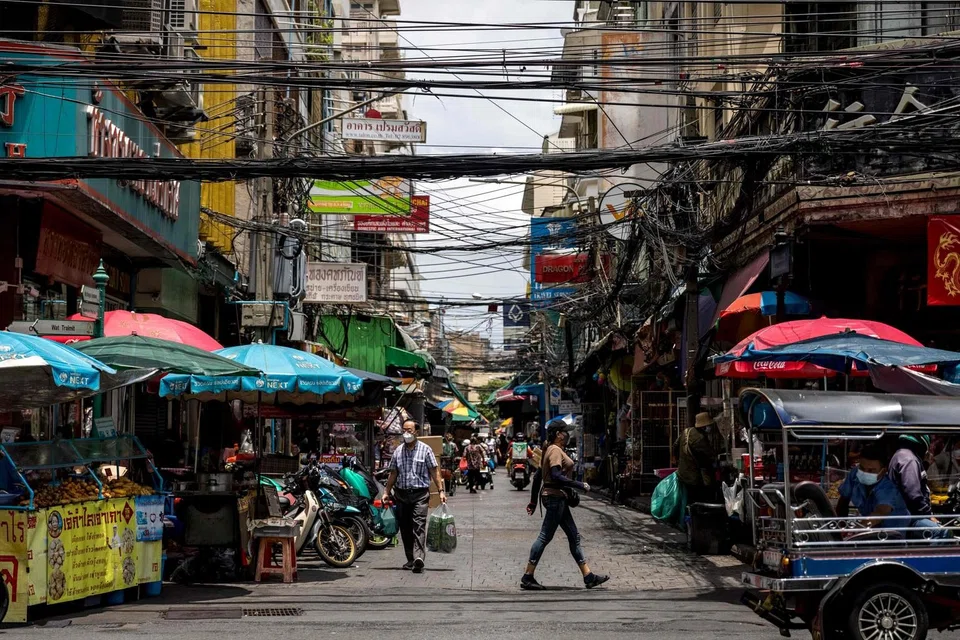
Bangkok
THAILAND'S Board of Investment (BOI) - the agency that hands out tax incentives and other privileges to foreign and local investors - appears to be the only source of good news this year for South-east Asia's second-largest economy, which has been hit by a Covid-19 resurgence, slow growth and rising political instability.
Last week, the BOI revealed that investment applications for the first half of 2021 had increased 158 per cent year-on-year to reach US$12 billion. This involved 801 projects, a 14 per cent jump from the same period in 2020.
It's an impressive performance amid the Covid-19 pandemic, which continues to cripple the tourism-reliant economy and has inhibited foreign investors from flying in, due to the need to still serve a 14-day hotel quarantine upon arrival.
But there is a good explanation for the January-June application surge, despite Covid-19, said BOI secretary-general Duangjai Asawachintachit.
"A high percentage of the applications are from existing investors - Thai companies as well as foreign companies, well-established here and who trust Thailand. They are also expanding or upgrading their production lines, and investing in technology to improve efficiency," she told The Business Times.
During the first half of 2021, 60 per cent of the total applications came from existing investors, accounting for 74 per cent of the total investment pledges.
"Some FDI expansions, particularly in smart electronics, are from new investors who have invested in Thailand a couple of years ago. All that requires little or no international travel," she said.
Due to a third and more deadly wave of Covid-19, Thailand has registered more infections and deaths in recent weeks.
There were 20,128 new cases reported on Tuesday, taking the national total to 948,442. There were also 239 more fatalities, with the death toll now at 7,973.
A reopening of international travel has become increasingly untenable this year, with lockdowns now enforced in 29 of Thailand's 77 provinces including the capital Bangkok.
As the tourism industry normally accounts for some 18 per cent of Thailand's gross domestic product (GDP), economic growth is closely tied to the sector.
Given Covid-19's resurgence, the Bank of Thailand (BOT) is estimating that only 150,000 foreign tourists are expected to visit the kingdom for the whole of 2021.
With the gloomy tourism outlook, and the adverse impact of lockdowns on consumption, the BOT has lowered its GDP growth forecast from 1.8 per cent to 0.7 per cent.
Thailand's exports in the first half of 2021 grew 15.5 per cent year-on-year, and could benefit in the second half from a 10 per cent devaluation in the baht currency against the dollar over the past month.
But Covid-19 could also dent the export recovery as the pandemic has already spread to 1,500 factories and caused disruptions to important supply chains.
Actual private investment is expected to grow 4.7 per cent year-on-year in 2021, after falling 8.4 per cent in 2020, according to the National Economic and Social Development Council, a state planning body.
Despite the BOI's encouraging figures for project applications (to be actualised in the next one to two years), private investment and FDI in particular have lost much of their steam over the past decade as one of Thailand's traditional engines of growth.
In 2020, according to the Asean Secretariat in Jakarta, Thailand's FDI was negative US$4.7 billion, the worst performance in South-east Asia.
One reason for the negative number can be attributed to the sale of the UK-based Tesco/Lotus grocery store chain to Thailand's Charoen Pokphand Group for US$11 billion.
Thailand's multinational corporations such as CP (agro-conglomerate), TCC (beer), Indorama (plastics), SCG (cement and petrochemical), Thai Union (canned tuna) and PTT (oil, gas and petrochemicals) have been aggressively expanding overseas over the past decade, while their investments in Thailand have slowed.
"Thai companies are going overseas because the local market is getting saturated, so to keep growing they need to go abroad," said Charl Kengchon, the executive chairman of Kasikorn Research Center.
That trend may be changing somewhat as Thailand moves to promote more value-added, higher- tech industries in line with the Bio-Circular-Green concept.
For instance, Japan's Toyobo Corp and Thailand's Indorama Group entered into a joint venture earlier this year to invest US$490 million in a project to produce polylactic acid - a low-carbon polymer derived from agricultural feedstocks.
On Aug 10, the US-based Cargill Inc announced a US$600 million joint venture project with Thailand's PTT Global Chemical to build a biopolymer production plant to provide sustainable materials using 110,000 tons of sugar a year. This project was also promoted by the BOI.
"The whole bio-based sector is clearly a rising star for Thailand," Ms Duangjai said.
"We have a strong agricultural sector providing a large quantity and diversity of raw materials and we have strong research institutions and qualified specialists doing a lot of work in this area."
TRENDING NOW

Government to bring forward raising of retirement age, give employers more financial support to create flexi-load jobs

If Europe goes to war, the fallout will be felt in East Asia

Indonesia stocks suffer worst plunge in nearly 30 years as MSCI proposes standalone status

Vietnam’s northern provinces, not Hanoi or Ho Chi Minh City, are powering near 10% GDP growth

