

Flexibility with China hires and more time among measures to help construction firms

Singapore
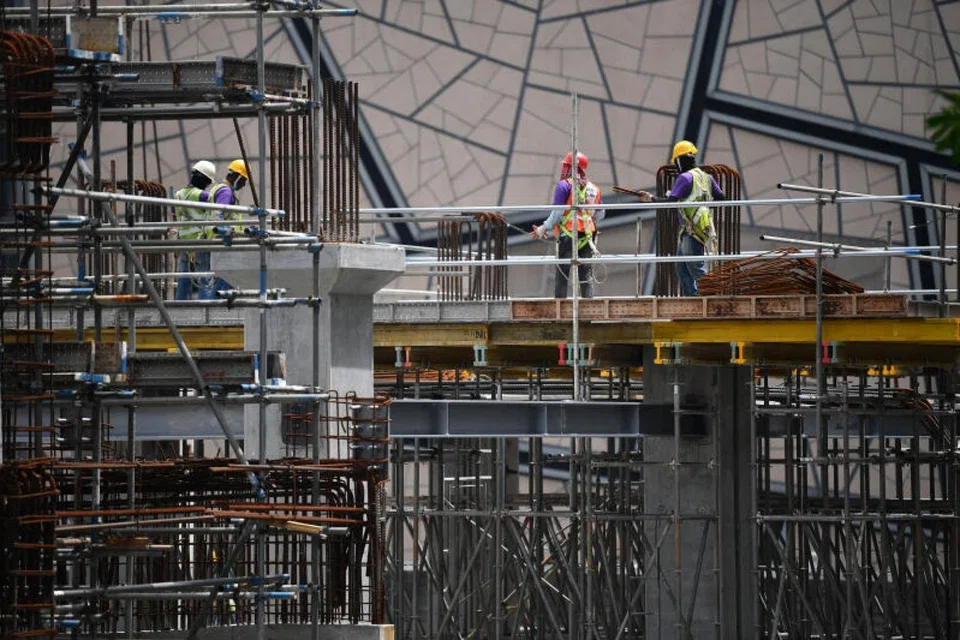
CONSTRUCTION firms will get temporary flexibility in recruiting workers from China; an additional 49-day extension of time for eligible public sector construction contracts; and quicker payouts from the public sector under cost-sharing arrangements, in the first wave of additional measures to support the industry, the Building and Construction Authority (BCA) said on Monday.
Last week, border measures with India were tightened further due to the Covid-19 situation in the country, affecting the flow of Indian workers into Singapore and "companies in the construction sector that are dependent on them", said BCA.
On Monday, it announced three moves to mitigate the impact, adding that it continues to study more measures to help firms cope with rising costs due to labour shortage, with these to be rolled out progressively.
Construction firms welcomed the moves, but noted that the degree of mitigation would be limited.
From May 7, a temporary six-month scheme will let new work permit holders from China get their skills certification in Singapore, rather than having to first enrol in overseas testing centres (OTCs).
As some OTCs in China have yet to resume operations, not all prospective workers have been able to get the qualifications needed to enter Singapore as "basic-skilled" workers.
The temporary scheme will allow employers to bring in work permit holders from China without skills certifications, though they must comply with the other prevailing entry approval and work pass requirements.
Employers can submit applications to BCA's approved training and testing centres from May 7. The list of such centres will be made known within the next two weeks.
While this will help, it is already hard to get workers from China, as there is less interest in coming to Singapore now, said Koh Brothers group chief executive Francis Koh.
Kori Holdings chief executive Hooi Yu Koh said that some industry areas rely more on workers from other source countries, who have relevant skillsets. In his firm's area of structural steel and tunnelling, workers from China are relatively rare.
But with close to 90 per cent of its work in the public sector, Kori Holdings is poised to benefit from another measure. Government agencies will grant an extra 49-day extension of time to eligible construction contracts that have been delayed due to Covid-19 for the period Aug 7 to Dec 31, 2020, "to help ease contractors' cashflow and relieve anxiety on being unable to meet project timelines".
This is in addition to the earlier 122 days provided under Part 8A of the Covid-19 (Temporary Measures) Act. Contractors do not need to make claims for this additional extension.
"That is helpful because it will lessen the pressure that we are facing now," said Mr Hooi.
Mr Koh also welcomed this move, but added that the estimated delay due to Covid-19 is closer to six to nine months, with the labour crunch likely to make progress even slower.
Facing continued overheads, main contractors themselves "don't want to take so long" and would like support to finish projects earlier, said Mr Koh.
Third, for quicker disbursement of cost sharing of non-manpower-related costs under Part 8B of the Act, the public sector will provide 0.1 per cent of the awarded contract sum for every month of delay.
This is for eligible contracts up to an awarded contract sum of S$100 million. Contractors do not need to put up detailed substantiation on qualifying cost incurred for this 0.1 per cent. Those who wish to claim beyond the 0.1 per cent can continue to submit claims with substantiation.
"Details on the above measures will be shared with the construction sector once ready," said the BCA.
Julia Bensily, director of Prime Structures Engineering, said that language barriers can make it hard for firms to switch to sourcing workers from China, if their workforce is not already significantly from there.
She hopes that more of the future additional measures could apply to firms involved in private projects. Reductions or waivers of foreign worker levies would help firms cope with "massive manpower overheads incurred due to the delays", she added.
TRENDING NOW
Singapore identifies 7 firms responsible for haze fires, notices issued urging action: Grace Fu
DBS remains analysts’ pick ahead of Q3 earnings after Singapore banks’ share slump
High Court rules against Julius Baer’s Singapore trust arm in US$50 million family trust dispute

Could stablecoins be the future of money?

