

Foreign workers to drive job growth in 2022 as Singapore economy reopens

Annabeth Leow
NON-RESIDENT job growth is expected to outpace local employment gains in 2022, analysts have told The Business Times, even as the tight Singapore labour market should add jobs across the board through the year, on the back of a broad domestic and border reopening.
The Ministry of Manpower (MOM) on Thursday (Apr 28) said an ongoing economic recovery will drive demand for workers, helping resident employment to “continue to grow modestly”.
Selena Ling, chief economist at OCBC, noted that the labour market faces both an ongoing rollout of wage ladders aimed at local workers, as well as strict foreign manpower policies.
“I would expect that both resident and non-resident labour demand will continue to pick up ahead,” she said, tipping “high hiring demand and needs by employers for the rest of this year”.
Granted, employers could mop up some Singaporeans in pandemic-era roles like safe-distancing enforcement, as Singapore unwinds safe management measures such as SafeEntry check-ins.
But “reopening will lead to higher increases in non-resident employment, as residents are already fully employed”, Maybank senior economist Chua Hak Bin remarked.
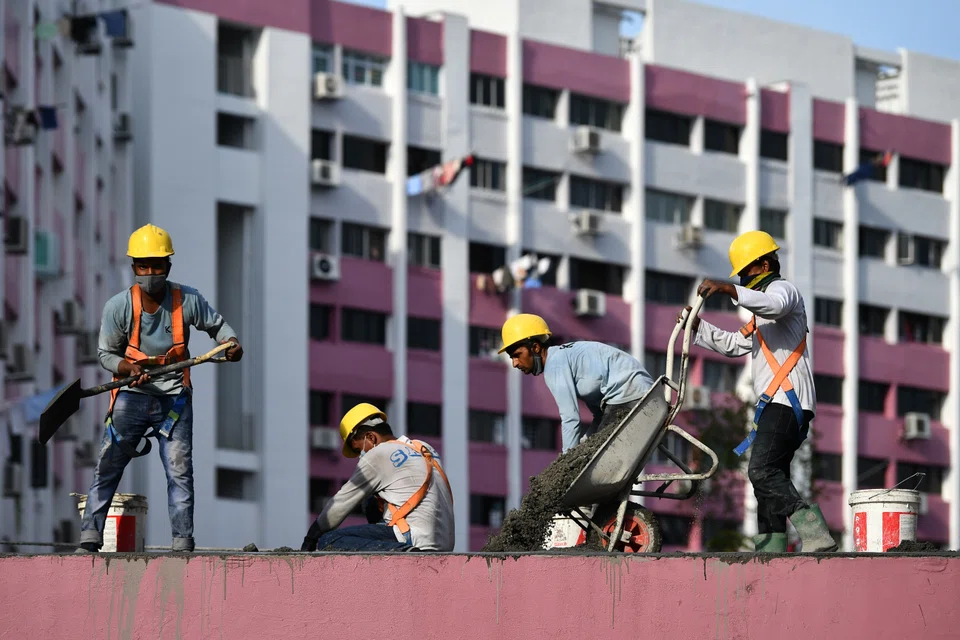
Preliminary figures from the MOM show that work permit holders in the construction sector drove a “robust” quarter-on-quarter employment increase of 41,100 - excluding migrant domestic workers - in the first 3 months of 2022.
The ministry noted that “the increase in non-resident employment was significantly greater than that of resident employment” as border restrictions were gradually eased.
With foreign worker numbers still lower than before the Covid-19 pandemic, non-resident employment is expected to continue recovering in the coming months.
“The services-oriented end of reopening… will largely be led by foreign employment growth,” said labour economist Walter Theseira, citing transport, accommodation and food and beverage (F&B) services as examples. “A large part of employment in such tourist and travel-related services is relatively lower-skilled and has historically relied on foreign workers.”
The ongoing lack of headroom in resident manpower came as unemployment has returned to pre-pandemic levels and retrenchment hit a record low in the first quarter.
Overall unemployment stood at 2.2 per cent in March; resident unemployment, 3.0 per cent; and citizen unemployment, 3.2 per cent. There were some 1,300 layoffs, or 0.6 retrenchments for every 1,000 employees, and the MOM reiterated that the job market remains tight.
Separately, the Ministry of Sustainability and the Environment told the press earlier this week that the country’s roughly 2,000 safe distancing ambassadors (SDAs) will be gradually stood down and can return to other lines of work. Job assistance is on hand for SDAs who need it.
The number of displaced SDAs “should not be an issue, compared with the record low retrenchment and job vacancy-to-unemployed ratio of 2 times”, said Ling from OCBC.
Maybank’s Chua told BT that “reopening will likely reallocate workers to the hospitality and aviation sectors” - with these industries possibly also poaching from F&B, healthcare and retail, where pay is comparable but working conditions may be less attractive.
Prof Theseira, who is associate professor of economics at the Singapore University of Social Sciences, noted that students, homemakers and retirees who had been working part time in Covid-related positions are unlikely to be cause for concern on the labour front.
Yet he added: “There’s high demand at present in the more entry-level job roles in F&B, accommodation, transport, and also manufacturing… But many Covid-19 workers have higher expectations or have skills and experience, so accommodating them will be the challenge.”
On the other end of the skills spectrum, resident employment grew in the quarter in external-facing industries such as information and communications and financial services.
Even so, skills and experience requirements remain “difficult to meet in sufficient quantity from resident workers alone”, said Theseira.
Some 21,600 jobs gained in the first quarter were in construction. Services employment rose by 11,600, excluding migrant domestic workers, and manufacturing sector added 7,200 jobs.
Said the MOM: “As the improving economy continues to drive the demand for workers, we expect unemployment rates to stay low amidst a tight labour market.”
Still, it warned of risks to business sentiment and performance and labour demand, on factors such as lengthy supply chain disruptions and higher prices, amid global uncertainties.
TRENDING NOW

ComfortDelGro appoints two new independent directors

Once staunchly pro-China, Malaysian Chinese businesses are now distancing themselves from Beijing

NoonTalk needs continued financial support from CEO Dasmond Koh, auditors warn

DP Architects sets the benchmark for sustainability disclosure and design

