Fund managers bullish, and 'melt up' possibility cited if US and China forge deal
London
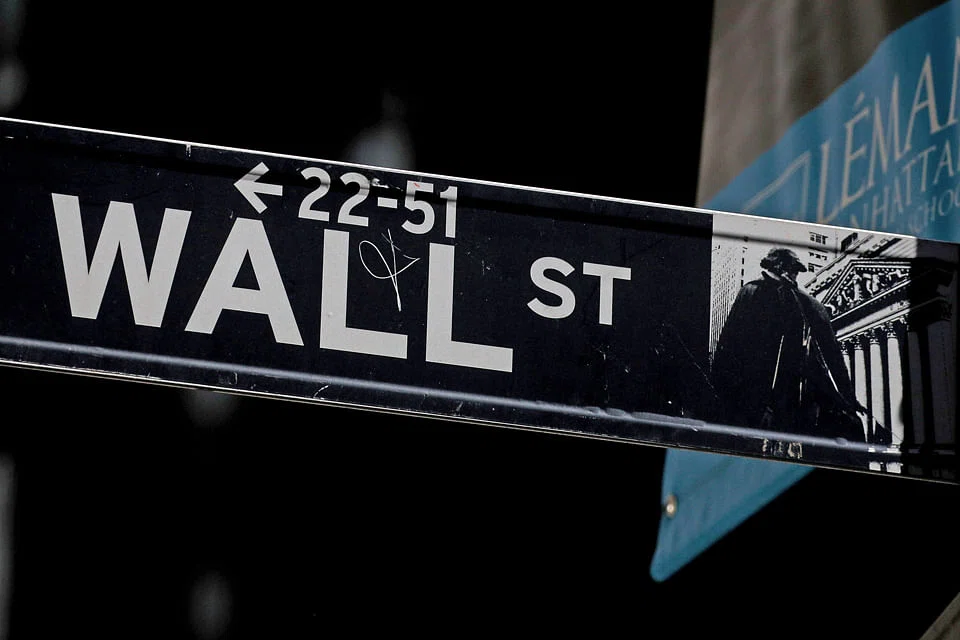
THE majority of global fund managers have become exceedingly bullish about the prospects of Wall Street and other global markets.
But the proviso is that the United States and China forge a trade deal and the US Federal Reserve continues to adopt an easy money policy. Also with unpredictable British elections and possible other geopolitical and economic events and surprises in the offing, markets are likely to be exceedingly volatile.
Some market strategists such as Ed Yardeni, president of Yardeni Research, contend that there is a possibility of a market "melt up" that usually takes place in the final stage of a bull market.
Others such as Gary Shilling, president of A Gary Shilling & Company, argue that the world is close to recession and investors should become bearish and begin to sell the US S&P 500 short. Both strategists have had good track records in the past.
On a global "CAPE" (cyclically adjusted price earnings ratio), the US, Switzerland, New Zealand, Ireland and the Netherlands are the most expensive developed equity markets, according to Star Capital AG. The cheapest are Italy, Israel, Japan, Spain, Singapore, Germany and the UK. Indonesia and India are the most expensive emerging markets and Russia and China the cheapest.
Market reaction on Wednesday illustrates how sensitive investors have come regarding the current US- China trade war.
Asian and European markets slid after US President Donald Trump warned in a speech that there would be a further rise in tariffs if China failed to agree on a trade deal.
The downturn was somewhat ironic as a day before BOFAML had published a survey showing that the majority of global fund managers were super bullish. The investment bank's November Global Fund Manager Survey was conducted between Nov 1-7 and 230 panelists, with US$700 billion assets under management, participated.
Cash levels of funds fell to 4.2 per cent from 5 per cent the previous month, the biggest monthly drop since 2013.
The survey concluded that the fund managers had become less-concerned that a global recession was likely. A "fear of missing out" had prompted a wave of investment optimism into equities, especially cyclical companies which would benefit from an upturn in the economy.
To be sure, optimism about the prospects of global growth was the most prevalent in 20 years. It was also the first time in a year that investors wanted more companies to increase capital expenditure rather than reduce debt and improve their balance sheets.
Over half of investors surveyed (52 per cent) expect equities to be the top performing asset class in 2020, followed by commodities (21 per cent) and cash (10 per cent). Only a net 10 per cent of respondents expected profits to deteriorate.
The US dollar is expected to depreciate, contend 37 per cent of fund respondents, and the decline is expected to fuel a rise in US exports and commodities.
Fund managers rotated into value stocks and less into growth, momentum equities in recent weeks. The sectors included banks, large-cap utilities and staples. European markets were favoured despite the downturn in Germany, Italy and concerns about Brexit. Investors are neutral about Japan.
The optimism contrasts with the gloom a year ago when equities slumped in the fourth quarter before beginning a sharp recovery late in December 2018 and continuing in 2019. Indeed, there was an acceleration to new highs on Wall Street.
The fund managers agreed that the trade war was a key risk factor and are concerned about an economic slowdown in China.
They believe, however, that a trade agreement would encourage investors to raise their holdings of equities. Other risks included inflation and an increase in bond yields.
"The bulls are back," said Michael Hartnett, BOFAML chief investment strategist. "Investors are experiencing FOMO - the fear of missing out - which has prompted a wave of optimism and jump in exposure to equities and cyclicals."
READ MORE: Singapore firms both winners and losers in yuan's downtrend