

German industry views Brexit, Trump as biggest risks to economy
 Add BT as a preferred source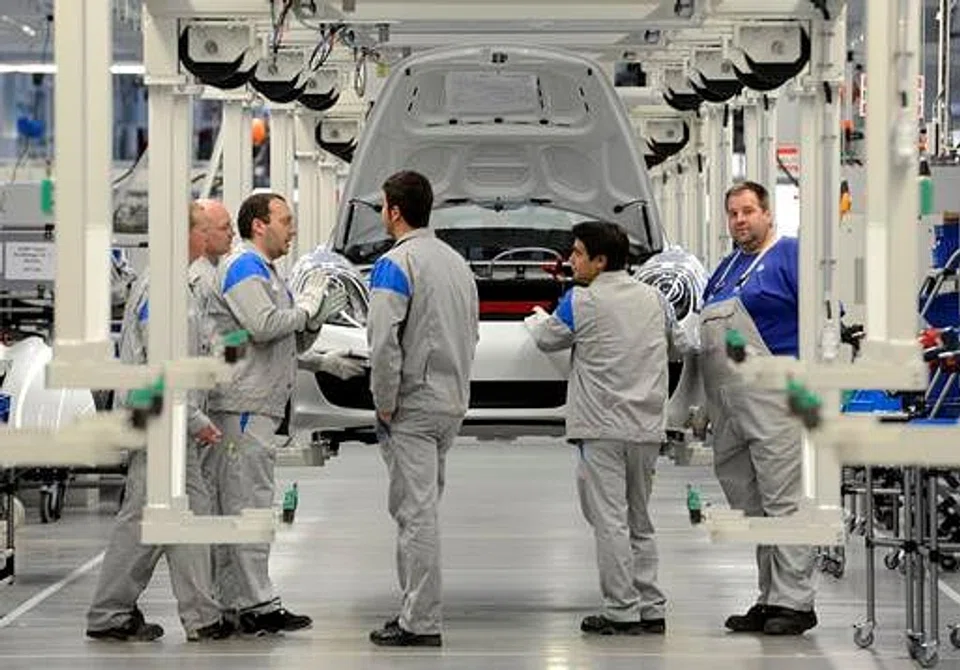
DeeperDive is a beta AI feature. Refer to full articles for the facts.
[BERLIN] Germany's leading industry groups said on Wednesday that Britain's departure from the European Union and trade disputes triggered by US President Donald Trump's 'America First' policies were posing the biggest risks to growth and prosperity.
The German economy, Europe's largest, is expected to post its weakest growth rate in many years in 2018 as exporters are facing headwinds from abroad. But vibrant domestic demand means many companies are still able to expand business.
In a survey conducted by Reuters, the heads of Germany's leading industry associations said they did not see the economy entering a recession and that most forecasts were predicting a solid growth rate of around 1.5 per cent for 2019.
But the industry associations said the economic woes of company executives were increasing and the government should do more to help them, for example by lowering corporate taxes and investing more in digital infrastructure.
"The biggest risk in the short term is Brexit," said Dieter Kempf, president of the BDI industry association.
If Britain left the EU in March without any agreement on its future relations with the bloc, this would create massive uncertainties for trade and business, Mr Kempf warned.
Navigate Asia in
a new global order
Get the insights delivered to your inbox.
"The British economy would face the direct threat of a recession which would indirectly also affect Germany," Mr Kempf said.
Holger Bingmann, head of the BGA trade group, said Brexit was the "most urgent problem for the German economy" while an escalation of international trade disputes sparked by the United States could potentially derail the economic upswing.
DIHK President Eric Schweitzer said German companies are still worried about the US imposing higher import tariffs on European cars. "The threat of car tariffs is still on the table," Mr Schweitzer warned.
It was vital that both sides increased their efforts to find a solution to the trade dispute through negotiations that ideally would lead to lower tariffs, Mr Schweitzer said.
The German economy likely grew by around 1.5 per cent this year, compared with 2.2 per cent in 2017.
REUTERS
Share with us your feedback on BT's products and services
TRENDING NOW

Ministry of Home Affairs Permanent Secretary Pang Kin Keong to retire

Shelving S$5 billion office redevelopment plan proved ‘wise’ as geopolitical risks mount: OCBC chairman

Richard Eu on how core values, customers keep Singapore’s TCM chain Eu Yan Sang relevant
China pips the US if Asean is forced to choose, but analysts warn against reading it like a sports result

