

German tax revenues to rise more slowly as economy cools
 Add BT as a preferred source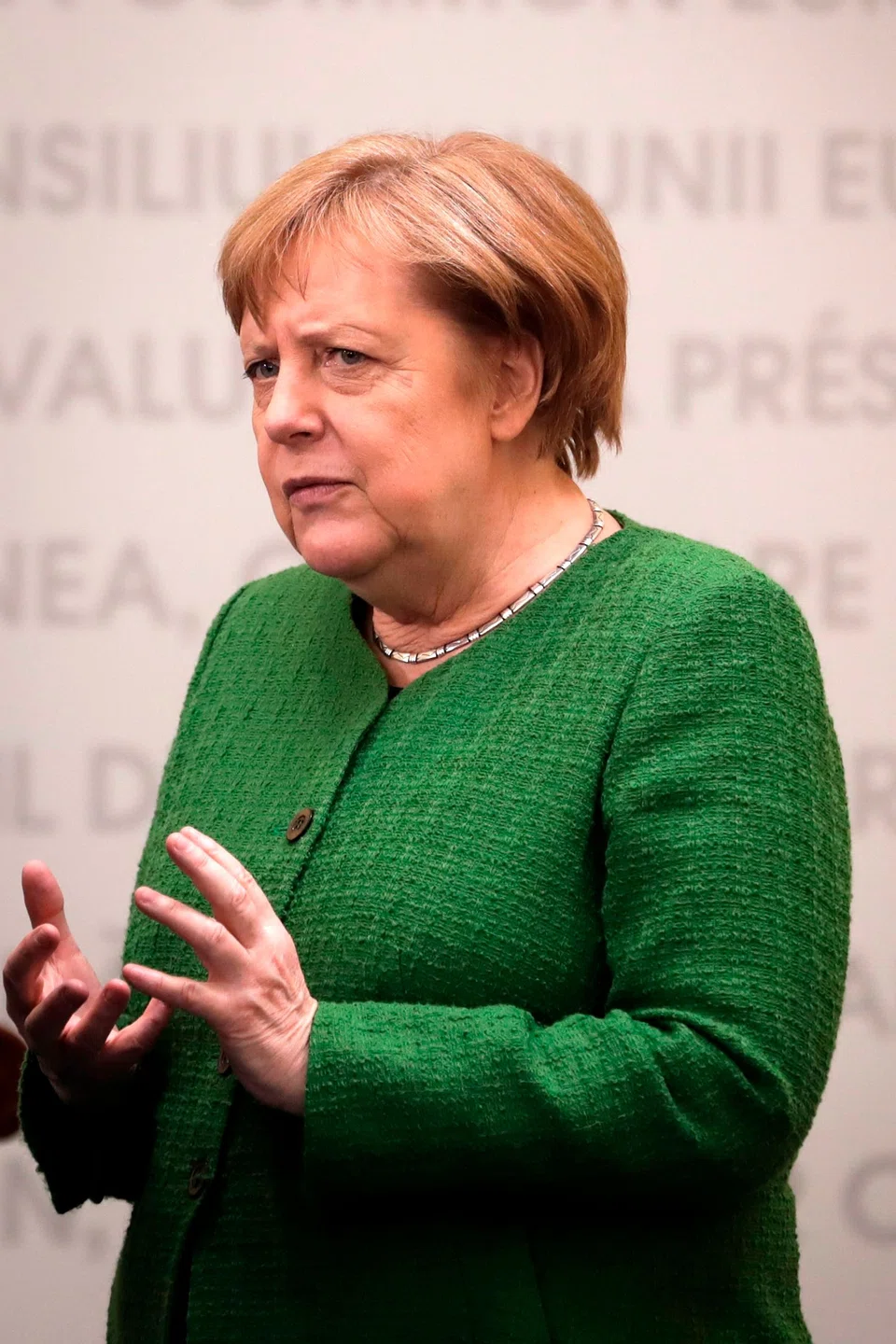
DeeperDive is a beta AI feature. Refer to full articles for the facts.
[BERLIN] German Chancellor Angela Merkel's government predicted Thursday that its tax revenues would rise more slowly than expected in coming years.
This set off heated debate within her left-right grand coalition government on where to slash public funding in the biggest EU economy.
Finance Minister Olaf Scholz said local, state and federal governments would receive 124 billion euros (S$189.3 billion) less in the next four years than had been estimated half a year ago.
The main reason, he said, was slowing global economic growth as trade wars which the United States is waging with the European Union and China impact export power Germany.
"If global demand falls because growth is down everywhere then of course we feel the impact of that," Mr Scholz told a press conference, adding that the main causes were "man-made".
Lower tax receipts will make Germany less enthusiastic about spending big on stimulative eurozone investments as urged by EU partners, or on joint Nato defence as demanded by US President Donald Trump.
Navigate Asia in
a new global order
Get the insights delivered to your inbox.
Despite the relative tax income shortfall, Mrs Merkel's government vowed to stick to its "black zero" mantra of incurring no fresh debt, to avoid future fiscal trouble in the ageing nation.
Economic experts of Merkel's centre-right Christian Democratic Union (CDU) and the opposition Free Democrats and Greens parties demanded that some spending and subsidies be reduced.
The CDU also urged Scholz's party, the Social Democrats (SPD), to scrap its dream of spending billions more on old-age pensions.
Others in Mrs Merkel's CDU called for a corporate tax cut in order to stimulate economic activity and thereby boost future tax receipts.
The Greens meanwhile urged an end to state subsidies that harm the climate, including for the auto and airline sectors.
The tax estimate is calculated twice a year by a working group that includes experts from federal and state governments, the central bank, statistics office and research institutes.
AFP
Share with us your feedback on BT's products and services
TRENDING NOW

From 1MDB to ‘corporate mafia’: Is Malaysia facing a new governance test?
Higher costs, lower returns: Why are Singaporeans still betting on real estate?

South-east Asian markets account for 8.8% of global capital inflows from 2021 to 2024: report

Richard Eu on how core values, customers keep Singapore’s TCM chain Eu Yan Sang relevant

