

Global minimum corporate tax unlikely to cause US capital flight from Asia
Countries with low tax rates need to rely on non-tax policies to attract FDIs in future

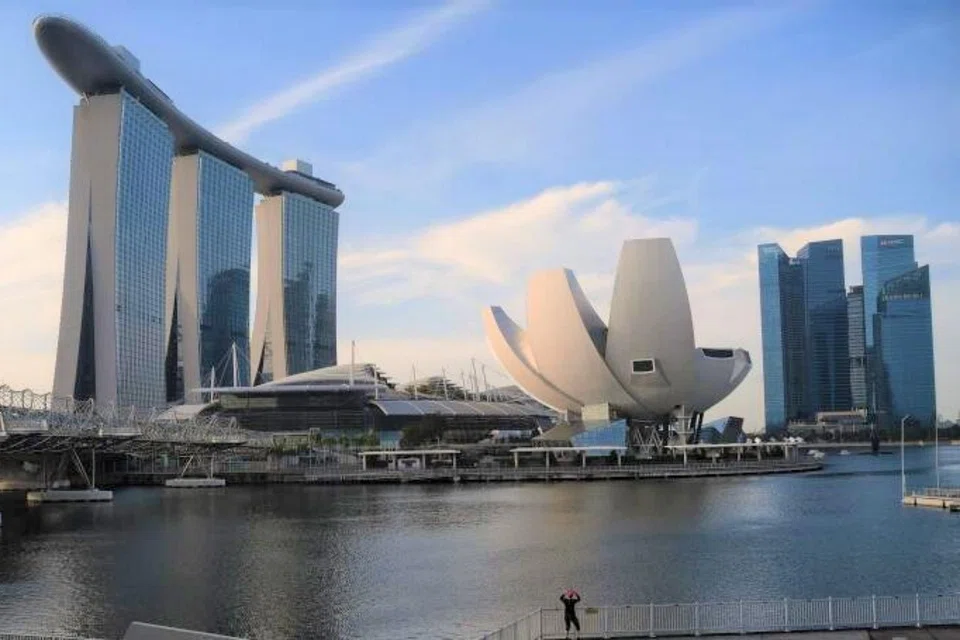
Singapore
CALLS for a global minimum corporation tax rate, if implemented, may see some American companies restructuring to shift certain functions back home or elsewhere, but an exodus of US capital from high-growth Asia is unlikely, tax experts say.
Any such move, however, means low-tax jurisdictions in Asia such as Hong Kong, Thailand, Vietnam and Singapore can no longer rely on tax policies to attract foreign direct investments (FDIs) in the future. Instead, they must focus on non-tax incentives.
The Biden administration is looking to an international cooperation on corporate taxes to prevent multinational corporations (MNCs) from relocating in search of lower tax rates. US Treasury Secretary Janet Yellen has suggested a global minimum corporate tax rate of 21 per cent.
Paris-based Organisation for Economic Co-operation and Development (OECD) has been building a consensus around a 12.5 per cent rate in its talks with about 140 countries - a move which could boost the global tax take by US$100 billion at a time when government coffers have been drained by the Covid-19 pandemic. OECD is expecting a deal to be finalised as early as October, but tax experts say it may take at least two years to implement any agreement consistently globally.
Chris Woo, tax leader at PwC Singapore, tells The Business Times that the US proposals could prompt American MNCs to re-evaluate their global operations.
"While this may result in some corporations restructuring to move certain functions back to the US or elsewhere, the region's value proposition is such that a mass exodus of US investment is probably unlikely," Mr Woo says.
Eugene Lim, head of tax, private equity and mergers and acquisitions (M&A) services at Marsh Asia, says that tax liability will be a major cost for businesses that has to be closely monitored.
"This, together with the increasing ambiguity in tax legislation and tax policy design, will have a huge burden on how businesses assess tax risks relating to cross-border M&A transactions going forward.
"To enhance their level of tax certainty, businesses may look for innovative solutions, such as tax liability insurance, to manage their tax risks," Mr Lim suggests.
Key territories in Asia that have standard corporate income tax rates below 21 per cent include Vanuatu (0 per cent), Macau (12 per cent), Maldives (15 per cent), Hong Kong (16.5 per cent), Singapore (17 per cent), Brunei (18.5 per cent) as well as Thailand and Vietnam (both at 20 per cent), according to Fitch Solutions Country Risk & Industry Research.
Citi Research believes that Singapore will be more affected by US tax proposals than Hong Kong given the city-state's much larger presence of US MNCs and lower effective tax rates (ETR).
"Despite the statutory/headline corporate income tax rates of 16.5 per cent and 17 per cent in Hong Kong and Singapore, respectively, tax breaks and exemptions yield a much lower ETR. We estimate the gap is much wider in Singapore (4 per cent versus 17 per cent) than in Hong Kong (11 per cent versus 16.5 per cent) for US MNCs," Citi says.
If a global minimum corporate tax rate is agreed on, low-tax jurisdictions may see companies involved in mid-level manufacturing and business process outsourcing (BPO) services relocate some of their operations to places that offer more competitive advantages like skilled labour and better infrastructure, Fitch says.
Firms in higher value-add sectors that rely on strong logistics and highly-skilled labour in these markets will be confronted with fewer options for relocation.
"Countries with operating environments that support highly-specialised sectors such as biotech, advanced Information and communications technology (ICT) services and smart manufacturing, will likely be better shielded from the risk of capital flight on the basis of these tax changes," Fitch says.
Tax rates and incentives are just one of the many considerations when corporates decide where to invest or locate their operations.
Mr Woo recalls that in the not-so-distant past, tax incentives were offered by less developed countries, including Singapore, to level the playing field as other non-fiscal factors such as infrastructure, skilled labour and market access weighed in developed countries' favour.
"Today, countries in the region have made strides in economic development, albeit at different paces, and multinationals invest in Asean for reasons other than favourable tax rates or incentives," he says.
Liew Li Mei, international tax leader at Deloitte Singapore, cites a 2019 report by the OECD, which observed that the effectiveness of tax as a tool to attract investments is unclear.
"The report also observed that the use of tax incentives may be effective only if a strong investment climate exists (including good infrastructure, availability of skills, macroeconomic stability, and robust intellectual property rights regime)," Ms Liew says.
She adds that a global minimum corporate tax rate may spur countries to rethink or reshape their tax policies if their corporate tax rate is below the global minimum corporate tax rate.
Mr Woo says the US minimum tax rate proposal and the OECD's base erosion and profit shifting (BEPS) initiative target the largest multinationals. If these are successfully implemented, it is likely that many countries will effectively have two tax systems - one for large multinationals and another for everyone else.
James Mastracchio, partner and co-leader of Winston & Strawn's tax controversy practice in Washington DC, believes that the reforms may not produce all the outcomes desired by their proponents.
He says: "Even if we went to a flat tax, there are too many tentacles for that to be a simple change. If governments want to incentivise certain industries, they can provide tax breaks. For example, tech companies get a favourable outcome when they invest in research and development (R&D). There are lots of competing concerns, so something that may look very simple would, in fact, be enormously complicated."
Uncertainty in tax is a certain global risk, Marsh Asia's Mr Lim says.
"Having a strong tax risk management framework, which entails robust internal process to identify tax risks and solutions to mitigate those risks, will help businesses differentiate themselves from competitors."
What is clear is that Singapore and other low-tax jurisdictions should continue to strengthen their attractiveness for inbound investments - global connectivity, political stability, pro-business environment, diverse talent pool as well as, in the case of Singapore, an innovative and resilient spirit - to ensure that they remain among the top choice investment destinations, Ms Liew says.
PwC's Mr Woo adds: "We are at a watershed in international taxation - we could either see the best of multilateralism in a harmonised effort to collaborate and to promote economic growth, or the opposite outcome which can potentially include multiple taxation, distortion of capital flows and sub-optimal allocation of scarce resources."
READ MORE:
TRENDING NOW

S$8 billion wiped off OCBC value as shares slide 5.8% in heavy trade

Grab CEO’s wife Chloe Tong on life with Anthony Tan and finding her purpose

Brookfield denies accusation it cut Soilbuild out of Mapletree deal

8 public officers referred to police over property buys near unannounced MRT stations: Chan Chun Sing

