GovTech competing with Google, Shopee and more for tech talent
In past two-and-a-half years, agency has raised headcount from about 1,800 to 3,000

Singapore
TECH engineers are a precious resource these days and Singapore's government, pumped with ambition to build a nation driven by technology, is aggressively seeking them out.
In the past two-and-a-half years, GovTech, the agency tasked with digitalising the public sector, has increased its total headcount from about 1,800 to 3,000. It still wants to hire 500 more people.
To illustrate its speed: in the full year ended March 31, 2021, GovTech added 760 new faces to its workforce - about two people a day.
Many of the hires went to the unit that works on government digital services, said Kok Ping Soon, the chief executive officer of GovTech. Several also joined the cybersecurity group and the agency's data science and artificial intelligence division.
Snagging these people was no mean feat, he added.
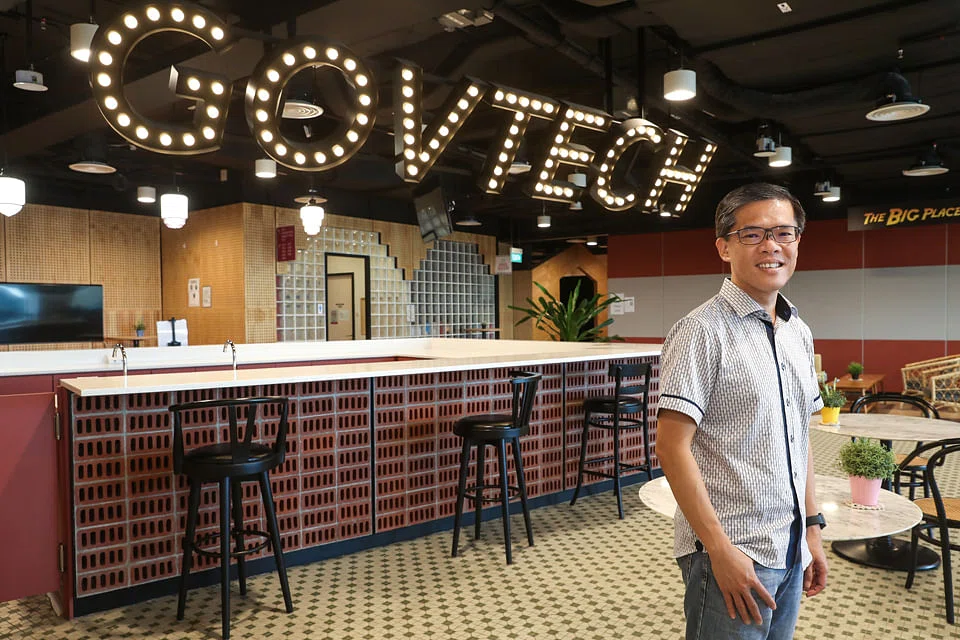
"I am competing with Google, Grab and Shopee. The competitive environment and landscape for talent continues to be quite challenging," Mr Kok told The Business Times in an interview.
The agency is tapping all resources at its disposal. It built a fast-track leadership trainee programme, launched a technology bootcamp, dangled scholarships and promoted its fellowship programme and alumni network.
And it seems to have carved an image for itself. In Universum's 2020 employer perception survey, university students studying information technology (IT) ranked GovTech among the top 10 most attractive employers, alongside companies such as Amazon and DBS.
The ramped-up hiring comes amid the height of the Digital Government Blueprint launched in 2018, a five-year plan outlining how technology will change the way the government serves the public.
Having more people means that GovTech can take on more IT projects, as the agency shifts from outsourcing work to insourcing it, said Mr Kok. At any one time, GovTech is working on about 70 to 80 projects.
It also means that more teams can be deployed to other government agencies for closer collaboration.
There are currently two large development teams, one in the Ministry of Manpower and the other in the Ministry of Education, that are multi-disciplinary and can work on projects from application development to data science.
One of the goals in the five-year digitalisation plan is to have at least 70 per cent of eligible government systems on the commercial cloud by 2023 so that services can be deployed faster. Today, about 600 systems, or 37 per cent of systems, have been moved.
With cloud migration, the speed of IT infrastructure changes can be three to 14 times faster, while the speed of deploying and testing applications is three to six times faster, Mr Kok said.
In fact, when Covid-19 hit Singapore's shores last year and the government launched grants to support struggling businesses, GovTech quickly developed an application portal in an existing website for businesses.
"It is precisely because we were able to develop it on the cloud that we were able to scale," said Mr Kok.
Before the pandemic, the website handled about 800 monthly transactions. At the peak last December, it handled about 20,000 applications.
Covid-19 was chaotic for GovTech, Mr Kok admitted. "There's a Chinese saying, which translates into this in English: If you raise an army for a thousand days, you use it for one battle."
So the pandemic was a stress test for whether the agency could tap its expertise built over the years to swiftly react.
"Singaporeans being Singaporeans, we never give ourselves a very high grade. I think we passed," he said with a laugh.
The agency helped roll out a national contact tracing programme, a variety of temperature monitoring tools, and a tracking system for those serving their leaves of absence and stay-home notice. Many ideas came directly from its engineers, said Mr Kok.
As national vaccination programmes spurred talk of crossborder travel, GovTech began working on HealthCerts, a set of digital open standards and schema for issuing digital Covid-19 test results or vaccination certificates.
While some project milestones at GovTech had to be delayed to tackle the pandemic, increased digitalisation among businesses and consumers became a silver lining.
SingPass Mobile, an app to access government services through authentication methods, has about 2.4 million users today. This is up from March 2020, when the number of users passed one million.
Mr Kok said many relationships were forged in the heat of the Covid-19 moment.
In the past, agencies or ministries might have been reluctant to devote full attention to a tech project because of other priorities. But being exposed to the possibilities of tech over the past year has whetted their appetite.
"I want to be able to lock in these gains and not slide back to the old ways of doing things," Mr Kok said.
He also wants more digital platforms developed by the government to be extended to the private sector.
SingPass, for instance, can be used by small companies as a user verification method. That way, these companies don't have to develop their own authentication services.
SGFinDex, which consolidates an individual's financial information across banks and the government, was developed by the same team that worked on SingPass Mobile. Companies such as Citibank and DBS are involved in the initiative.
Looking ahead to where GovTech will go in the next three years, Mr Kok said that he hopes the organisation becomes an agile entity that is top-in-class in delivering a "digital government" - one that impacts lives, makes Singapore more competitive and helps create jobs.
To do that, "we need to continue to be at the sharp edge in our ability to attract talent", Mr Kok said.
A key push is making sure its staff can work across different disciplines and simplify tech so that non-tech people can understand it. "Otherwise, tech on its own is useless."
Even as he marvels at GovTech's growth, he knows it cannot go on forever.
Eventually, the organisation needs to do more with less. This is why he is so insistent on standardising government tech systems and pushing for more automation.
GovTech has also been tapping components that are easily repurposed, such as reusable codebases, and keeping an eye on emerging technologies such as the Internet of Things, artificial intelligence and 5G.
Reflecting on his three years leading the agency, Mr Kok said the experience has been quite a wild ride.
"I feel a bit like a boy in a candy store! Overwhelmed with so many opportunities that can use tech for the public good," he said, unable to hold back a wide grin.
He paused. "But it's very intense. And it's very consuming. We should compare my picture before and after, with all the white hair," he joked.
As cliché as it sounds, he said he is humbled by how passionate his staff are. The impact of their work is not global, unlike when working in multinational companies, but the sense of purpose is strong, he said.
"I am humbled by their ability and willingness to spend time with me to explain things, and what I can do to help move the agenda forward - by moving the boundaries and giving them the resources and mandate to do things."
Amendment note: Article has been edited to reflect the correct financial year