

High employment but lower salaries for degree holders in Covid-19 years: MOM
 Add BT as a preferred source
DeeperDive is a beta AI feature. Refer to full articles for the facts.
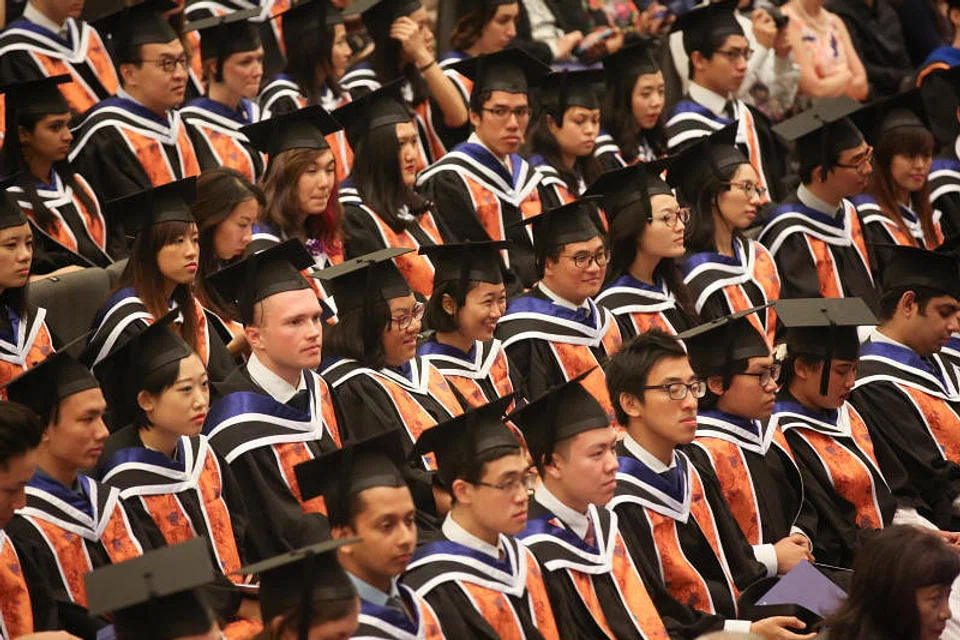
THOUGH degree holders continued to see high employment rates during the pandemic, their incomes took a hit, according to the Manpower Ministry's (MOM) annual Labour Force in Singapore report on Friday (Jan 28).
The employment rate of degree holders aged 25 to 64 edged up to 87.7 per cent in 2021, having stayed stable in the previous 2 years at 87.6 per cent.
But the median income of full-time employed degree holders fell, "pulled down by lower bonuses amid the more uncertain economic climate", said the report. This was S$7,351 in 2021, down from S$7,434 in 2020 and S$7,605 in 2019 before the pandemic.
With salaries falling in the last 2 pandemic years and higher inflation in 2021, median income for full-time employed degree holders grew just 0.2 per cent per annum in real terms, from 2016 till 2021.
In comparison, real median income growth across the workforce was 2.1 per cent per annum from 2016 till 2021, and 2.7 per cent for workers at the 20th percentile.
An advance version of the report was released last December, showing that various labour market indicators have recovered since 2020, some of them to pre-pandemic levels.
Navigate Asia in
a new global order
Get the insights delivered to your inbox.
This included the overall employment rate of 67.2 per cent, which was higher than in both 2020 and 2019.
Friday's updated report showed that real median income growth was 0.9 per cent in 2021, revised down from the preliminary 1.1 per cent figure in December's advance release. But this was still an improvement from the year before, when real median incomes fell 0.4 per cent.
For workers in the bottom fifth, incomes were higher than the pre-Covid level if government payouts are included.
Income at the 20th percentile of full-time employed residents rose 4.4 per cent in real terms in 2021, to around its pre-Covid level. After including Workfare Income Supplement-related payouts, it would be higher than the pre-Covid level by 0.5 per cent per annum.
As reported in December, unemployment rates have improved in 2021, though still shy of pre-pandemic rates.
Compared to 2020, fewer unemployed workers had left their last job involuntarily in 2021, which MOM said reflected the economic recovery.
This refers to those who had left their job due to retrenchment (16 per cent, down from 18 per cent), cessation of business (4.4 per cent, down from 7.6 per cent) and temporary layoff without pay (2.5 per cent, down from 6 per cent). (see Amendment note)
Instead, a rising share of the unemployed had left their last job due to dissatisfaction with long working hours or demanding work, low pay, or working conditions.
"As job opportunities rose with the economic recovery, more workers could have been encouraged to look for a more suitable job," said MOM.
However, the resignation rate and prevalence of job change both remain below pre-Covid levels.
Amendment note: An earlier version of this story said that the share of those who left their job due to cessation of business was 4.4 per cent, down from 7.4 per cent. The latter figure should be 7.6 per cent.
Decoding Asia newsletter: your guide to navigating Asia in a new global order. Sign up here to get Decoding Asia newsletter. Delivered to your inbox. Free.
Copyright SPH Media. All rights reserved.
TRENDING NOW
‘Boring’ is the new black: The stars are aligning for a Singapore stock market revival
Near sell-out launches in March boost developer sales to 1,300 units after four slow months

China pips the US if Asean is forced to choose, but analysts warn against reading it like a sports result

Genting Singapore’s Lim Kok Thay receives S$7.5 million pay package for FY2025

