

Hong Kong's refusal to open border is crushing city's businesses
 Add BT as a preferred source
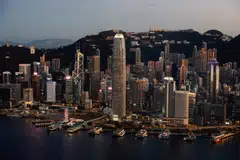
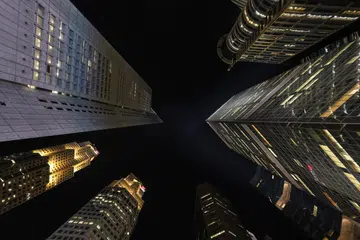
SPARKS cascade into the night sky as welders work on 2 office towers arising in Hong Kong's waterfront banking district. Owned by companies controlled by the city's 2 richest men, the high-rise construction projects radiate confidence in the future of finance hub.
On the streets below, optimism is in short supply. The city, which hosted 65 million visitors in 2018, has been effectively closed to the world since March 2020. There is little sign of the border with mainland China opening this year. Strict Covid restrictions - such as forcing restaurants to shut at 6.00 pm - throttled consumer spending. In February and March, retail sales plunged more than 12 per cent from a year earlier. The economy contracted 4 per cent in the first quarter, one of its worst performances in the past 30 years.
Behind the bleak figures is the human cost. Small business owners facing potential ruin after being forced to shutter their operations for months on end. Residents choosing to emigrate rather than take the risk of their children's schools closing again. Uncertainty over future policy is the enduring theme of many interviewed by Bloomberg News for this story. Quelling such doubts will be key if John Lee, the city's next leader, is to revive the city's economy when he takes over on Jul 1, the 25th anniversary of the return to Chinese rule.
Elizabeth Chan has experienced the economic pain first hand. The government ordered the closure of her beauty salon business along with gyms, bars, cinemas and theme parks in early January for the second time in 2 years. While the move did little to blunt the spread of Omicron, it's almost driven her business into the ground. She's closed 2 of her 3 Elite Skin & Hair salons and reduced staff to 15 from 50. Salons were allowed to open last month, but Chan estimates about 20 per cent of her clients have left the city.
"We are very worried, our clients are worried," said Chan. "From an accounting point of view, we should close down the business. It's gone past the point of survival."
Anthony Yu opened The Galley, an airplane-themed restaurant in the city's gritty Tai Kok Tsui district before the pandemic brought Hong Kong's air traffic to a halt. In 2018, the last year before civil unrest and Covid curbed travel, the airport handled about 75 million passengers. Last year it was 1.4 million, a drop of 98 per cent.
Due to onerous quarantine rules for travellers, the highly-rated restaurant is now the closest many can get to being in the sky. Diners sit in plane seats next to oval windows, being attended to by staff dressed in aircrew uniforms.
"Customers say because we can't travel we are dining in your restaurant so we get a closer feeling to it," said Yu. "People even bring their pets."
Social distancing rules crushed his business - which also includes a Las Vegas-themed bar, hot pot restaurant and takeaway outlet. Sales plunged 90 per cent in the first 3 months of the year as the government banned evening dine-in and limited the number of diners per table to 2.
The government has since eased rules to allow restaurants to stay open till 10.00 pm and allowed 8 per table. But Yu isn't optimistic. A major concern for business owners is the potential for restrictions to be reimposed in the event of another wave.
"The economy will not quickly return to normal," he said. "All of us are under big pressure because we can't see a clear future."
Small and medium businesses employ about 45 per cent of the workforce in Hong Kong's private sector, making them crucial to the economy. Hong Kong's unemployment rate climbed to 5 per cent in the first quarter, a 9-month high. About 470,000 people applied for pandemic-related unemployment relief, 57 per cent more than authorities expected, the government said in mid-April.
As the rest of the world moves past Covid restrictions to living with the virus, Hong Kong's approach of closing businesses, restricting everyday activities and keeping travellers out looks increasingly outdated and punitive. Governments bar China have abandoned Covid Zero policies in the face of Omicron, while Asian nations are rapidly dismantling travel restrictions aimed at limiting the spread of the virus.
New Zealand's leader Jacinda Ardern said Wednesday (May 11) the country will fully reopen its border in July, 2 months earlier than planned. Japan's Prime Minister Fumio Kishida pledged last week to relax virus-related border controls in line with other wealthy countries in June. Singapore and Thailand both eased entry rules for vaccinated travellers last month.
Hong Kong is moving in a more liberal direction than before, certainly compared with mainland China, where Covid Zero is being pursued with increasing zeal. This month, the financial hub ended a 2-year ban on visits by all non-residents and eased some restrictions on inbound flights. Hotel quarantine for inbound travellers has been halved to 7 days. Most remaining social distancing rules will be eased later this month.
Yet the quarantine rule means the city is still effectively closed to visitors. Simon Murray, the former Glencore chairman who built his career in Hong Kong, doesn't want to return until restrictions are lifted.
"I don't fancy coming and sitting in a hotel for 7 days under lock and key," said 82-year old Murray, a former French Foreign Legionnaire. "A knock on the door reminds me of foreign legion prison."
Hong Kong is "falling behind" as the rest of the world reopens, Cathay Pacific Airways chairman Patrick Healy said at the airline's annual general meeting Wednesday.
There is plenty of room for Hong Kong to ease international border controls. Infections have continued to decline even as the government loosened rules. New daily cases are below 300, from more than 50,000 at the peak in March. Vaccination rates continue to climb. About 86 per cent of the population aged 3 and up have had 2 doses.
It's not clear what the prerequisites are for reopening the border with the mainland, Hong Kong's leader Carrie Lam said this week. Hayman Chan, a third-generation tailor, used to drive to his workshop in neighbouring Shenzhen several times a day before the pandemic. He hasn't been back to the mainland since last year when he did 21 days quarantine.
"It takes a very long time to make an order and a longer lead time means less business, it's just a massive headache," said Chan, who is chief executive officer of Hondsyork, which specialises in selling suits online for global clients.
Chan has closed 2 of his 3 premises and cut staff to 6 from 20 as business declined. "It can't get any worse," he said.
Back in Hong Kong's financial district, construction continues on the buildings owned by Li Ka-shing's CK Asset Holdings and Lee Shau Kee's Henderson Land Development. Yet demand for office space is falling.
The city recorded just HK$7.8 billion (S$1.4 billion) of commercial property transactions in the first quarter, compared to a quarterly average of about HK$30 billion in 2018, Cushman & Wakefield data show.
"I've been working in this industry for more than 25 years," said James Mak, a district sales director in Midland IC&I and who helps broker sales of office floors. "This is the worst." BLOOMBERG
Decoding Asia newsletter: your guide to navigating Asia in a new global order. Sign up here to get Decoding Asia newsletter. Delivered to your inbox. Free.
Share with us your feedback on BT's products and services
TRENDING NOW
Shanda co-founder sells Tanglin Hill bungalow for S$76 million
Jumbo Seafood to close flagship East Coast Seafood Centre outlet on Sep 30
Nearly half of Apac’s wealthy expect market crash or correction, plan to rotate to cash: study
Yeo’s, Tiger Beer and now Gardenia – flight of food manufacturing from Singapore might be just as planned

