

Industry groups say ministers' statements confirm Singapore is open to trade, talent
They agree that it is crucial for Singapore to remain open to international talent, following minister's robust defence of free-trade agreements
Singapore
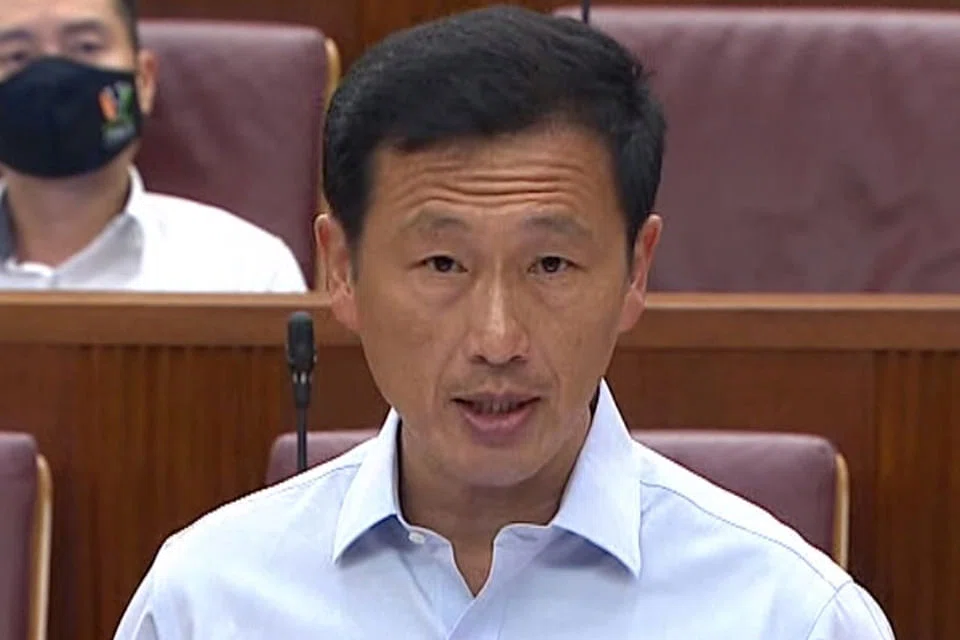
LOCAL professionals, managers and executives (PMEs) face several challenges from the entry of their foreign counterparts into the workforce, Health Minister Ong Ye Kung acknowledged in a speech on Tuesday.
However, referring to the misplaced blame on free-trade agreements (FTAs) for this problem, he defended the FTAs Singapore has signed, in particular the India-Singapore Comprehensive Economic Cooperation Agreement (CECA).
Such trade deals "are not the cause of the challenges our PMEs face; if anything, they are part of the solution", the former trade negotiator said in a ministerial statement.
He conceded that local PMEs may face more competition from foreigners at the company level, but pointed out that policy-makers, on their part, have to balance the need to create more jobs and having "some competition". The alternatives are to have many jobs and strong competition, or no competition but few jobs.
Industry groups told The Business Times that Mr Ong's statement in Parliament, and the one delivered by Manpower Minister Tan See Leng were welcome reaffirmations of Singapore's openness to trade and talent - a stance that is key to business competitiveness.
Singapore Business Federation chief executive Lam Yi Young told The Business Times that "it is important that Singapore remains open to international talent", and that the movement of foreign manpower in and out of Singapore "is an essential part of the smooth operations of multinational companies" (MNCs) with bases here.
"Singaporeans will be worse off if these companies decide to close their operations here due to their inability to bring in the manpower that they require," he said.
Mr Ong had told the House that addressing challenges such as the emergence of a large share of foreign PMEs from certain countries or in certain sectors "is not a straightforward matter of chopping up the operations of a company here", because a relocation of the entire investment out of Singapore "will hurt even more Singaporeans".
He stressed that the Ministry of Manpower and its tripartite partners are actively enforcing measures against unfair hiring practices in companies which have preferred hiring certain nationalities over local PMEs.
"If we mistakenly blame FTAs and CECA for these problems, our responses would be disastrously wrong and we would make our problems worse."
Mr Ong also noted that CECA "benefits Singapore in many ways", such as helping to expand bilateral trade with India on the back of reduced tariffs.
T Chandroo, who chairs the Singapore Indian Chamber of Commerce and Industry, confirmed that members of the chamber have benefited from CECA-enabled trade "because India is a difficult market to navigate and requires a lot more hand-holding".
But he added that more can still be done to build up Singapore firms' footprint in India, such as by making it easier for them to do business in individual Indian states.
CECA has emerged as a political flashpoint here in recent years; Hong Lim Park played host to a rally against the trade deal in late 2019.
Progress Singapore Party (PSP) Non-Constituency MP Leong Mun Wai has said that the party will file a motion to debate employment policies and CECA; MPs from the People's Action Party and Workers' Party also filed questions on FTAs.
Mr Ong, in his statement in response to the questions, strenuously rebuffed the charge that CECA is giving Indian nationals "free rein to come to live and work in Singapore".
He stressed that all of Singapore's FTAs contain a "strong immigration carve-out", in that, even with FTAs in place, all foreign PMEs - including intra-corporate transferees - must meet work-pass criteria to be employed here.
He said that Parliament should robustly debate policies "to help Singapore navigate the balance between global and local", but warned: "We cannot survive - we cannot earn a living - without being connected to the world, without being welcoming to the world, without the House unanimously supporting the FTA strategy."
In the wake of Tuesday's parliamentary sitting, Hsien-Hsien Lei, chief executive of the American Chamber of Commerce in Singapore, lauded that "there was at least some agreement" across the political aisle - consensus that FTAs are good for the economy, and that Singapore has to be open to global talent with new knowledge and expertise.
"Because of that, American companies know that we are committed to the same things," she said, citing research and development, career development and business growth.
Dr Lei told BT that members rarely face difficulties bringing in workers from abroad "because I believe that they're following the right processes. They're demonstrating that they're hiring local talent and only applying for work passes when it's necessary".
Singapore International Chamber of Commerce chief executive Victor Mills added that the ministerial statements "categorically and clearly reiterate Singapore's DNA" of openness to investment and talent "from everywhere".
"Businesses prefer to hire Singaporeans and permanent residents where they have the skills, the character, the drive and the potential. The issue is there are not enough, never have been enough and will never be enough of us to fill every role," he said.
Referring to the furore over CECA, Mr Ong noted that "quite disturbing xenophobic views about Indian immigrants" have spilled over into attacks on both Indian nationals and Singaporean Indian citizens. Valid concerns over the effects of globalisation deserve serious attention, but should not be "exploited by political groups", he added.
TRENDING NOW
One-third of Singapore-listed firms at risk in severe AI downturn: MAS
‘Not done’: Keppel CEO Loh Chin Hua transformed the group, but says there’s ‘still a lot to do’

He built the Vingroup empire. Now South-east Asia’s richest man is handing some key roles to his sons
‘We don’t want to stay as we are’: CEO Patrick Ng builds a more resilient Huationg

