

Industry, trade and investment to boost Vietnam's strong growth: ADB
But a faltering global vaccine roll-out could impact its ability to return to its strong pre-pandemic growth path

Singapore
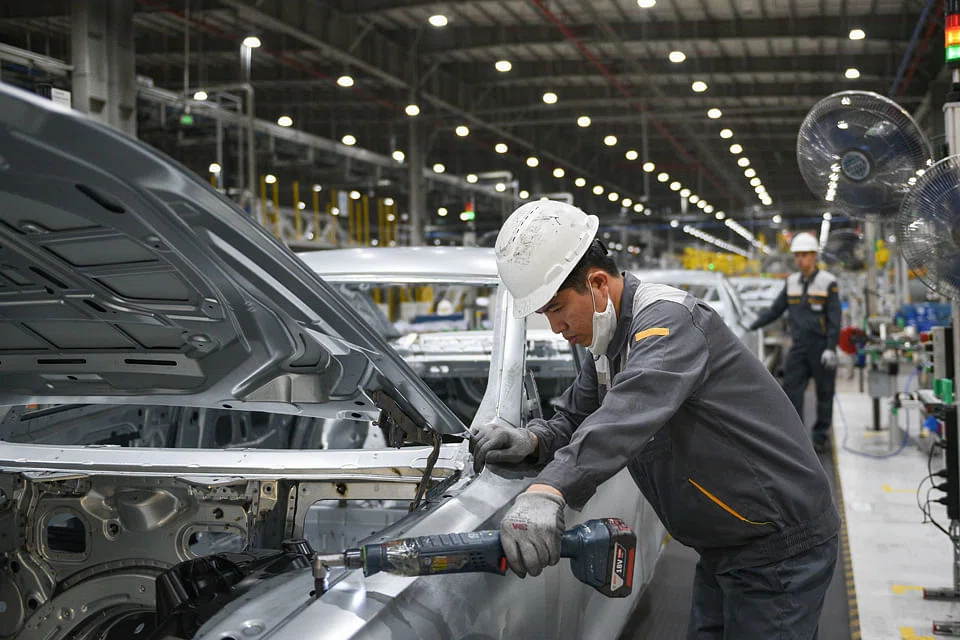
VIETNAM is expected to see a strong and steady growth of 6.7 per cent this year and 7.0 per cent in 2022, propelled by export-oriented manufacturing, increased investment and expanding trade in spite of the resurgence of Covid-19 infections among some of its neighbours.
According to the Asian Development Bank (ADB), stagnant domestic consumption and weak external demand caused by the Covid-19 pandemic slowed Vietnam's growth last year, but the growth momentum is strong this year and next, thanks to the country's success in controlling the virus spread.
However, ADB country director for Vietnam, Andrew Jeffries warned: "But significant risks remain this year and next, including the emergence of new coronavirus variants and a delay in the government's vaccination plan."
Ongoing reforms to improve the business environment and Vietnam's participation in multiple free trade agreements (FTAs) involving almost all advanced economies will fuel growth.
The industry sector, which got off to a strong start in the first quarter of 2021 when it grew by 6.3 per cent from the first three months of 2020, is forecast to expand by 9.5 per cent in 2021, contributing 3.5 percentage points to gross domestic product (GDP) growth.
"The economic recovery of major trading partners will increase demand for manufacturing exports," ADB said.
Construction is expected to pick up quickly as the government continues to accelerate major infrastructure projects in 2021 and low interest rates stimulate property development. Services are expected to rebound by 6.0 per cent in 2021, contributing 2.3 percentage points to GDP growth. Its growth will be generated by the digital transformation, increased spending on Covid-19 vaccines, buoyant business sentiment, and low interest rates.
ADB sees a stronger agriculture sector this year on continued structural reforms, greater market access for agriculture exports under regional FTAs, and higher global food prices due to rising demand.
Vietnam's success in containing Covid-19 and the Investment Law, passed in January 2021 to cut business regulations, are expected to further attract foreign investment. Registered foreign direct investment increased by 17.8 per cent in the first quarter of 2021, compared to the same quarter last year. "Overall investment growth will be further spurred by private investment, which has already risen substantially, stimulated by low interest rates and rising public spending," ADB said.
Rising international oil prices and increased domestic consumption is expected to push inflation up to 3.8 per cent this year and 4.0 per cent in 2022.
Trade is expected to remain robust this year, supported by strong economic recoveries in China and the US, Vietnam's two major trading partners, as well as the country's participation in 15 major FTAs. Some US$2 billion in merchandise trade surplus was posted in the first quarter of 2021, with exports surging 34.3 per cent to China and 32.8 per cent to the US. Merchandise exports are forecast to rise by 8.0 per cent this year and the next.
Fiscal policy will remain expansionary given the need for spending on social security, health care, and vaccinations, and for possible additional fiscal support. This could potentially push the fiscal deficit beyond the planned 2021 deficit target of the equivalent of 4.0 per cent of GDP.
ADB warned that a resurgence of the pandemic from new coronavirus variants and delays in the government's vaccination plan are major downside risks to Vietnam's growth momentum.
"A faltering global Covid-19 vaccine roll-out could have an immediate impact on Vietnam being able to return to its strong pre-pandemic growth path, given the country's reliance on external demand," ADB said.
It added that a quick revival of domestic private investment might worsen the risk of asset bubbles, if credit is not channelled to productive sectors. ADB said Vietnam can maintain inclusive growth by softening the pandemic's impact on poverty and incomes. It urged the government to adopt a long-term sustainable strategy to help the poor and vulnerable diversify their livelihoods through measures such as vocational training and improved access to micro-finance for new businesses.
TRENDING NOW
Olivia Lum, ex-CFO not giving evidence in their Hyflux trial
Bank on AI-resilient Singapore property via deep-value listed property groups
Positive pivot or premature? Analysts split on Keppel Reit’s S$610.9 million buy

Once staunchly pro-China, Malaysian Chinese businesses are now distancing themselves from Beijing

