Investors in Australian real estate unlikely to be put off by wildfire crisis
Singapore
INSTITUTIONAL investors - including those from Singapore - are unlikely to be put off from investing in Australian real estate despite the months-long devastating wildfires which have razed a wide swathe of the south-eastern part of the country.
Some six million hectares of forest, bush and parks have been burned mainly in New South Wales (NSW), Victoria and South Australia.
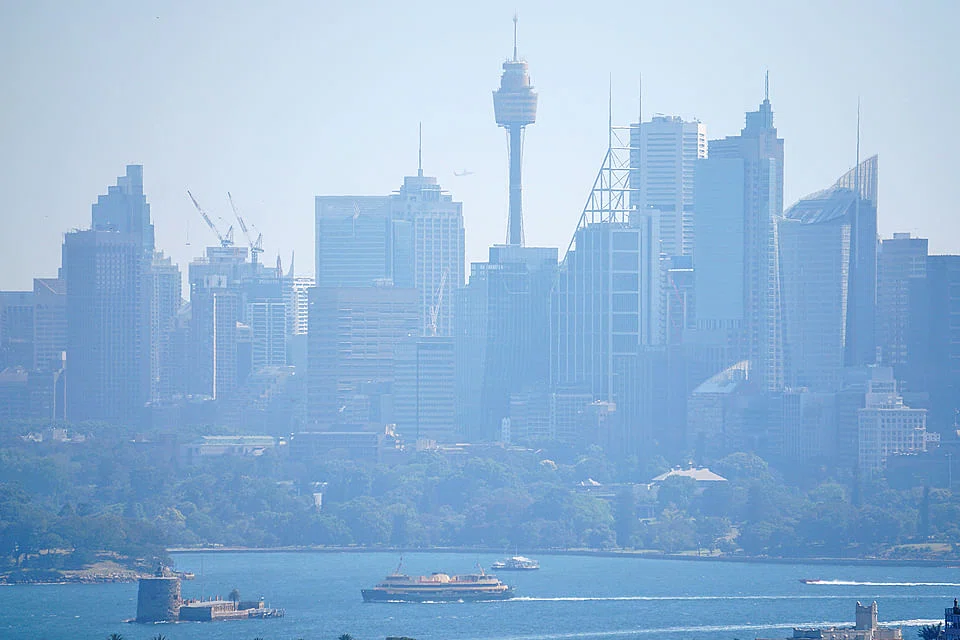
NSW, the worst-hit state, accounted for almost five million hectares and last month the air quality in Sydney exceeded hazardous levels several times with the city being shrouded by smoke.
Victoria has declared a state of disaster, and NSW has declared a state of emergency - both granting extraordinary powers and additional government resources to battle the fires.
Qantas cancelled all flights to and from Canberra on Sunday as a result of the fires. As of Monday morning, flights have resumed.
Without minimising the tragedy of the wildfire crisis which has killed 24 people so far and destroyed some 2,000 homes, consultants note that the fires are not in the gateway cities favoured by institutional investors.
"Most investments are in gateway cities, away from bush fires although air quality will be affected," said Ong Choon Fah, chief executive of Edmund Tie & Company.
Singapore investors last year snapped up Australian real estate, with acquisitions up 20 per cent to US$3.4 billion driven by the transparent and deep market, good yields, freehold opportunities and cheap currency.
2019's US$3.4 billion was the third-highest since 2014, when about US$3.8 billion was spent on Australian property.
Most institutional real estate investors are interested in assets found in city centres, where buildings are not physically at threat, said Colin Galloway, contributing editor, Urban Land Institute (ULI).
"Unless there is a perception that the wildfires may create a systemic problem for the economy, I don't see this as a problem, especially given that demand for assets is greater than supply," he added.
Institutional real estate investors - both domestic Australian and international institutional investors - are all interested in major Central Business Districts (primarily Sydney and Melbourne, but to a lesser extent Brisbane and other state capitals) office and international hotel properties, major regional shopping malls and major logistics centres, said Ian Mackie, ULI Australia chairman.
"All of these target assets are virtually immune from the current fire crisis facing Australia," added Mr Mackie.
"Even when suburban Sydney was dramatically impacted some years ago (when suburbs adjoining national parks and forests were severely hit and many houses lost), I do not recall any real estate assets which we would consider 'institutional' being affected at all," he noted.
The fires across Australia are in regional forest and grassland areas, and not in cities, he pointed out.
There are many small communities and farm houses in these affected areas that have been devastated, but no city suburban areas (so far), and no CBD locations.
"As for the smoke impact on major cities, while this is severe in the short term, when the fires finish, the smoke will clear. The smoke is drifting into the cities from regional forest areas, and is not generated in the cities themselves," said Mr Mackie.
Significant transactions by Singapore investors in Australia in 2019 include GIC buying a 25.1 per cent stake in Lendlease International Towers Sydney Trust from the Canada Pension Plan Investment Board and Lendlease Group.
The trust which owns premium-grade office properties in Sydney's CBD was set up in 2012 and is valued at A$4.3 billion (S$4 billion).
In November, SPH Reit bought a half-stake in a freehold mall, Westfield Marion Shopping Centre, in the state of South Australia. The transaction with Lendlease Real Estate Investments comes at a price tag of A$670 million. This followed its acquisition of an 85 per cent stake in Figtree Grove Shopping Centre for A$175.1 million in Wollongong, NSW in December 2018.
Susan Leng, SPH Reit chief executive, when asked if the wildfires might prompt a review of its Australian assets, said that the company's investment proposals are subject to a rigorous and disciplined assessment that takes into account relevant and significant factors.
"This is to safeguard business sustainability and protect investors' interest," added Ms Leng.
READ MORE: