

Italy tightens restrictions on Covid unvaccinated
 Add BT as a preferred source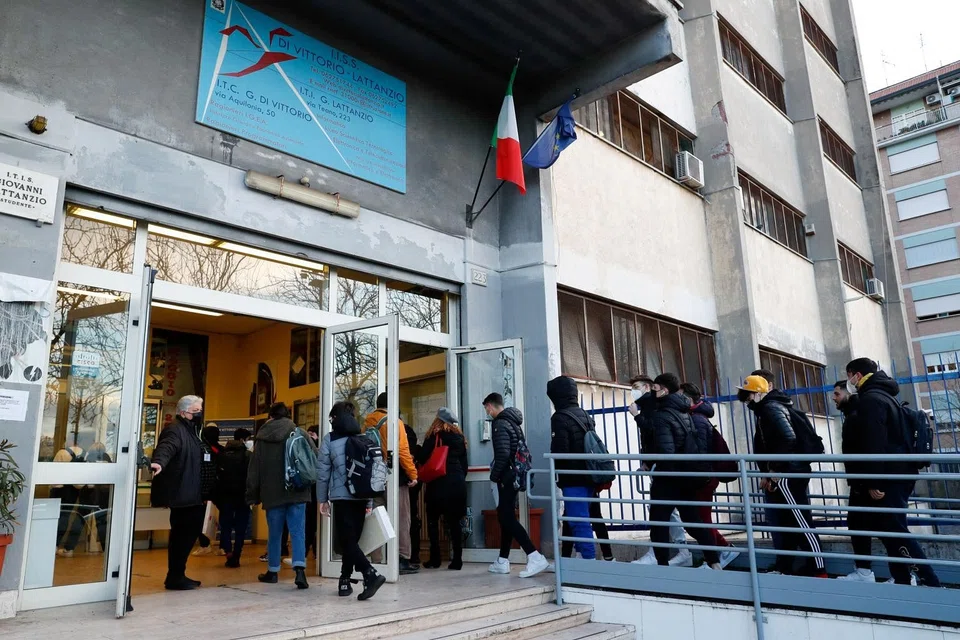
DeeperDive is a beta AI feature. Refer to full articles for the facts.
[ROME] Prime Minister Mario Draghi urged Italians on Monday to get vaccinated against the coronavirus, blaming those who were not for "most of the problems we facing", as Italy again tightened its Covid-19 rules.
New restrictions came into force Monday barring the unvaccinated from restaurants, gyms, swimming pools, theatres, cinemas, sports events and public transport, with only those recently recovered from Covid-19 exempt.
The measures were introduced in the face of a sharp rise in infections in Italy, the first European country hit by coronavirus in early 2020, which has since recorded almost 140,000 Covid-19 deaths.
At a press conference, Draghi emphasised that despite the rising cases - another 100,000 were reported on Monday - the situation was different from last winter when the vaccination campaign had yet to begin and lockdowns were required to stop hospitals becoming overwhelmed.
"Most of the problems we are facing today depend on the fact that there are unvaccinated people," he said.
"Unvaccinated people have a much higher chance of developing the disease and severe forms of the disease," he said, saying they were putting hospitals under pressure - and urging "all the Italians who are not yet vaccinated to do so".
Navigate Asia in
a new global order
Get the insights delivered to your inbox.
More than 86 per cent of people over the age of 12 in Italy are fully vaccinated, while 23 million of the 60-million-strong population have had a booster jab.
Vaccines are also open to children aged five and over.
The government is also making vaccines obligatory for the over 50s from next month.
The majority of schools opened Monday for a new term despite calls from headteachers, the doctors' union and some mayors to delay the return to class for at least two weeks.
Hundreds of councils across the country kept their schools closed, according to media reports, but Draghi repeated that keeping children in class was a priority.
"We want to be careful, very careful, but also try to minimise the economic and social effects and above all the effects on boys and girls who have been affected more than others by the closures, from a psychological and educational point of view," he said.
Top virologist Massimo Galli at the Sacco de Milan hospital earlier warned opening schools was "imprudent and unjustified", while public health expert Walter Ricciardi described the situation as "explosive".
The high number of cases is also having an economic effect - Trenitalia said on Monday it had cancelled 180 regional trains due to staff shortages.
The so-called Super Green Pass showing proof of vaccination or recent recovery is required in almost all public places and on public transport until March 31, while FFP2 masks are mandatory in many places.
Unvaccinated residents on Italy's small islands, which had warned they risked being cast into "forced exile" by the new rules, have been permitted to travel with a negative Covid test until February 10 for health or educational reasons.
AFP
Decoding Asia newsletter: your guide to navigating Asia in a new global order. Sign up here to get Decoding Asia newsletter. Delivered to your inbox. Free.
Share with us your feedback on BT's products and services
TRENDING NOW
Ministry of Home Affairs Permanent Secretary Pang Kin Keong to retire

Shelving S$5 billion office redevelopment plan proved ‘wise’ as geopolitical risks mount: OCBC chairman

Richard Eu on how core values, customers keep Singapore’s TCM chain Eu Yan Sang relevant

China pips the US if Asean is forced to choose, but analysts warn against reading it like a sports result

