

Jobs in some international schools in danger if enrolment falls along with expat numbers

Sharon See
Singapore
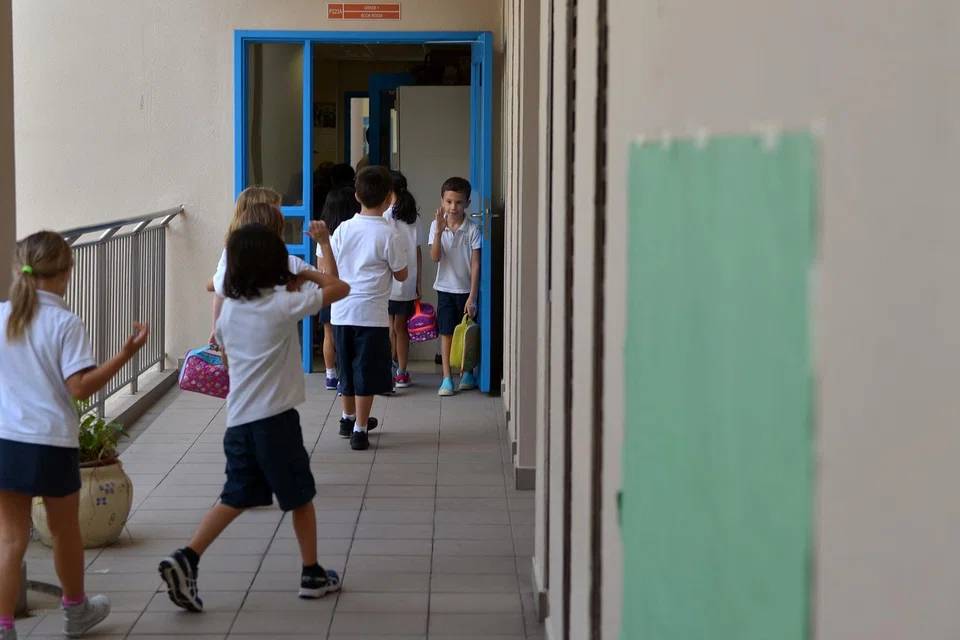
INTERNATIONAL schools are bracing for a possible fall in enrolment numbers as expatriate numbers slide due to the Covid-19 pandemic, but for the more popular schools, it could mean a shorter wait-list for prospective students.
A spokesperson from Overseas Family School (OFS) told The Business Times that interested parents who are making enquiries at the school are now "struggling" to get their work passes approved by the Ministry of Manpower. This has created uncertainty for expatriates who were originally scheduled to move here.
"The enquiries are still there, but I think now, to convert them into enrolment, that itself - because of Covid-19 - becomes a challenge," the spokesperson said. "We can accept them on a provision ... but that, they have to submit their status, whether they can come in with their parents."
The school, which has 2,500 students from pre-school to pre-university levels, is operated by mainboard-listed Overseas Education Ltd. The company said in a June 12 exchange filing that it is expecting student enrolment in the new school year starting August to be affected by the pandemic and border restrictions.
"We have a group of 200 (students) who just graduated from Grade 12, so we lost them, they'll go to university. We hope that the rest of the 2,300 ... we have given them the letter that our school fees for next year don't change, hopefully they accept them and they'll continue," the spokesperson said.
While OFS is trying to keep all its teachers, the spokesperson said some may have to be let go in a worst-case scenario, if enrolment numbers do fall. This is especially since the school does not get much in wage support through schemes like the Jobs Support Scheme, since the bulk of its faculty staff are foreigners.
Melissa Maria, principal of Global Indian International School's SMART Campus in Punggol, said the pandemic has caused a slowdown in incoming expat families from India, resulting in a slowdown in physical enrolment.
For parents and students who are on the wait-lists of popular schools however, the border restrictions may have helped nudge them forward more quickly, as is the case at the Singapore American School (SAS) and Tanglin Trust School.
Tom Evans, director of marketing and communications at Tanglin Trust School, said: "We have been able to offer spaces to many families on our wait-list which has resulted in a smaller wait-list, that is, fewer numbers of people on the waitlist for future years. However, the duration of our waitlist is not shorter."
Mr Evans noted that what international schools are now facing is an increased uncertainty in families' plans. "Many students who originally planned to change schools have decided to stay while others who had planned to stay will be leaving Singapore," he said.
As a result, some schools have initiated virtual classes for students who have been enrolled but are unable to enter Singapore in time.
Global Indian International, for instance, has initiated virtual schooling. "Students and parents are enrolling through our digital networks and attending school online," said Ms Maria.
SAS is also offering this option in its new school year in August. Kyle Aldous, the school's director of communications, believes its use of distance learning platforms is the reason the school has been able to maintain a "relatively stable" enrolment in the coming year.
However, Mr Aldous said Covid-19's impact on enrolment could be more keenly felt from 2021. Given that the pandemic has forced most people to work from home, he believes remote working will eventually become more mainstream.
"We can have people based anywhere in the world, and we may not need them necessarily to move to Singapore or to any other country for that matter, just that the nature of the work can be done digitally or with short travel, as opposed to needing to permanently relocate someone," he said.
"Because there are a number of international schools here in Singapore in particular, there may not be enough demand in the future, which means that certain schools may not make it all the way through."
TRENDING NOW

Grab CEO’s wife Chloe Tong on life with Anthony Tan and finding her purpose

He built the Vingroup empire. Now South-east Asia’s richest man is handing some key roles to his sons

US says China to buy 10 million tonnes of coal in 2027 and 2028
Tokyo reverses baby bust with AI matchmaking and generous subsidies

