Land costs to expand IRs: S$1.3b for MBS, S$1b for RWS
Parliament told that IRs will pay fair market value for their land; additional costs will be levied for bigger gaming area

Janice Heng
Singapore
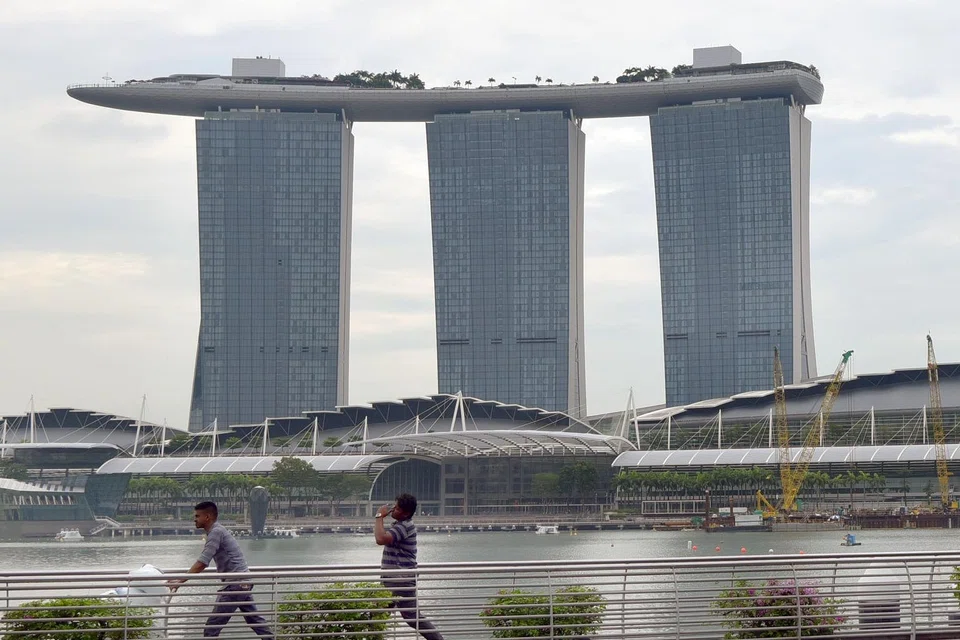
LAND to expand Singapore's two integrated resorts (IRs) will cost S$1.3 billion for the 3.3 hectare site for Marina Bay Sands (MBS), while Resorts World Sentosa (RWS) has set aside S$1 billion to intensify the use of its existing land and to buy around one hectare of new land.
Senior Minister of State for Trade and Industry Chee Hong Tat told Parliament on Monday: "The IRs will pay fair market value for their land, as determined by the chief valuer in accordance with market conditions and established valuation principles."
Replying to questions filed by Members of Parliament on the land costs, he said that if the IRs choose to exercise their options for additional gaming areas, they will have to pay additional costs for these areas.
"The amount payable will be determined by the chief valuer based on prevailing market conditions when the option is exercised."
He added: "When there are substantial investments that can benefit our economy and our workers, the government is open to directly allocating land to these investors.
"This is a long-standing policy that has been extended to both local and foreign companies across different industries."
The two IRs said last month that they would invest S$4.5 billion each to expand. After the investment, they are expected to attract half a million more international visitors a year, and contribute S$500 million to gross domestic product annually.
Mr Chee said tax revenue from the IRs is one of Singapore's many sources of overall tax revenue in a "diverse and resilient" revenue base.
Answering questions on why the IRs have the option to expand their gaming areas, he said gaming activities contribute more than two-thirds of the IRs' total revenue, and gaming revenue makes it commercially viable for the IRs to offer non-gaming amenities as an integrated package.
He noted that the IRs have not decided to activate the additional gaming options. If both do so in full, the gaming area as a proportion of total floor area will fall from 3 per cent now to 2.3 per cent, as their non-gaming area will expand by a much larger percentage.
"The IRs have also stated that the additional gaming provisions will be targeted at higher-tier, non-mass market players, who are mostly tourists," he said.
Addressing concerns about problem gambling, Minister for Social and Family Development Desmond Lee said the government will work with the IRs "to implement technology measures to provide patrons with information to allow them to make informed decisions on their bets and better control their gambling expenditure", and to strengthen training for casino gaming staff to identify at-risk patrons.
Second Minister for Home Affairs Josephine Teo noted that since 2010, about S$1.3 billion in casino entry levies has been collected from Singapore citizens and permanent residents. The proceeds are channelled to the Tote Board, which funds social and community programmes.
To the suggestion of doing away with the annual entry levy to discourage compulsive gambling, she said that the government has "considered this carefully" and thinks that the annual levy "can remain for now".
"The data is quite clear - annual entry levy holders tend to have higher incomes. For these affluent individuals who want to visit the casinos more often, such as premium players, the annual entry levy provides convenience," said Mrs Teo, adding that the levies are not the only deterrence measures.