Looking through the eyes of the blind

Fiona Lam
Singapore
IN A dimly lit lounge, the guests relax on velvet couches and savour tuna tartare appetisers, while a service staff member briefs them on what to expect.
Their visually impaired host arrives soon after. In a single file, he carefully leads them up a flight of stairs, to their table in a pitch-black dining room. He makes intermittent clicks with his mouth while navigating in the dark.
After describing the cutlery placement to the guests, the host makes light conversation in between serving each mystery course.
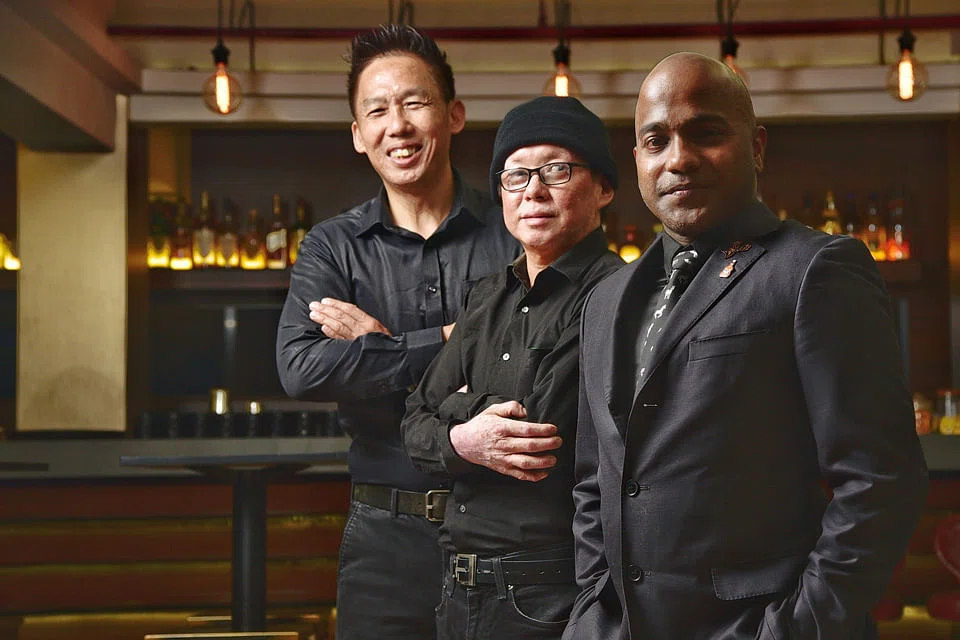
This is a typical evening for patrons of NOX - Dine in the Dark. Seven of the 20 employees at the fine-dining establishment on Beach Road are blind or partially sighted.
Visually impaired employees play a pivotal role there - the work they do and their experiences are at the core of the restaurant's unique concept.
NOX aims to raise awareness of vision impairment by letting sighted people step into the blind's shoes.
In a role reversal, the blind become the diners' eyes in the darkness, as they guide the diners who must now rely on their other senses.
Diners also attempt to guess what they are eating by discussing the flavours and textures with their hosts.
NOX manager Sam Ramasamy tells The Business Times: "We hire only visually impaired persons as hosts, to offer guests an accurate insight into their lives and personalities."
It also gives the restaurant a chance to integrate PWDs (persons with disabilities) into the workforce, and empower them to become financially independent on a steady income with benefits.
"Employers need to make an effort to get to know job applicants or staff who have disabilities, and identify their forte so they can be placed in a suitable, meaningful role, rather than brushing them aside without consideration," Mr Ramasamy says.
For NOX, blind people are best placed to be hosts because they are naturally more efficient in the dark.
Moreover, part of the experience for guests lies in the engaging conversations and getting to know the hosts on a personal level.
The hosts also check on the guests frequently to reassure and calm anyone nervous. A dose of humour often helps, too.
NOX's hosts are thus selected for their knack for connecting with strangers, and will also be further trained to hone their people skills.
"The value that they bring to the company lies in their character, humility as well as the ability to help patrons relate to their visual impairment and put patrons at ease," Mr Ramasamy says.
Championing staff with disabilities requires more than cosmetic tweaks. Empathy, patience and understanding them as individuals are key, he says.
For instance, if new NOX hosts are afraid to move quickly because they are wary of their surroundings, other staff members will coax them to boost their confidence and morale.
The restaurant has also made adjustments to its training processes to cater to the staff's needs.
Those with no experience in the food and beverage industry are given more time to learn the ropes at NOX - in contrast to the fast-paced environment at many restaurants.
"Carrying two wooden serving platters with four bowls each may be daunting, so we let them practise by carrying empty bowls before dinner service begins," Mr Ramasamy says.
Dropping and breaking cutlery or crockery is also normal for trainees. Instead of reprimanding them, he encourages them to take the mistakes as a lesson and try again.
A mentor system also sees trainees shadowing experienced hosts, who can teach from the perspective of a fellow visually impaired person.
"Our senior hosts have tried and tested different approaches for certain situations at work, so they know what is or isn't feasible for visually impaired people," Mr Ramasamy says.
Of top priority is getting familiar with the new environment.
"Other restaurants usually start with training their servers to carry food and drinks, but our first step is for them to learn and memorise the table arrangement, since they cannot see where the tables are and how many tables are placed in each room," Mr Ramasamy explains.
NOX's hosts make mouth-clicks and other sounds to identify each other and inform other staff of their presence. It is also a form of echolocation to find out exactly where they are with respect to objects and people.
Infrared cameras also keep surveillance on the dark room to ensure the safety of the hosts and visitors.
All new joiners start with simple tasks - folding napkins and resetting tables - before graduating to guiding the guests in and talking the guests through each course of the meal.
The time needed to adapt to the job varies between three to six weeks. "Everyone has a different learning curve, so we don't rush them," Mr Ramasamy explains.
Sighted NOX staff are required to work at least once in the area where food and drinks are dispensed, so that they understand the process and can better relate to their visually impaired colleagues.
The restaurant's patrons also gain a new understanding of how visually impaired people feel and what it is like to perform mundane tasks without seeing, Mr Ramasamy says.
However, it can be difficult to find job candidates who are a good fit.
"Not everyone can open up to strangers for a casual chat or to share their stories while having a sense of humour and delivering fantastic service for a whole evening," he notes.
It is also a challenge to identify areas of improvement for the quality of service and for the sake of the staff's personal development. To manage that, he relies on exchanging feedback frequently with his employees and conducting numerous role-play training sessions. "It is not always perfect, but here at NOX we are all family," Mr Ramasamy adds.