

Malaysia confident of achieving 2022 growth target amid impact of Ukraine war
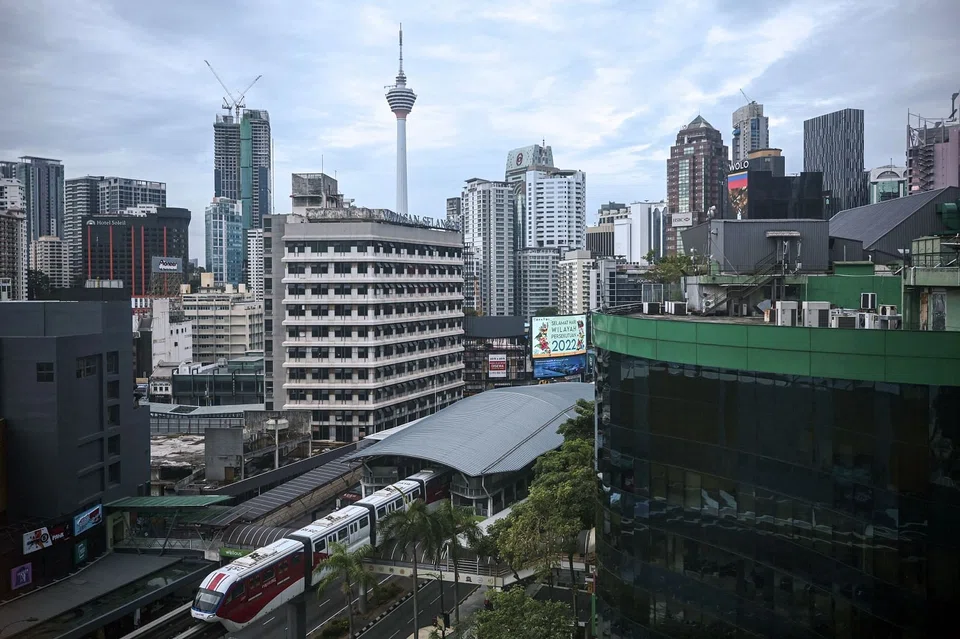
Kuala Lumpur
THE Malaysian government is confident of achieving its projected economic growth this year, even as the sharp rise in global commodities prices arising from the Russia-led war in Ukraine may temper the positive momentum, a minister said on Tuesday (Mar 29).
Speaking at an event in Kuala Lumpur, Minister in the Prime Minister's Department (Economy), Mustapa Mohamed, said recent indicators show that growth will be driven by robust external trade, a net inflow of foreign investments, and a more resilient increase in private consumption.
He said the country's impending reopening of international borders on Apr 1 will help it achieve the projected gross domestic product growth of 5.5 per cent to 6.5 per cent in 2022.
He added that with the worst of Covid-19 now over, it is time for Malaysia to focus on rebuilding the nation's economy to ensure that it will meet its mid-term target of becoming a high-income nation by 2025.
"Looking around us, it is clear that we faced a lot of competition in the region and it is important that Malaysia remains competitive amid the challenges such as the pandemic situation and issues related to productivity," Mustapa told reporters on the sidelines of the Malaysian Banking and Finance Summit.
"We started from a higher base compared to some other countries, and hence it requires more dedicated efforts to move the economy up another level. We need to be bold in continuing the economic reforms - strengthening the institutions, attracting global talent while growing the local talent," he said.
He called on banks to work with the government in spurring the economic recovery by facilitating access to funding for businesses, particularly those in hard-hit industries such as aviation, tourism and hospitality.
Speaking during a session about transformational leadership in a post-pandemic world, OCBC Bank Malaysia chief executive officer Ong Eng Bin said the rise of the ESG (environmental, social and governance) concept in recent years is timely, and that the social aspect is as important as the environmental element in order to reduce the inequality that exists.
He cited the example of a missed opportunity by Malaysia's rubber glove industry in using the bumper profit generated during the pandemic to address its shortcomings in ESG.
Ong said a similar opportunity has now emerged for the plantation sector in Malaysia as commodities prices soar, and these companies should make good use of this "once in a lifetime" opportunity to address the ESG concerns plaguing the industry, particularly on the social front.
To embrace digitalisation, fellow panellist Vaseehar Hassan, who is also the former chairman of RHB Islamic Bank, observed that banks are increasingly forging collaboration with partners outside the financial sector, such as fintech companies, to accelerate the transformation.
It was reported that several banks in Malaysia have teamed up with non-financial companies in applying for a digital banking licence from Bank Negara Malaysia. The central bank is expected to announce the result of the applications in the coming days.
"In reality, banks don't need a separate licence to do digital banking, their existing license already allow them to do so. But why are banks looking for partners? Because it is hard to teach an old dog new tricks," Vaseehar said, adding that Malaysian banks still have plenty of room to improve on their current service as they embrace the digital economy.
TRENDING NOW

Fed hike throws Singapore banks a margin lifeline; UOB most likely to feel impact

He built the Vingroup empire. Now South-east Asia’s richest man is handing some key roles to his sons

Real-estate veteran Desmond Sim quits from CEO roles at Realion, ETC

Chagee, Mixue and Luckin won the market. Sustaining their edge is the harder part

