MAS further tightens Singdollar policy
It sees economy on steady expansion path in quarters ahead

Singapore
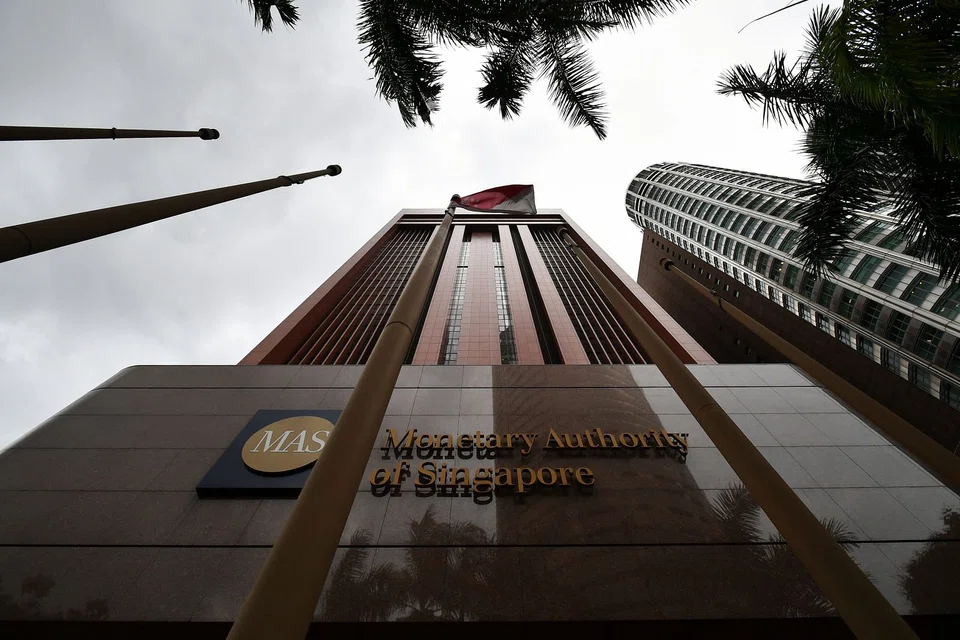
THE Monetary Authority of Singapore (MAS) is slightly increasing the pace of the Singapore dollar's appreciation in keeping with a "modest and gradual appreciation path... that will ensure medium-term price stability", in the second consecutive tightening at its half-yearly policy review.
The width of the policy band and the level at which it is centred will be unchanged.
In its October monetary policy statement on Friday morning, the central bank said the move comes as the Singapore economy "is likely to remain on its steady expansion path in the quarters ahead, keeping output slightly above potential".
It expects 2018 economic growth to land within the upper half of the forecast range of 2.5 to 3.5 per cent, and to moderate slightly in 2019.
"A small, positive output gap is expected to persist into 2019, imparting modest inflationary pressures," it said, expecting core inflation to experience "modest but continuing pressures" before levelling off at just below 2 per cent over the medium term.
The MAS projection is for core inflation to average 1.5 to 2.5 per cent in 2019, slightly higher on the top end than the 1.5 to 2 per cent indication for 2018.
Headline inflation is projected to be about 1 to 2 per cent next year, up from about 0.5 per cent in 2018.
The MAS acknowledged the risk that trade wars could pose in the year ahead, saying: "Global growth has been relatively resilient thus far. In 2019, trade frictions between some major economies and the uncertainty they pose could weigh more discernibly on global economic activity."
It went on to say: "Barring a significant setback in global growth, the Singapore economy should expand at a pace close to potential in 2019."
The MAS manages the exchange rate against a trade-weighted basket of currencies of major trade partners. The Singdollar is allowed to float within an undisclosed policy band called the Singapore dollar nominal effective exchange rate (S$NEER) that can be adjusted when monetary policy is reviewed at half-yearly meetings in April and October.
In its April policy statement, the MAS moved out of the neutral stance it had held since April 2016, with the first tightening in six years.
Prior to Friday, economists had been split on whether the MAS would tighten again in October, with inflation in the upper half of the forecast range but global uncertainties growing. The market, however, seemed to have been expecting further tightening, with the S$NEER strengthening towards its upper bound.
Economists remained divided following Friday's statement, both on its tone and whether further tightening might be on the cards in 2019.
Calling the statement "more hawkish", ANZ Research head of Asia research Khoon Goh noted that though trade frictions were mentioned in the October statement, they "were generally downplayed".
With the MAS expecting only slight growth moderation and continuing inflation pressures in 2019, this suggests that "the MAS is not yet done with policy normalisation, and a further increase in the S$NEER slope is likely if the economy evolves as the MAS expects", he added. ANZ's baseline view is for another tightening in April 2019.
Also taking the MAS as hawkish on inflation, UOB analysts see "a possibility" of further tightening in April, with the biggest uncertainty for this view being trade tensions between the United States and China.
Citi analysts see October's move as "a continuation of a planned series of measured adjustments that started in April", with policy biased towards a further steepening next April.
OCBC head of treasury research and strategy Selena Ling saw "no explicit dovish overtones" in the October statement, adding that "the inflation rhetoric has evolved and hardened in our view". The April statement had expected imported inflation to "rise mildly"; October's statement said imported inflation "is likely to increase".
However, her view is that "it remains doubtful if there will be any further tightening impetus in 2019".
Maybank Kim Eng economists Chua Hak Bin and Lee Ju Ye, who have lowered their growth forecasts for 2018 and 2019, think it unlikely MAS will tighten again this coming April, as growth is expected to slow further in the next six months.