MAS maintains monetary policy, cuts core inflation forecast to 1 - 2%
Weaker GDP growth and softening inflation among contributing factors

Janice Heng
Singapore
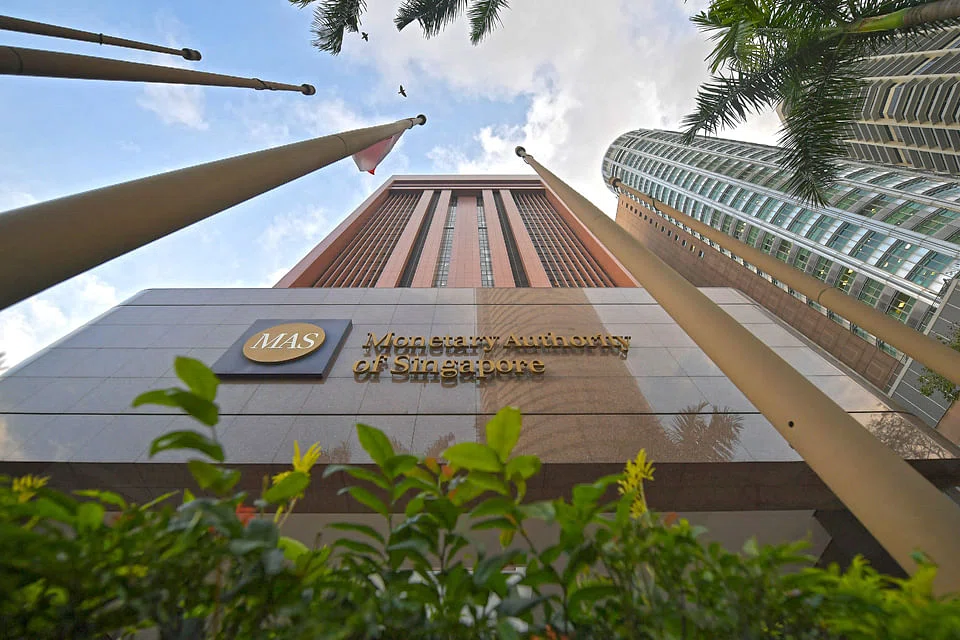
THE Monetary Authority of Singapore (MAS) is holding steady on monetary policy but downgrading its forecast range for core inflation to between 1 and 2 per cent, it announced at its latest half-yearly monetary policy review on Friday.
Given the weak growth outlook and revised inflation expectations, economists see the MAS as likely to maintain policy at the next review in October too, contrary to earlier expectations of possible tightening.
After two consecutive slight increases in the pace of Singdollar appreciation in 2018, MAS is now maintaining the Singapore dollar's current rate of appreciation.
The width of the policy band and the level at which it is centred will also be unchanged, consistent with a "modest and gradual appreciation path... that will ensure medium-term price stability", the central bank said. Economists had expected this lack of further tightening, given weaker gross domestic product (GDP) growth, softening inflation, and the United States Federal Reserve having paused in its interest rate hikes.
MAS manages the exchange rate against a trade-weighted basket of currencies of major trade partners. The Singdollar is allowed to float within an undisclosed policy band called the Singapore dollar nominal effective exchange rate (S$NEER) that can be adjusted when monetary policy is reviewed twice a year.
Explaining the latest monetary policy decision, MAS noted that Singapore's GDP growth has eased, "bringing the level of output closer to its underlying potential". It added: "Despite some pickup in labour costs, inflationary pressures are mild and should remain contained."
With core inflation lower than projected due to weaker global oil prices and a stronger-than-expected effect of the open electricity market, MAS is downgrading its core inflation forecast range for 2019 to between 1 and 2 per cent from the previous prediction of between 1.5 and 2.5 per cent.
Its 2019 forecast for headline inflation stays unchanged at 0.5 to 1.5 per cent. It was last revised in February, down from 1 to 2 per cent previously.
MAS has not changed its 2019 GDP growth expectation and still expects this to come in slightly below the mid-point of the official 1.5 to 3.5 per cent forecast range.
"In all, the pace of growth will be slightly below potential this year, following two years when it was above trend," MAS said. "With the positive output gap expected to narrow, inflationary pressures will be kept in check."
Also on Friday, the Ministry of Trade and Industry released advanced estimates showing 1.3 per cent GDP growth in the first quarter of 2019, down from 1.9 per cent growth in the preceding quarter.
Economists saw dovish tones in Friday's statement but stopped short of predicting an easing of policy in October, with most expecting the MAS to continue maintaining policy.
UOB economist Barnabas Gan highlighted key changes in rhetoric between Friday's statement and the previous round in October 2018: growth is seen to be "slightly below potential this year", down from slightly above potential; global growth has "moderated by more than expected", compared to having previously been "relatively resilient"; and "external sources of inflation are likely to be benign", compared with October 2018's view that imported inflation would increase.
UOB has changed its guidance for October's policy statement, now seeing it as increasingly likely that the MAS will maintain its current stance instead of tightening.
OCBC Bank head of treasury research and strategy Selena Ling noted "slightly dovish" inflation rhetoric, but also said that OCBC "would not read the current MAS statement as unduly bearish or to portend a more dovish action at the October MPS (monetary policy statement)".
Mizuho Bank head of economics and strategy for Asia and Oceania Vishnu Varathan saw "dovish hues" to the policy statement but noted that MAS had not turned around on prior policy normalisation, "nor has it changed its guidance to one of imminent easing".
He sees the MAS as "likely to pause for the time being" as it sees how downside risks unfold, before resuming calibrated steepening of the S$NEER, "most likely in 2020".
Some economists who had earlier seen a further tightening in 2019 as possible, depending on economic conditions, now see it as unlikely.
Barclays analysts Brian Tan, Hamish Pepper and Ashish Agrawal "see little reason to expect (the MAS's) growth assessment to improve significantly by the next policy meeting in October".
Similarly, HSBC economist Joseph Incalcaterra and senior Asia FX strategist Joey Chew believe "the conditions for further tightening will not be met" in 2019. They forecast growth of 2.3 per cent and expect core inflation to stay below the long-run average.
Mr Incalcaterra saw MAS's downgrade of the core inflation forecast as "an unexpectedly strong dovish signal", but added: "There were no discernable hawkish signals in the statement to suggest that MAS still intends to tighten policy. However, this does not signal a dovish bias. We think MAS will keep policy on hold for the foreseeable future."
ING Asia economist Prakash Sakpal, however, is not ruling out an easing if economic conditions deteriorate - although his baseline case is also for stable MAS policy in 2019.